 Himal Press
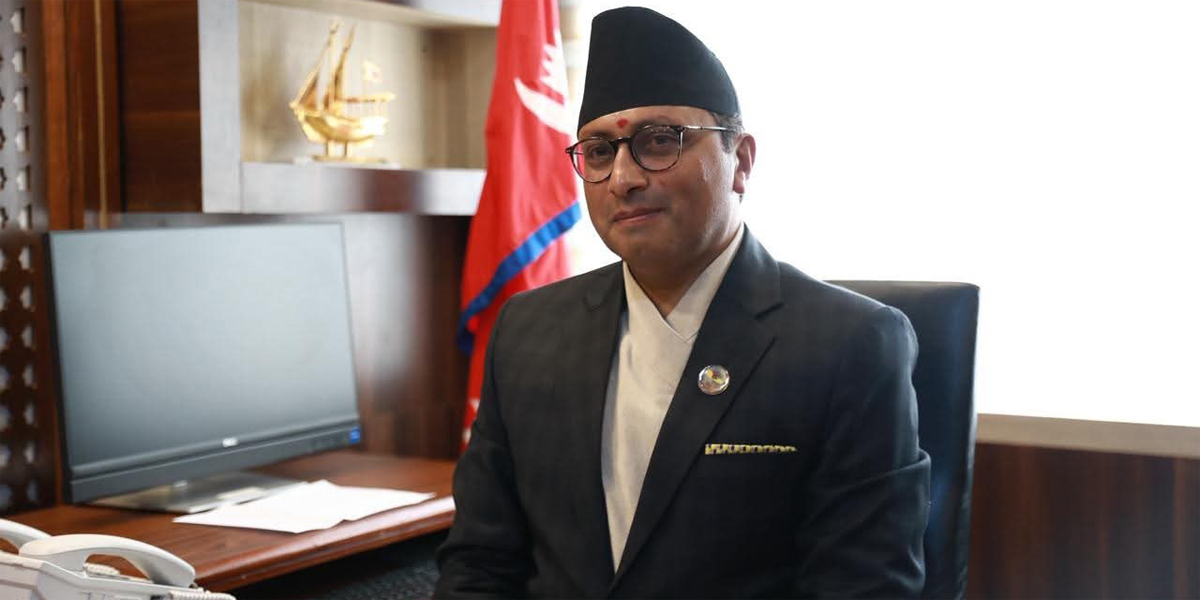
KATHMANDU: Deputy Prime Minister and Minister for Finance Bishnu Prasad Paudel has blamed former governments for the country’s current economic woes. He added that the current government should not be held accountable for flawed policies implemented in the past.
Responding to questions raised by lawmakers on the budget for the upcoming fiscal year, in the meeting of the House of Representatives on Monday, Minister Paudel said the incumbent government cannot continue with harmful policies set by previous governments. Paudel further blamed former governments for Nepal’s inclusion in the Financial Action Task Force’s ‘grey list’. “We must get the country off the grey list. Strategies and action plans have already been formulated to achieve this,” he said.
According to Paudel, the budget has been designed to facilitate Nepal’s removal from the grey list through effective implementation and future safeguards. He said weak investigation and prosecution in money laundering cases had contributed to Nepal’s current status and vowed to make improvements in these areas.
Described the upcoming budget as realistic and implementable in terms of both revenue and expenditure projections, he warned that failure to manage resources would hinder implementation. “This time, I have been particularly mindful that not just the proposed allocations, but also the projected resources must be realistic and feasible,” he said, adding that estimates for revenue mobilization, international support and domestic borrowing are based on factual analysis.
The finance minister also criticised past governments for setting overly ambitious revenue targets. “There have been instances when previous governments projected a 41% revenue increase in a single year,” he said. “In contrast, our internal revenue projection for the upcoming fiscal year is a modest 17% increase from the current year’s revised estimate. We aim to achieve this by controlling revenue leakage, expanding the tax base and enhancing administrative efficiency.”
Regarding foreign aid projections, Paudel said estimates were made only after assessing the preparedness and of proposed projects. Paudel also said the borrowing targets—both domestic and external—were based on recommendations made by the National Natural Resources and Fiscal Commission.
Responding to criticism over the “take-and-pay” provision in power purchase agreements (PPAs) for hydropower projects, Paudel said it should not be a problem as the new Electricity Bill under consideration in parliament would allow private companies to sell electricity independently. He added that the provision was not intended to discourage private sector investment but rather to enhance it by involving the private sector across power generation, transmission and distribution.
“The budget aims to revitalise the economy, boost private sector confidence, promote investment, increase capital expenditure, attract foreign investment, and support innovation,” he added.