 Himal Press
 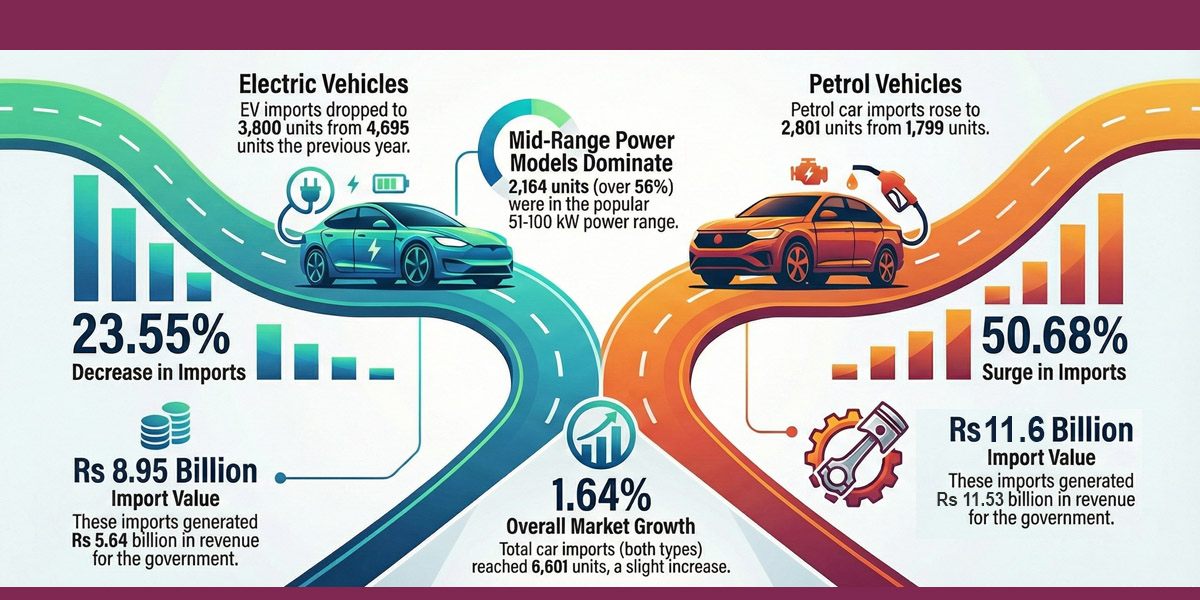 Infographic created using AI.
KATHMANDU: Electric vehicle (EV) imports to Nepal fell sharply in the first five months of the current fiscal year 2025/26, even as overall car imports posted a marginal increase.
EV importers say the decline in imports is due to stockpiling at the end of the previous fiscal year ahead of expected tax changes.
Data released by the Department of Customs show EV imports declined by 23.55% during the review period to 3,800 units from 4,695 units a year earlier. During the period, the country imported EVs valued at Rs 8.95 billion. These imports contributed Rs 5.64 billion in revenue to the state.
Of the EVs imported during the period, the majority fell in the mid-range power category. Vehicles with a power capacity of 51–100 kilowatts accounted for 2,164 units, followed by 1,215 units of up to 50 kilowatts. Similarly, with 414 units of cars in the 101–200 kilowatt range and just five units above 201 kilowatts were imported during the period. In addition, two units of unassembled EVs with a capacity of up to 50 kilowatts were imported in the first five months of 2025/26.
In contrast, imports of petrol-powered vehicles surged during the same period. Petrol car imports rose by 50.68% to 2,801 units, up from 1,799 units in the same period of the previous fiscal year. While it is too early to say whether people have started preferring ICE vehicles over EVs, this shows a renewed interest in internal combustion engine (ICE) vehicles.
Between mid-July and mid-December, the country imported 6,601 units of cars, jeeps, and vans, including both electric and petrol-powered vehicles. This represents a modest increase of 1.64%, or 107 units, compared to the same period of the previous fiscal year. In the first five months of the previous fiscal year, a total of 6,494 units were imported into the country.
The total import value of these vehicles reached Rs 11.60 billion, while the government generated Rs 11.53 billion in customs revenue.