 Himal Press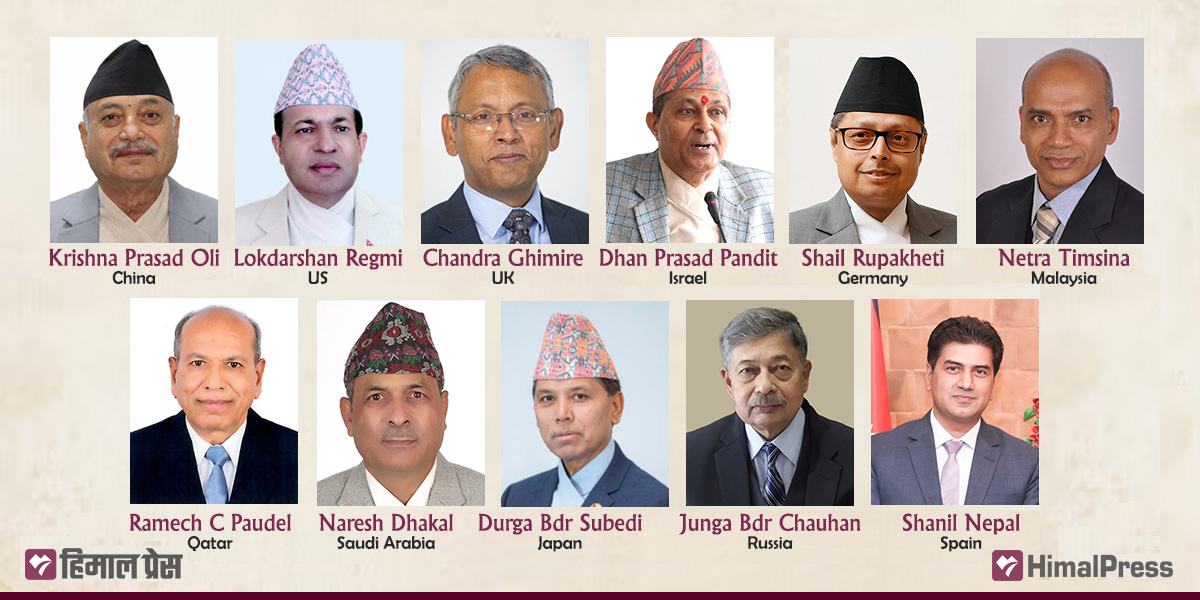
KATHMANDU: The government has decided to recall ambassadors appointed through political quotas and those who have already retired from the foreign service after several host countries reportedly began sidelining them.
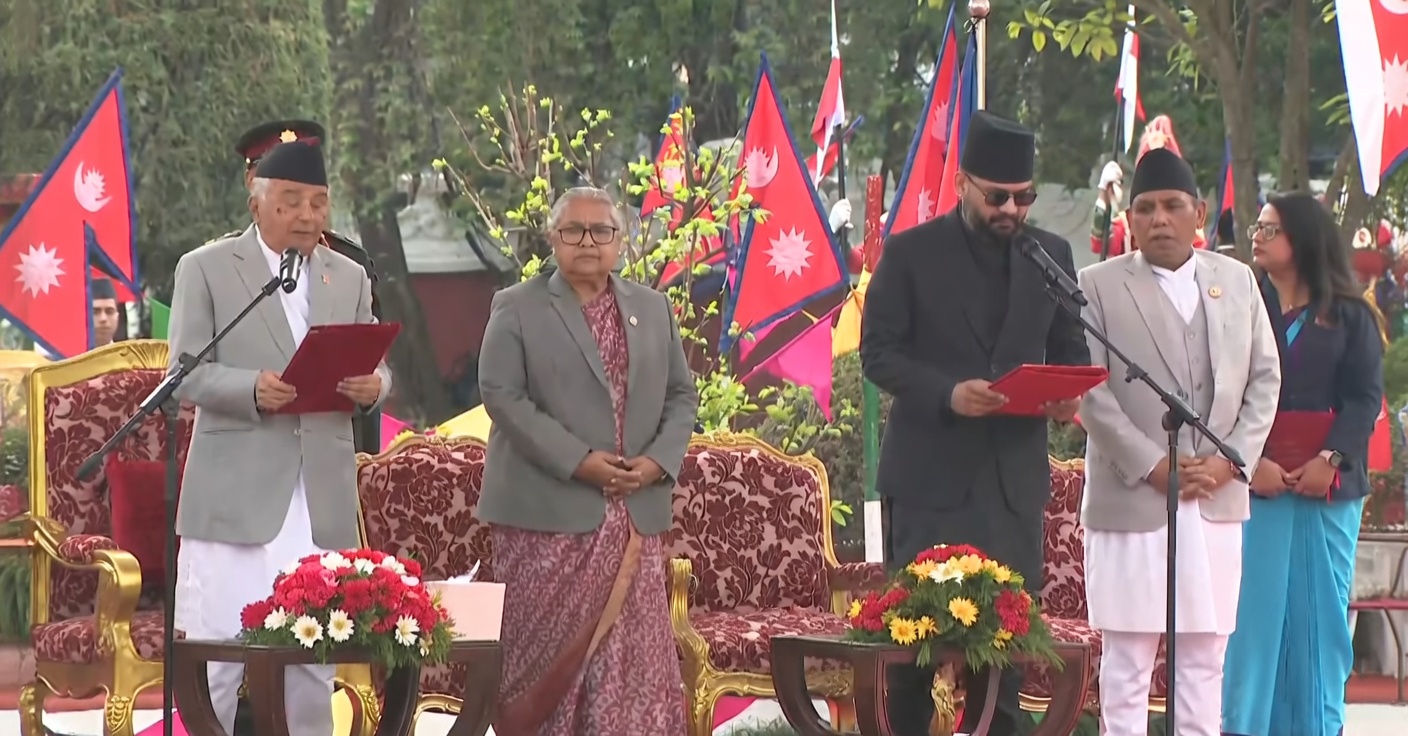
The interim government led by Sushila Karki made the decision to recall ambassadors from 11 countries on Thursday. According to a senior foreign ministry official, the move follows a noticeable decline in engagement from the respective host nations toward these politically appointed envoys.
However, the government has chosen not to recall women as well as ambassadors from the Dalit or indigenous community.
“A recall of ambassadors was not initially on the interim government’s agenda,” said a senior official from the Prime Minister’s Office. “But when foreign governments began disregarding ambassadors appointed through political deals, the government was left with no choice. No new appointments will be made immediately, either. In the US and China, even deputy chiefs of mission are of joint secretary rank. Other countries will understand such situations as temporary.”
Observers note that it is common for a new government to recall ambassadors appointed by its predecessor since such posts are not permanent. “In a politically unstable country like ours, the argument that ambassadors should remain unchanged despite a change of guard is flawed,” the foreign ministry source.
Traditionally, ambassadors would resign voluntarily after a change in government, considering it inappropriate to continue under a new administration that did not appoint them. But according to officials, none of the current ambassadors indicated willingness to return even a month after the formation of the interim government.
“It is rare nowadays to find ambassadors who act on moral grounds,” another official commented. “Many politically appointed ambassadors continued even after the government that appointed them failed, putting foreign ministry officials in an awkward position.”
Ajay Bhadra Khanal, a political adviser to Prime Minister Sushila Karki, said that the government had intended to recall all political appointees and retired officials. “However, the foreign ministry informed the Prime Minister that some retired ambassadors were performing well. The Prime Minister suggested retaining women and Dalit or indigenous ambassadors; therefore, not all political or retired appointees have been recalled,” Khanal said.
According to foreign ministry officials, the government had waited to see if the ambassadors would resign on moral grounds. “When you represent a previous government, it is only natural for host nations to lose confidence after a major political change,” an official said. “The government had hoped they would return voluntarily, but since they did not, the recall became necessary.”
The 11 ambassadors recalled are Durga Bahadur Subedi (Japan), Krishna Prasad Oli (China), Shail Rupakheti (Germany), Dhan Prasad Pandit (Israel), Dr Netra Prasad Timilsina (Malaysia), Ramesh Chandra Paudel (Qatar), Jung Bahadur Chauhan (Russia), Dr Naresh Bikram Dhakal (Saudi Arabia), Chandra Kumar Ghimire (UK), Lok Darshan Regmi (US) and Shanil Nepal (Spain).
Pandit, Dhakal, Nepal, Rupakheti, and Paudel were appointed from the Nepali Congress quota, while Regmi, Ghimire, Chauhan, Oli, and Timilsina were picked by the CPN-UML.
Ambassadors who have not been recalled include Dr Shankar Sharma (India), Chitra Lekha Yadav (Australia), Sumnima Tuladhar (Denmark), Shivamaya Tumbahangphe (South Korea), Kapilman Shrestha (South Africa) and Purna Bahadur Nepali (Sri Lanka).
Seven ambassadors currently serving were appointed from the foreign ministry and have already retired from the civil service. Although some have called for their recall, the government believes most are performing satisfactorily. “Those who are inactive or treat their posting as a reward for retirement will be recalled immediately,” a senior official from the Prime Minister’s Office said, adding that any complaints from host nations would also trigger a recall.
Nepali currently has 34 missions abroad — 31 embassies and three permanent missions. Of these, 18 are headed by career diplomats of the joint-secretary level, while 16 were appointed on political grounds.
The government is also reviewing whether some embassies are necessary at all. Officials say only chargé d’affaires may be retained in certain countries.
Foreign ministry officials also cautioned the government to consider diplomatic implications while selectively recalling ambassadors. “It would be a mistake to recall ambassadors from some key nations while retaining others,” one senior official said. “Still, recalling politically appointed envoys was necessary, as some had underperformed.”
Those appointed from the foreign ministry include Tirtha Raj Wagle (Bahrain), Ghanashyam Bhandari (Bangladesh), Sewa Lamsal (Belgium), Nirmal Raj Kafle (Brazil), Bharat Raj Paudyal (Canada), Sushil Lamsal (Egypt), Sudhir Bhattarai (France), Ghanashyam Lamsal (Kuwait), Harish Chandra Ghimire (Myanmar), Dora Nath Aryal (Oman), Rita Dhital (Pakistan), Prakash Mani Paudel (Portugal), Dhan Bahadur Oli (Thailand), Tej Bahadur Chhetri (UAE) and Lok Bahadur Thapa (Permanent Representative to the United Nations in New York), Ram Prasad Subedi (Permanent Representative to the United Nations in Geneva) and Bharat Kumar Regmi (Permanent Representative to the United Nations in Vienna).
Seven envoys appointed by the ministry have already retired from the foreign service. Although there have been calls to recall those who have retired, the government believes that most of them are performing well in their current assignments.