 Himal Press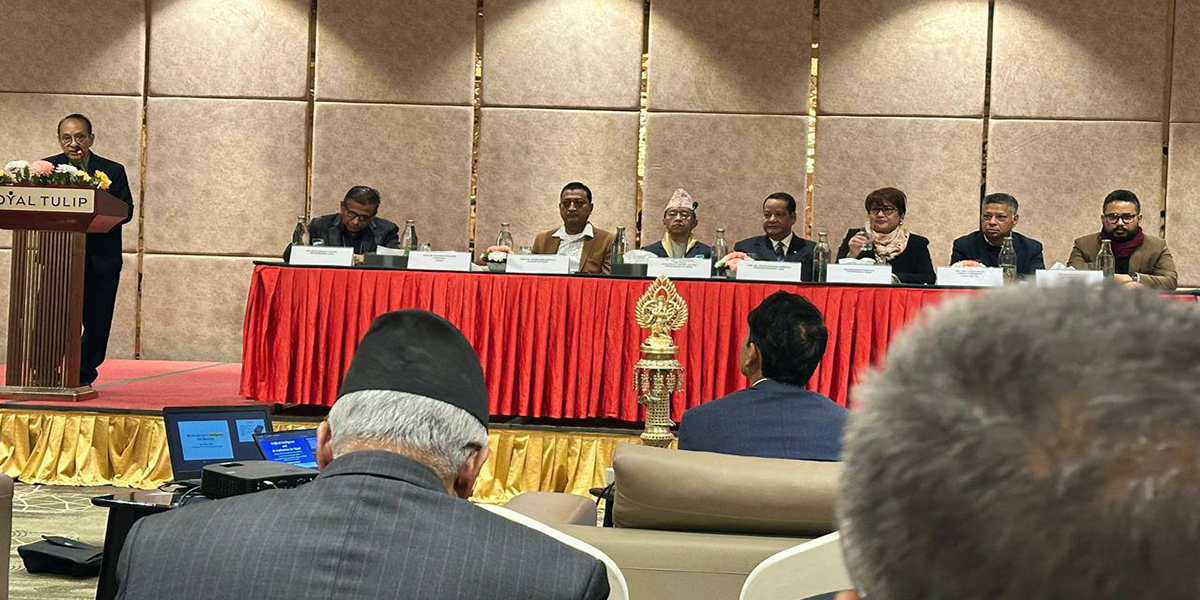
KATHMANDU: Foreign Secretary Amrit Bahadur Rai has said that artificial intelligence (AI) has become a core concern of diplomacy and foreign policy, warning that Nepal must urgently prepare for the geopolitical and economic shifts driven by rapid technological disruption.
Speaking at a talk program on Artificial Intelligence and Its Implications for Nepal, organized jointly by the Association of Former Career Ambassadors of Nepal (AFCAN), Center for Diplomacy and Development (CDD), and Former International Professionals of Multilateral Organizations (FIPMO) in Lalitpur, Rai said AI is no longer limited to science and technology. “AI is now a matter of foreign policy. It is reshaping global power, redefining strategic competition, influencing development prospects, and transforming the foundations of international relations,” he said.
Rai added that no country can manage the risks or opportunities of AI alone. “Diplomacy is essential to ensure that AI benefits humanity while minimizing its dangers,” he added.
Outlining key priorities for Nepal, Rai said diplomacy must adapt to an era where technological disruptions move not in decades but in weeks. Cybersecurity, he stated, has become central to national security.
He argued that Nepal’s traditional non-alignment policy must evolve into “technological non-alignment,” ensuring digital sovereignty and reducing dependence on dominant tech powers by building our own autonomous, community-focused digital infrastructures and platforms.
Rai also emphasized the need for Nepal to advocate in global forums that AI be treated as a global public good, and to resist the fragmentation of the internet into competing blocs.
Calling AI both a risk and an opportunity, he said Nepal must remain vigilant against bias, disinformation, and cybersecurity threats, while proactively using technology to advance education, health, agriculture, and governance.