 Himal Press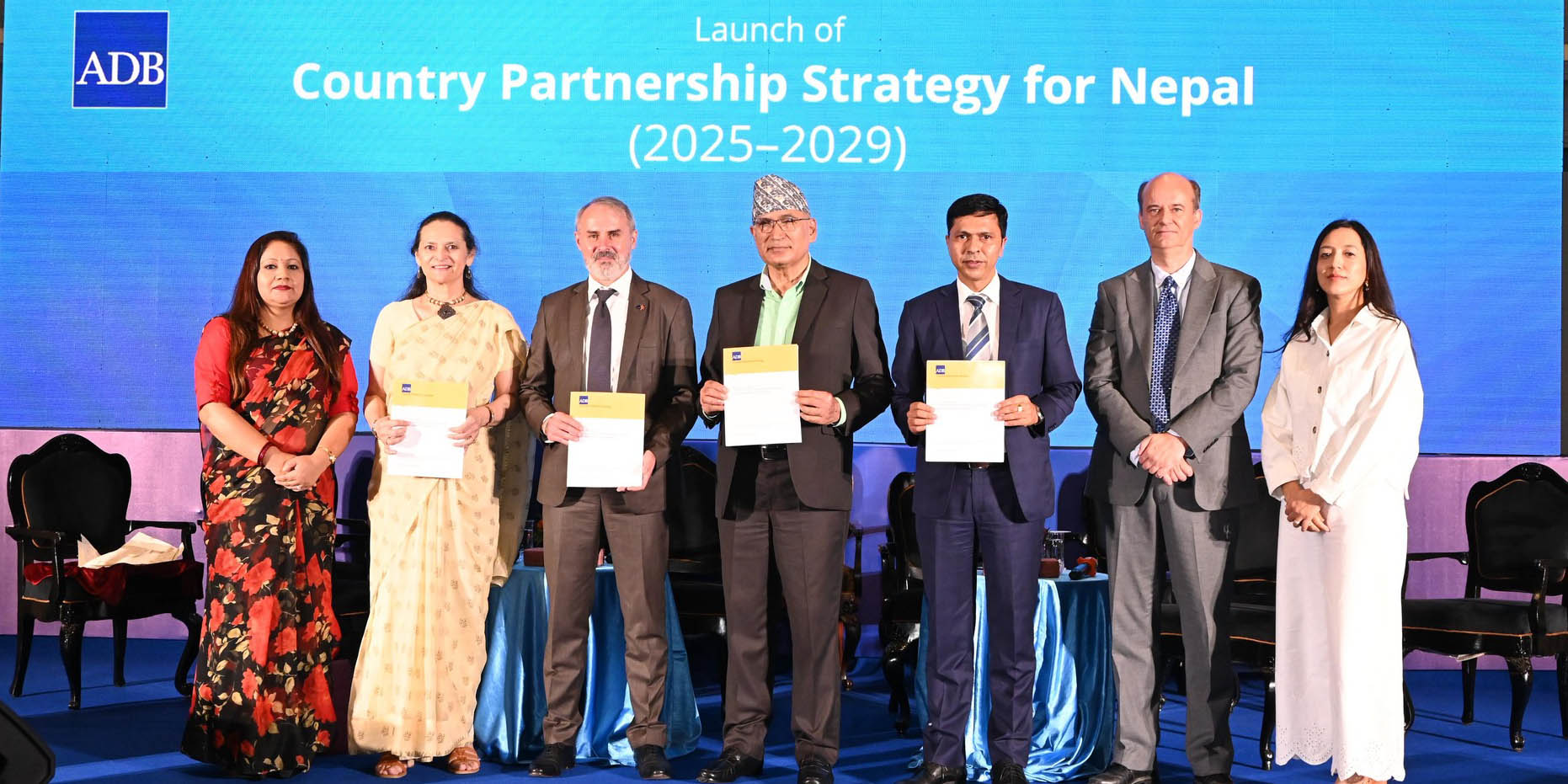
KATHMANDU: The Asian Development Bank (ADB) has unveiled its Country Partnership Strategy (CPS) for Nepal for the 2025-2029 period.
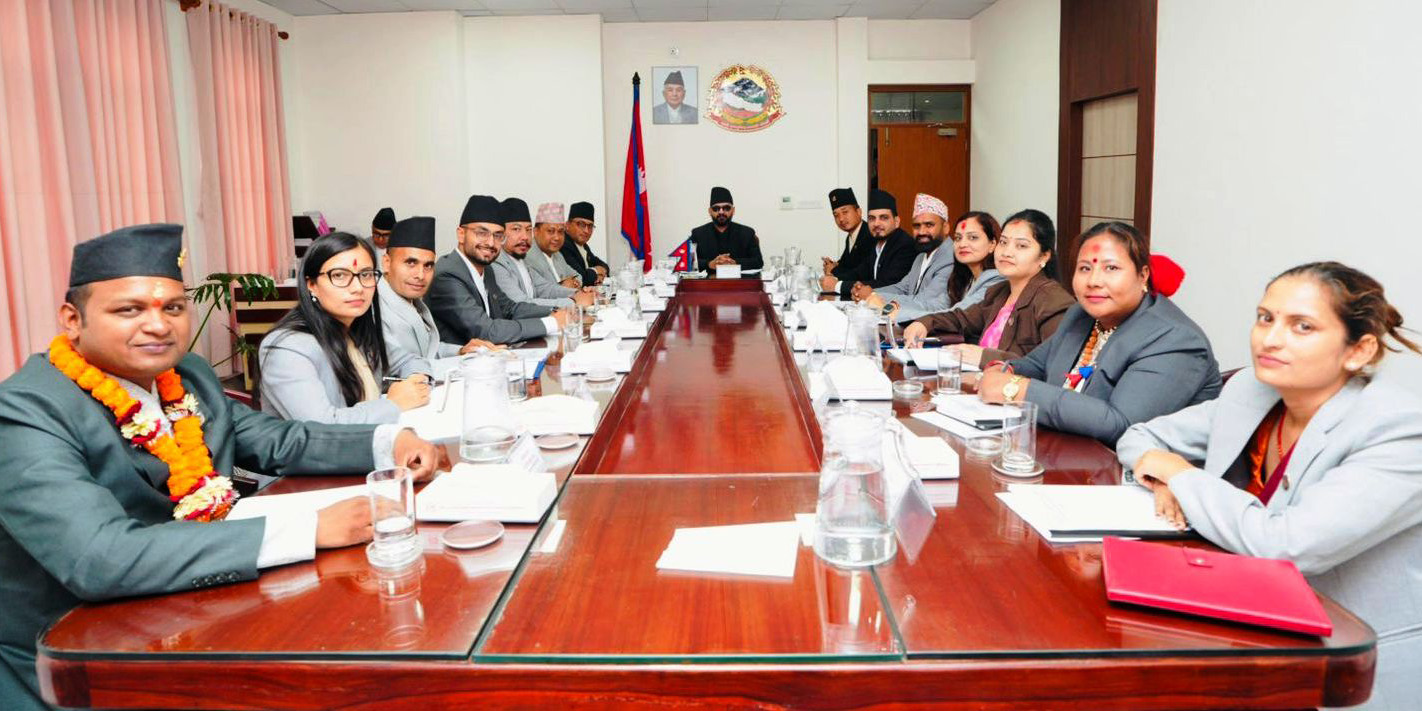
Deputy Prime Minister and Minister for Finance Bishnu Prasad Paudel officially launched the strategic document in Kathmandu on Tuesday.
The strategy, approved by ADB’s Board of Directors on June 17, outlines the Manila-based multilateral development partner’s strategic direction in Nepal for the next five years. For the first time, ADB has jointly prepared the partnership framework with the World Bank Group, underscoring a new level of cooperation in development planning.
Speaking at the launch event, Minister Paudel said the publication of ADB’s new CPS marks the beginning of a new phase of partnership. “Aligned with Nepal’s 16th Five-Year Plan, it will support inclusive economic growth, climate resilience, and the creation of quality jobs for youth. We deeply appreciate ADB’s continued support in our journey toward economic transformation,” he added.
The CPS focuses on three strategic priorities: promoting private sector-led, employment-intensive, and green economic transformation; advancing inclusive and quality human capital development and public service delivery; and enhancing environmental sustainability and climate resilience.
The strategy also prioritizes digital transformation, good governance, capacity building for federalism, and the empowerment of women and disadvantaged or vulnerable groups, aiming to ensure inclusive and equitable development outcomes.
On the occasion, ADB’s Principal Country Economist Ian Hanson and Program Officer Srijana Rajbhandari made a presentation on core sectors of support, which include energy, transport, water and urban infrastructure, agriculture and rural development and education. Similarly, public sector management, finance, industry and trade, climate mitigation and adaptation, and private sector development have been identified as enabling sectors.
According to the ADB, the cost-sharing arrangements during the five years will continue with a ceiling of up to 80% for loans and grants and up to 85% for technical assistance.
In the new CPS, the ADB has identified budget credibility and transparency, low execution and bunching of capital expenditure at the end of the fiscal year, weak public asset management, financial reporting, internal auditing, and fiscal
risk registry as risks to public financial management.