
 तिहारमा भाइमसलाको व्यापार
काठमाडौँ, १५ कात्तिक :
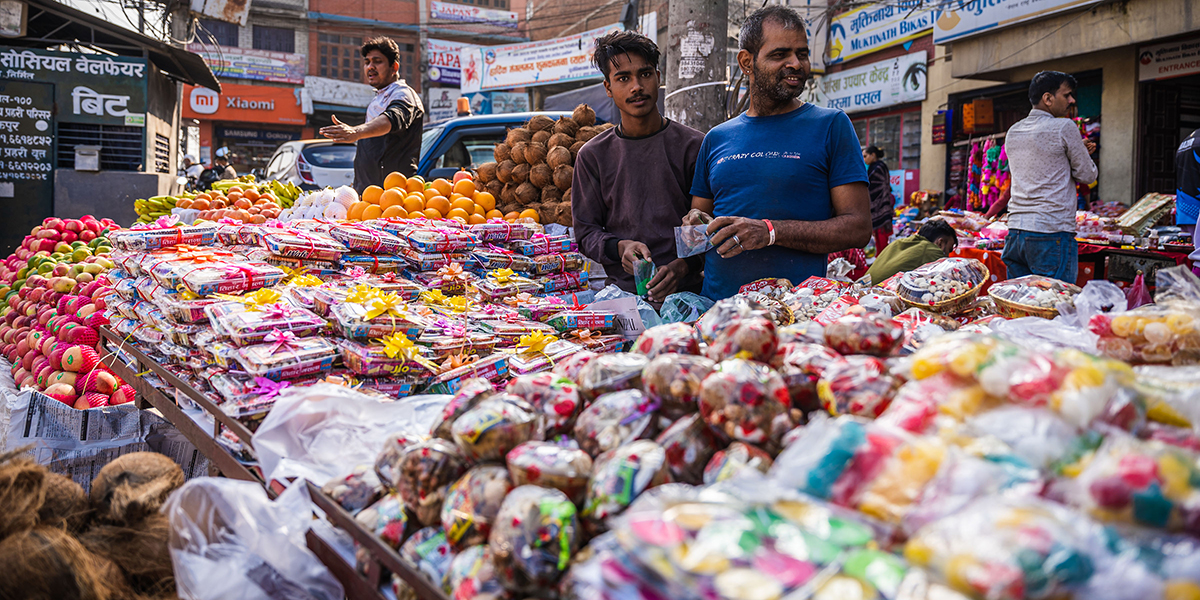
तिहार सुरु भएसँगै भक्तपुरको सूर्यविनायकमा बिक्रीको लागि राखिएको भाइमसला । राजधानीका चोकचोकमा भाइमसलाको व्यापार भइरहेको छ । भाइटीकाको दिन दिदीबहिनीले दाजुभाइलाई टीका लगाएपछि काजु, किसमिस, ओखर, बदाम, चकलेट, सुपारी, नरिवल, मखनलगायतका मसाला दिने चलन छ । तस्बिर : सुरज घिमिरे/रासस
KATHMANDU: Tihar has become more expensive this year as the prices of bhai masala, an assortment of nuts and dried fruits traditionally offered by sisters to brothers during Bhai Tika, have surged sharply.
Although prices have risen in previous years as well, the increase has been particularly steep this time, traders say.
Bhai masala is traditionally prepared by mixing around 12 types of food items during Tihar. While some are available domestically, most have to be imported. Prices of almost all these items have increased this year.
“Sales have declined somewhat this year because prices have risen sharply,” said Devendra Bhakta Shrestha, president of the Nepal Food, Grocery and Wholesale Entrepreneurs Association. “We are even struggling to source these items.”
Bhai masala typically includes cashew nuts, coconut, cloves, almonds, raisins, walnuts, fox nuts, rock sugar, cinnamon, cardamom, figs and pistachios. Prices of all these items have increased, according to Shrestha.
According to Shrestha, cashew nuts are currently selling at Rs 1,600 to Rs 1,800 per kilogram. Their prices, which have traditionally remained high, have increased further this year.
While the price of cloves has remained unchanged, the price of dried dates has surged sharply. Coconut prices have also climbed to nearly Rs 500 per kg.
“Last year, the wholesale price was between Rs 250 and Rs 300 per kilogram. It has increased significantly this year,” Shrestha said. “Although the government has imposed a ban on dried dates, they are being smuggled into Nepal. This has resulted in revenue losses for the government and rise in prices.”
Even walnuts, which are produced domestically, have become costlier this year. Raisins are selling at Rs 500-600 per kg, while almonds cost around Rs 1,800 per kg.
Pistachios have emerged as the most expensive item in bhai masala this year. Traders say pistachios cost as high as Rs 4,000 per kg.
Most ingredients used in bhai masala have to be imported. Traders attribute the rising cost of Tihar essentials to Nepal’s dependence on foreign supplies for items that are either not produced domestically or are available only in limited quantities.
Pabitra Bajracharya, president of the Nepal Retailers Association, says bhai masala prices have increased by 10-15% this year.
“Although prices are high, people are still making their usual purchases because these items have become almost essential for the festival,” Bajracharya said.
Traders say Tihar has become more expensive partly because Nepal continues to depend on imports even for products that could be grown domestically. Coconuts, walnuts and almonds, for instance, can be produced in Nepal.
However, the lack of government incentives for farming and low interest among farmers have left the country dependent on imports from third countries even for everyday consumer goods.
“We have to import coconuts from China. If China stops supplying them, our market will face a shortage,” Bajracharya said.
Rock sugar, another ingredient used in bhai masala, is also not produced in sufficient quantities in Nepal. Despite year-round disputes over sugarcane prices and production, the country still has to import rock sugar from India.
Consumers do not usually purchase bhai masala ingredients in large quantities at once. As a result, retailers sell them in pre-packaged assortments.
“Since loose sales are not permitted, these products have to be packaged, which pushes up their prices further,” Bajracharya said. “The packaging work has to be outsourced to another company, which adds its own margin of 10 to 15%.”
The Consumer Protection Act requires packaged products to carry details such as prices and expiry dates. Traders say compliance with these requirements also adds to the overall cost.
According to the Department of Customs, Nepal imported 5,672,921 kilograms of cashew nuts, almonds, walnuts, coconuts and other similar products worth Rs 918.55 million in the month of Asoj (mid-July to mid-Oct).