 Himal Press
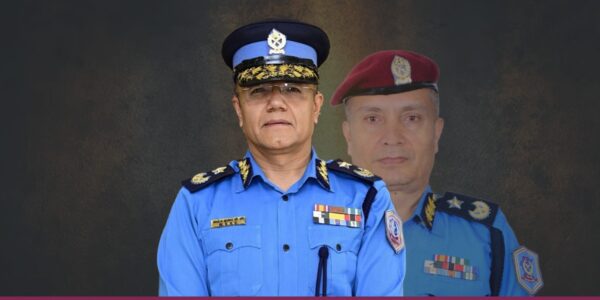
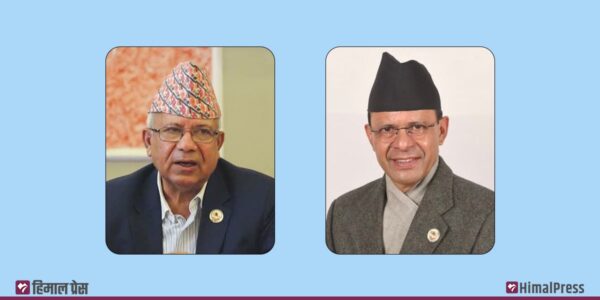
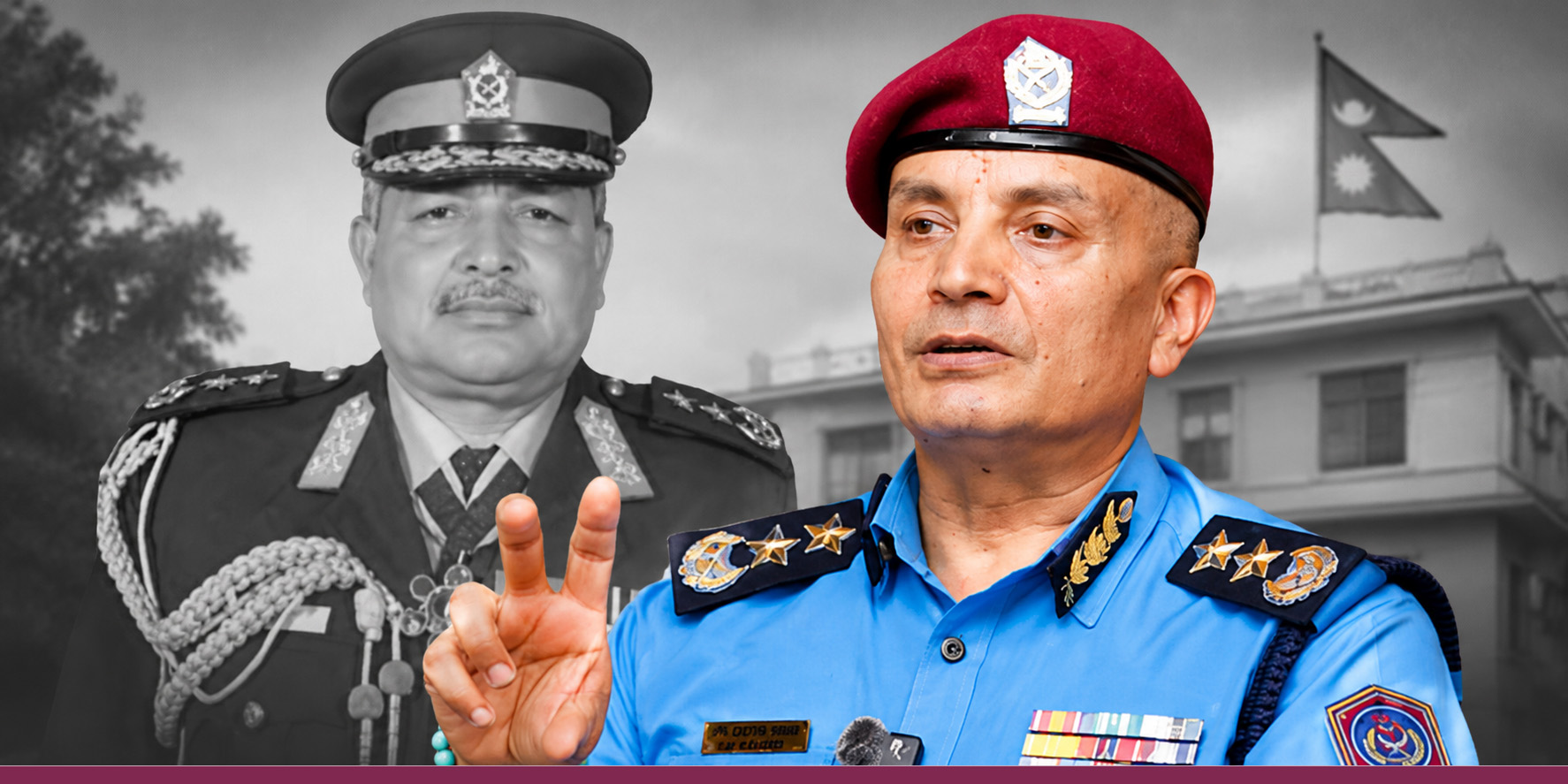 This combo photo shows former Inspector Generals of Nepal Police Achyut Krishna Kharel (left) and Dan Bahadur Karki
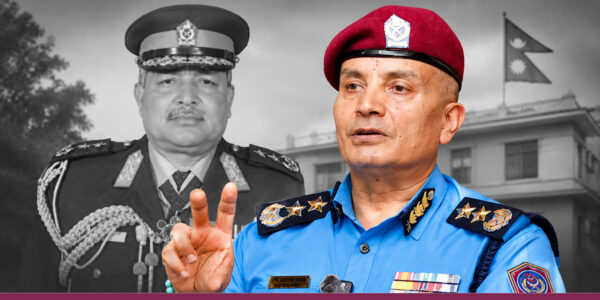
KATHMANDU: The government has removed Inspector General of Nepal Police Dan Bahadur Karki from his post and assigned him a new responsibility as the national security adviser to Prime Minister Balendra Shah. While the government has described the move as a reassignment rather than a dismissal, Karki has effectively lost his position as IGP. AIG Manoj Kumar KC has been appointed as the chief of the Nepal Police.
The decision has brought back memories of a similar incident nearly three decades ago. In March, 1997, the Lokendra Bahadur Chand government removed Achyut Krishna Kharel as the Nepal Police chief just 36 days after his appointment. Kharel was named chief of the National Investigation Department. He was replaced by Dhruva Bahadur Pradhan.
Kharel challenged the government’s decision in the Supreme Court. After the court overturned the decision, he was reinstated as the Inspector General in November of the same year. Pradhan was subsequently appointed special adviser to the prime minister.
In both cases, the government removed the serving inspector general from the leadership of the police organisation and assigned him another responsibility. This time, however, the government has sought to portray the decision as an assignment of a new responsibility rather than a dismissal.
According to Government Spokesperson Sasmit Pokharel, Karki was given the new responsibility after the government created a position to advise the prime minister on matters relating to peace and security.
However, the government’s explanation cannot sidestep the legal questions surrounding the decision. Regardless of the title or responsibilities of the new position, Karki is no longer the chief of Nepal Police. Another person has already been appointed to replace him. Therefore, the move cannot simply be regarded as an ordinary reassignment. Questions have also arisen over whether the government created a new position and transferred Karki to it to avoid the legal challenges that could have followed an outright dismissal.
Karki’s removal can be viewed from two perspectives. First, was the government dissatisfied with his working style and role within the police organisation? Second, was the decision prompted by his failure to act in accordance with the government’s directives or expectations? The government has not answered these questions. It has not clearly explained the reasons for changing the police leadership or justified the decision.
The timing of Karki’s removal also makes the controversy surrounding the procurement of uniforms for election police relevant. Allegations of irregularities have been raised in the purchase of uniforms for personnel recruited as election police for the House of Representatives election held on March 5.
In connection with the controversy, the Public Accounts Committee of the House of Representatives formed a nine-member subcommittee on October 2, 2026, under the leadership of ruling party lawmaker Manish Jha. After reviewing documents, the subcommittee has scheduled hearings and discussions with the concerned parties from November 17 to December 1. It has been given a deadline to submit its report by December 6.
The Commission for the Investigation of Abuse of Authority (CIAA) has also initiated a preliminary investigation into the matter.
Whether irregularities occurred in the procurement of election police uniforms is still under investigation. Security agencies have denied any wrongdoing, while complaints have alleged the misappropriation of a substantial amount of money. No one can be held guilty before the investigation reaches a conclusion. However, the change in police leadership while the investigation is underway has naturally raised questions. The government has not clarified whether Karki’s removal has any connection with the uniform procurement controversy.
Some have also linked Karki’s departure to police interference in media organisations last week. After news reports were published and broadcast about the possibility of Karki being removed as IGP, police teams visited media offices and arrested journalists. The police action raised questions about press freedom and the limits of police authority. Consequently, Karki’s removal is also being viewed in the context of both the ongoing investigation into the procurement of election police uniforms and police interference in media organisations. However, there is no confirmation that Karki was removed because of either of these incidents.
Karki’s removal is unusual. In terms of official rank, the position of security adviser to the prime minister may appear prestigious. However, the role of the police chief is different and significant in terms of the exercise of state power and executive influence. The inspector general leads the police organization, whereas an adviser provides recommendations to the prime minister. Therefore, a transfer from one position to the other cannot be understood as an ordinary promotion or change of responsibility.
The government has the authority to change the police leadership. But that authority must be exercised in accordance with established procedures, laws and institutional norms. The position of police chief is not one in which appointments or removals should be determined by the government’s political or personal convenience.
If the prime minister needed a security adviser, creating such a position would not have been unusual. But why was it necessary to remove the incumbent inspector general from his leadership position to fill that role? The government has failed to provide a convincing answer. Given the precedent set by the Kharel case, the government’s decision in the Karki episode could also be subjected to judicial review.
Senior Advocate Hari Prasad Upreti says Karki should challenge the government’s decision in court.
“Karki can go to court. I believe he will challenge the decision and seek judicial intervention,” Upreti told Himal Press over the phone.
Similarly, Advocate Rabindra Bhattarai says the government’s approach to removing Karki resembles the working style of the government led by former Prime Minister KP Sharma Oli.
“The government’s approach looks similar to that of KP Oli,” he said.
Bhattarai says Karki could obtain judicial relief, as Kharel did, if he approaches the court.
“The judiciary exists precisely because the government cannot be allowed to act arbitrarily. I believe Karki should also approach the courts,” he said.
Karki, however, has yet to say whether he will challenge the government’s decision in court or accept the new responsibility assigned to him. Sources close to him say Karki has begun consulting legal experts.