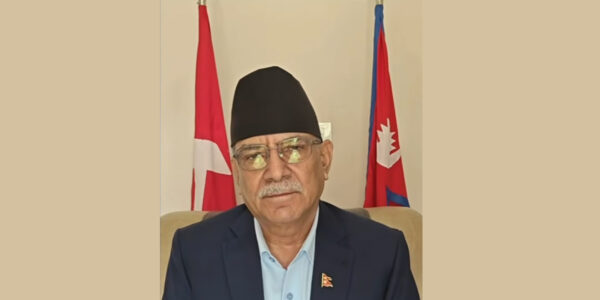
KATHMANDU: Former Prime Minister and Coordinator of the Nepali Communist Party (NCP) is changing his electoral constituency yet again.
Speaking at a party program in Rukum West last week, Dahal said he would contest the election from the neighboring Rukum East in the elections scheduled for March 5.
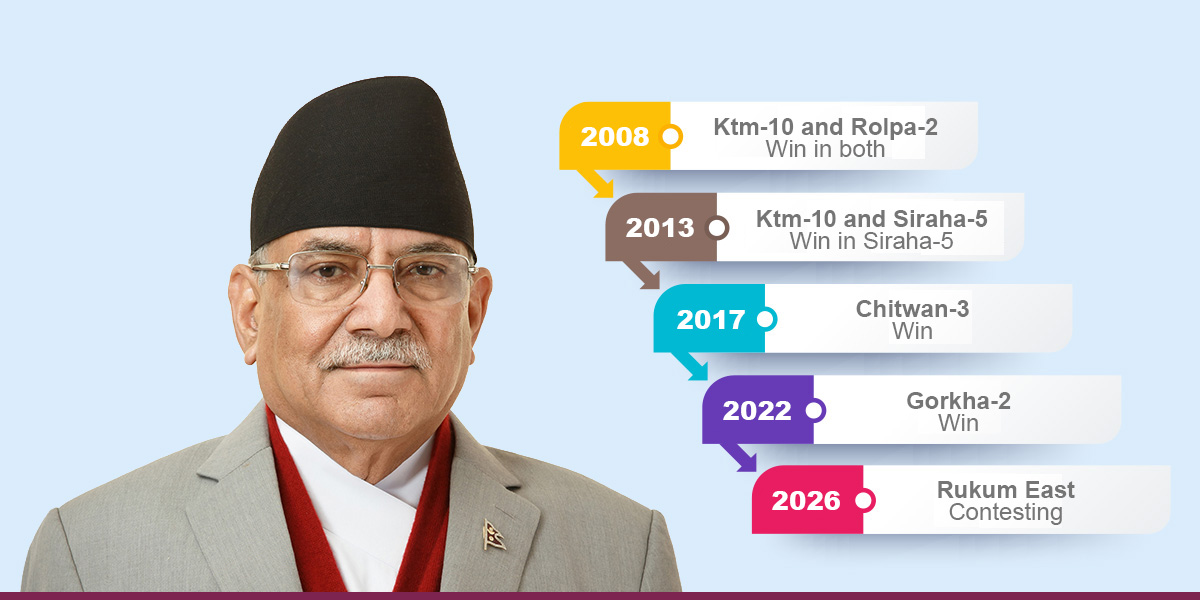
If Dahal indeed files his nomination from Rukum East on Tuesday, it will be his sixth district after Rolpa, Kathmandu, Chitwan, Siraha, and Gorkha. Likewise, it will be his sixth constituency after Kathmandu-10, Rolpa-2, Siraha-5, Chitwan-3, and Gorkha-2.
After joining the political mainstream following the end of the decade-long insurgency, Dahal contested the first Constituent Assembly election from two seats—Kathmandu-2 and Rolpa-2. He emerged victorious in both.
He again contested from two seats—Kathmandu-10 and Siraha-5—in 2013. He suffered a defeat in Kathmandu-10, but won with a slim margin of around 900 votes in Siraha-5. Dahal was accused of maneuvering the vote count to secure his win in Siraha.
The defeat in Kathmandu and a narrow win in Siraha prompted Dahal to change his constituency. In the 2017 elections, Dahal moved to his home district, Chitwan, and contested in the Chitwan-3 seat. Although he won the election by more than 9,000 votes, he moved to Gorkha in the 2022 elections in search of a safer constituency. He persuaded his insurgency-era colleague Dr Baburam Bhattarai, to leave his Gorkha-2 seat for him. Since he had the support of the Nepali Congress and a few left parties, he won the election with a margin of more than 13,000 votes. Despite such a commanding victory, he felt insecure and decided to change his electoral seat yet again. Now, he has decided to move to Rukum East—a Maoist heartland during the insurgency days.
Kathmandu-10 remains the only constituency he has contested more than once in his electoral history of more than 17 years.
Addressing a party program in Rukum East last week, Dahal said it was now certain that he would contest the election from Rukum East.
As in previous elections, Dahal distributed various assurances to voters. He said he remained committed to fulfilling the aspirations of the people of Rukum West as well. “I will take development and construction forward from a new perspective. I will come to share in the joys and sorrows of the people of Rukum,” he added.
There are several reasons why Dahal needs to go to Rukum East to contest this election. Maoist leaders argue that Dahal, being a national-level leader, contests elections from different constituencies. His critics, however, comment that he moves to new destinations in search of “safe” seats.
Rukum East is among the youngest districts of the country. It was created by splitting Rukum into two districts – Rukum East and Rukum West. Interestingly, Rukum East is in Lumbini Province, while Rukum West is in Karnali.
Based on geography and local administrative units, Rukum East is one of the smallest districts in Nepal. The district has just three local governments—Putha Uttarganga Rural Municipality, Bhume Rural Municipality, and Sisne Rural Municipality—and covers an area of 560 square kilometers. Some local units in Nepal are larger than this entire district.
Analysts say Dahal was drawn to Rukum East partly because of its small size and its history as a Maoist conflict-affected area. Journalist Ujir Magar, who covered Maoist insurgency for several Nepali media, said Maoists still retain influence in the district due to the impact of the armed conflict. “That is one of the reasons Dahal has gone to Rukum East,” he said. “Another reason is that the Maoists performed well here, even in the local elections. In the 2022 elections, the then Maoist Center won all three local units.”
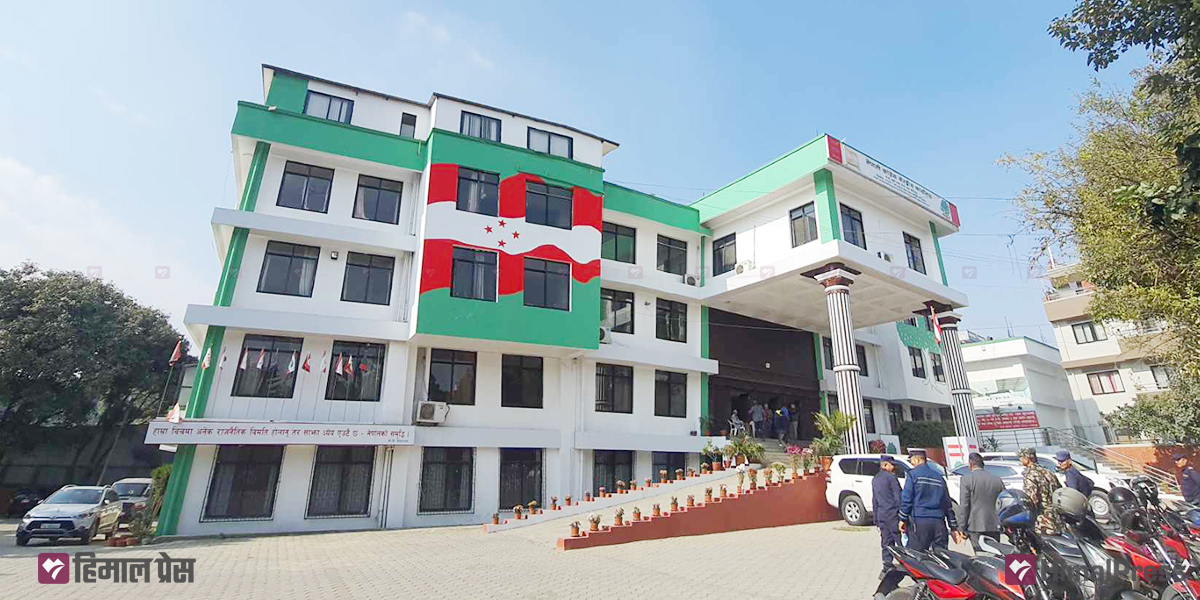
The Maoist Center has now merged with 17 parties to form the NCP.
In the 2022 House of Representatives elections, Maoist Centre candidate Purna Bahadur Gharti Magar, who had the support of the Nepali Congress and some left parties, was elected with 12,262 votes. UML candidate Kailash Kumar Malla received 5,211 votes.
Dahal had been recommended as a candidate from Kanchanpur, Rukum East, Rolpa, Gorkha, and Sindhuli districts.
Magar says Prachanda keeps changing constituencies for political safety. “Even though he is called a national-level leader, he has to keep changing constituencies to remain secure. This time as well, he chose Rukum because the influence of new parties is relatively weaker there,” he added.
Local NCP leaders, however, claim that he keeps changing constituencies at the request of the people. “The demand of the people here is that the district should represent the country at least once,” said Keshav Rawal of the NCP in Rukum East, told Himal Press. “There is also a desire on the part of the party coordinator to lead the country from the land of the revolution.”
Rawal rejected claims that Prachanda came to Rukum in search of a safe seat. “Jajarkot would have been safer for him than Rukum. But he came here for the people,” Rawal said. “During the conflict, people wanted to see Dahal’s face. Even now, families of the disappeared and conflict-affected people want Dahal.”