
JANAKPURDHAM: The agreement and proposed unification process between the Janata Samajwadi Party (JSP) Nepal and the Loktantrik Samajwadi Party (LSP) Nepal has run into controversy following the filing of candidacies for the National Assembly elections.
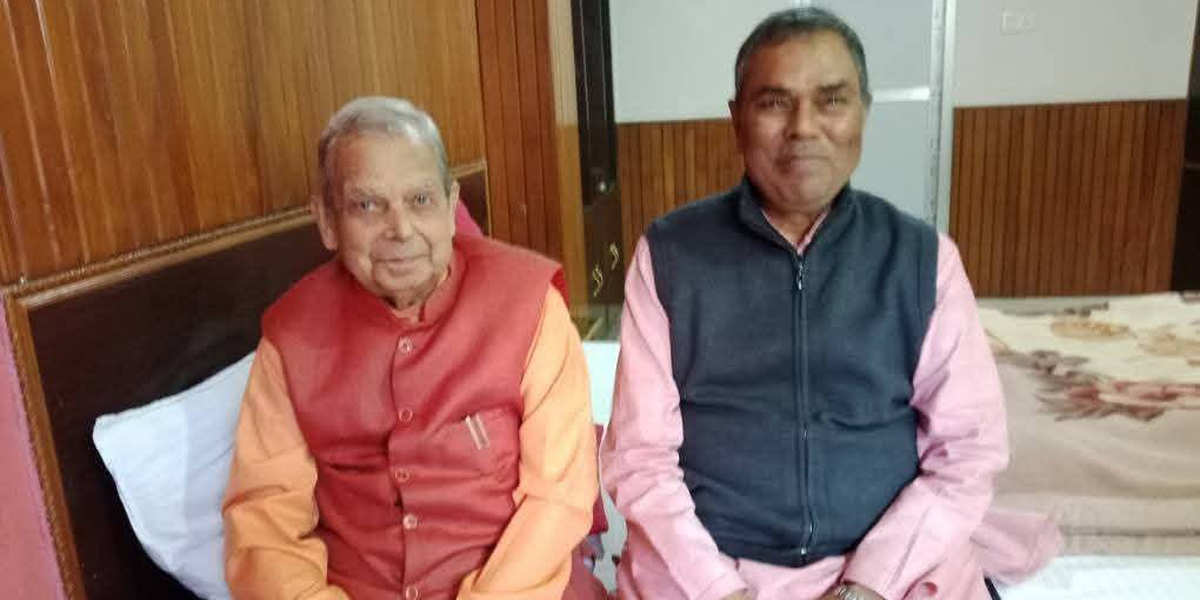
Since the proposed unification is yet to take a concrete shape, the candidacy of LSP Nepal Chairperson Mahantha Thakur for a National Assembly seat appears to be at risk. Thakur, who has filed his candidacy for the National Assembly from Madhesh Province, is facing uncertainty due to what is being described as JSP Nepal’s bargaining politics.
The alliance of Nepali Congress (NC) and CPN-UML had allocated one National Assembly seat to JSP Nepal on the assumption that JSP Nepal and LSP had already unified. In discussions between four parties, an agreement had been reached to field Thakur as the National Assembly candidate, while the alliance parties, with the NC and UML getting two and one seat, respectively.
In line with this agreement, Thakur filed his candidacy for the National Assembly from ‘others’ cluster.
However, contrary to the agreement with the alliance, JSP Nepal filed nominations for three more seats. Shailesh Chaudhary has filed a nomination from the minority cluster, Chandrakala Sah from the women’s cluster, and Chameli Devi Das from the Dalit cluster.
Meanwhile, the NC–UML alliance has fielded Ranjit Karn (NC) from the minority cluster, Dharmendra Paswan (NC) from the Dalit cluster, and Rekha Jha (UML) from the women’s cluster.
Analysts say that if JSP Nepal does not withdraw its candidacies, the alliance’s support will be split, which will directly affect Thakur’s prospects in the election. They say JSP Nepal’s bargaining strategy could not only lead to the defeat of its own candidates but also prompt the NC–UML alliance to withdraw support for Thakur altogether.
Moreover, Thakur, who currently enjoys support from both the NC–UML alliance and JSP Nepal, may find it difficult to openly side with any one group for the other three seats. If he aligns with the NC–UML alliance, JSP Nepal is likely to be alienated; if he supports JSP Nepal’s candidates, the NC–UML alliance may not vote for him. Aligning with JSP Nepal would almost certainly cost Thakur NC–UML votes.
LSP leader Parmeshwar Sah said that although a decision to unify JSP Nepal and LSP Nepal had been made, the process has yet to be completed. “While both parties have decided to unify, the remaining procedures are still pending, and the unification has not taken concrete shape,” he added.
Sah added that following the unification agreement, Thakur was made a National Assembly candidate on the advice of the NC–UML alliance. “Thakur has the support of the NC, UML, and JSP Nepal. No other candidate has been fielded in his cluster,” he said. “Questions about why JSP Nepal filed additional candidates should be directed to the party itself.”
On the other hand, JSP Nepal secretary Shailendra Sah rejected claims that the two parties had already unified. He said that while a political decision to unify had been made, the formal process had not been completed.
According to him, JSP Nepal supported Thakur’s candidacy and also sought an additional seat from the NC–UML alliance. “We have supported Thakur in line with the alliance agreement, but due to some unresolved technical issues, we filed our own candidacies,” Sah said. “There was an understanding that JSP Nepal would get two seats from the NC alliance. If another seat is given to us, we will withdraw our candidates; otherwise, they will remain.”
Analysts say JSP Nepal’s bargaining strategy, using Thakur as leverage, has signalled that the unification process between the two parties is driven more by strategic necessity than political trust. On the one hand, the unification agreement is being used to secure a seat from the alliance, while on the other, pressure is being applied for additional seats.
Analysts warn that this dual strategy could weaken not only JSP Nepal and LSP Nepal candidates in the National Assembly elections but also the entire unification process between the two parties.
Political analyst Dr Sushil Yadav said the dispute seen in the National Assembly election is not merely about a single seat. “It is not just a matter of whether JSP Nepal withdraws its candidates or whether the alliance decides to give it another seat,” Yadav said. “The future of the JSP Nepal–LSP Nepal unification will shape the final election results and the direction of Madhesh politics in the days ahead.”
JSP Nepal and LSP Nepal reached an understanding for party unification on December 28. However, the very next day, both parties submitted separate proportional representation closed lists to the Election Commission for the House of Representatives election.
They later agreed to keep separate candidacies temporarily, with provisions to amend the closed lists by January 11. Amid all this, JSP Nepal fielded candidates for the National Assembly elections, going against the earlier agreement.
Even before the decision to unify with JSP Nepal, LSP Nepal had reached unification agreements with the Janata Pragatisheel Party led by Hridayesh Tripathi and the Terai Madhesh Loktantrik Party led by Brijesh Chandra Lal.
Sources say that despite the decision to unify JSP Nepal and LSP Nepal, the process has stalled due to disputes over the authorized leader of the merged party. LSP Nepal is insisting that Thakur should be the authorized leader.