 Himal Press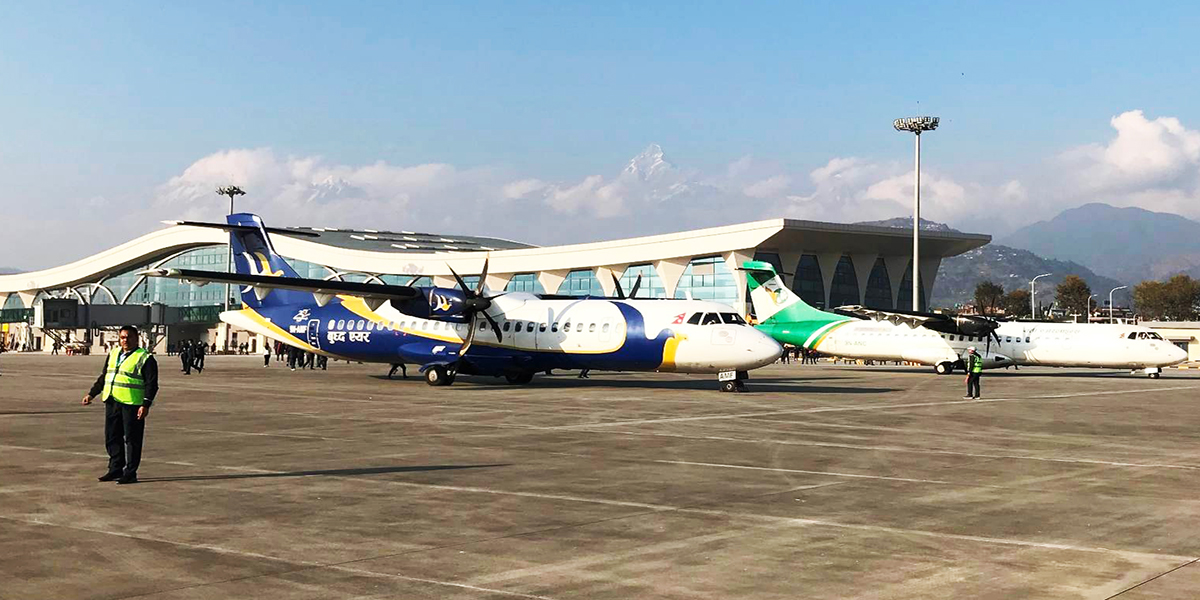
KATHMANDU: Only 21 of the 55 airports in Nepal are currently in operation.
According to the 2025 Annual Report of the Civil Aviation Airport, even airports with paved runways have remained out of operation for years.
Officials attribute the low operational rate largely to the long-standing practice of constructing airports to appease voters without conducting proper feasibility studies. In some cases, airports have also ceased operations because of reduced demand due to the availability of reliable surface transport. Some airfields like Syangboche (Solukhumbu), Manang, Jiri (Dolakha), Lantang (Rasuwa) and Palungtar (Gorkha) have remained non-operational for more than a decade.
Of the country’s 55 airports, 52 are domestic and three are international—Tribhuvan International Airport (TIA) in Kathmandu, Gautam Buddha International Airport (GBIA) in Bhairahawa, and Pokhara International Airport. Among the domestic facilities, Biratnagar and Nepalgunj airports serve as hub airports, supporting flight operations to and from short take-off and landing (STOL) airfields in hilly and mountainous districts.
Similarly, 41 out of the 52 domestic airports are STOL airfields, while the remaining are classified as Type-C airports.
According to the report, a total of 42 airports, including all three international airports, have paved runways. However, several paved airports—such as Baitadi, Baglung, Chaurjahari, Doti, Manang, Kalikot, Lamidanda in Khotang, and Dolpa’s Masinechaur—have remained non-operational for years.
In terms of operational capacity, only 10 airports currently have night-landing facilities. These include Tribhuvan International Airport, Gautam Buddha International Airport, Pokhara International Airport, Biratnagar, Chandragadhi, Dhangadhi, Janakpur, Nepalgunj, Simara and Rajbiraj airports.
Similarly, just 17 of the country’s 55 airports are equipped with REF (reference) facilities, which are essential for safe and regular flight operations. REF facilities encompass aviation infrastructure such as navigation aids, air traffic control services, weather observation systems, runway specifications and ground-handling standards.