 Himal Press
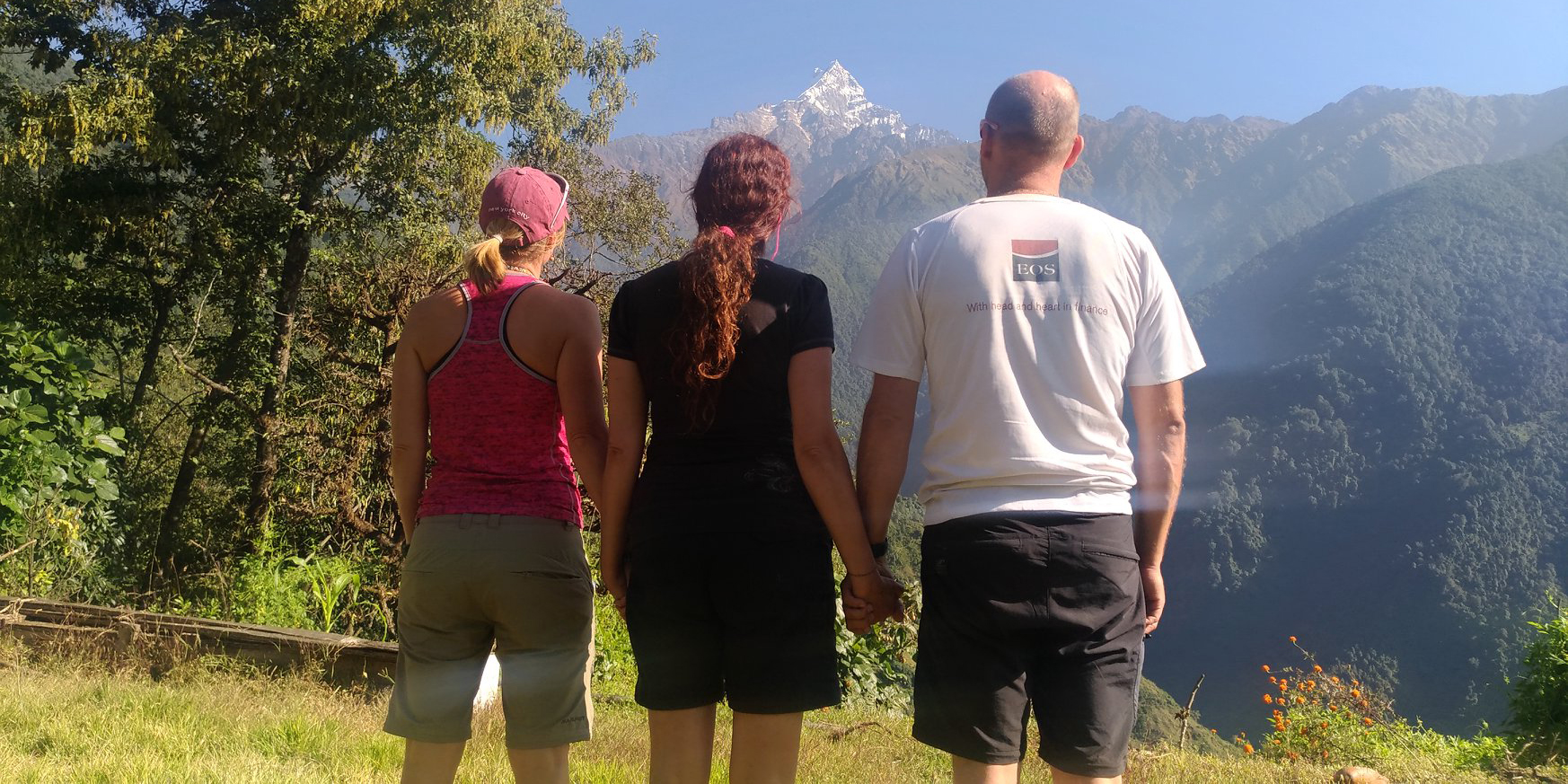
 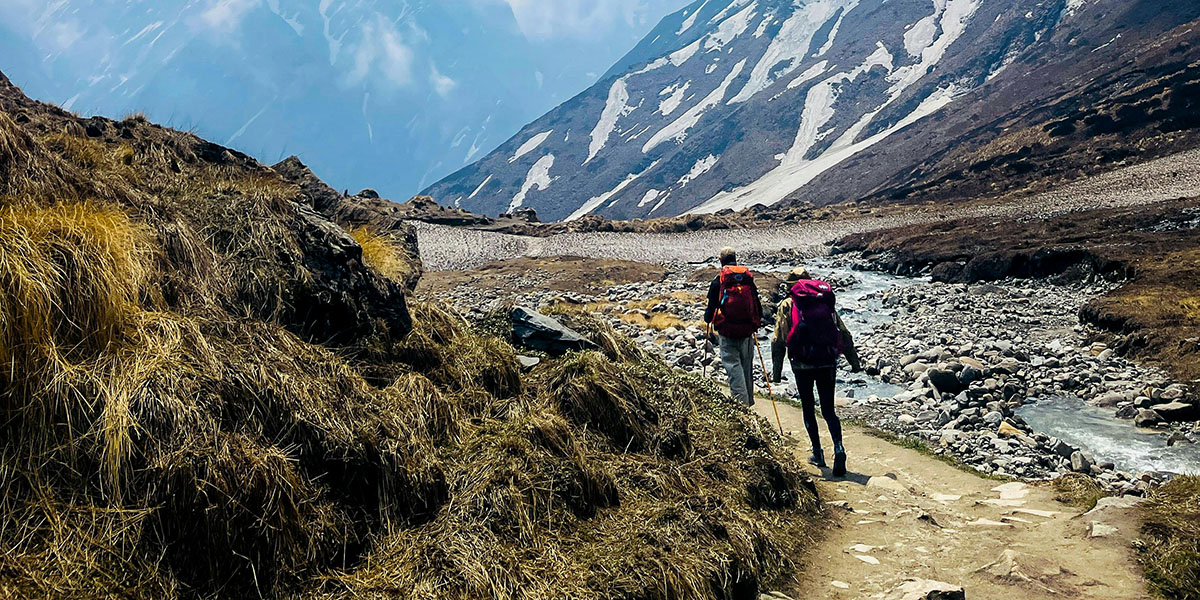 Trekkers in the Annapurna Region. (Photo Courtesy: Pexels)
KATHMANDU: The government has introduced a new framework to classify and regulate walking trails across Nepal, categorising them into three types — Hiking, Easy and Adventure.
The Walking Trails Standard Guidelines, 2025, issued by the Ministry of Culture, Tourism and Civil Aviation, has also set detailed standards for infrastructure, safety, and the roles of different tiers of government in the development of walking trails.
Although Nepal is known for its variety of walking trails – from the lowlands of the Tarai to the Maharbharat range and the Himalayan foothills, this is the first attempt of the government to classify them based on their altitude and length.
According to the new classification, walking routes of at least five kilometres that can be completed within a day are defined as Hiking Trails. Similarly, multi-day trails reaching altitudes of up to 3,000 metres are categorised as Easy Trails, while multi-day routes lying above 3,000 metres have been designated Adventure Trails.
The guidelines have assigned investment and management responsibilities for walking trails to all three levels of government. Local governments will oversee Hiking Trails, provincial governments will handle Easy Trails, and the federal government will be responsible for Adventure Trails.
The guidelines have also set width standards for each category. Hiking and Easy Trails must be at least two meters wide, while Adventure Trails should have a minimum width of 1.5 metres. Step height along the trail should range between 14 and 20 centimetres.
All walking trails must include essential facilities such as drinking water, resting places, information centres, toilets, waste management infrastructure, and safety and rescue services. They must also have signposts, arrow directions, caution signs in risky areas, and safety fixtures like railings, ropes, or chains where needed. Trails should also have eateries/cafes every five kilometers. Likewise, each trail must have a designated helipad and contact person for rescue purposes.
According to the guidelines, facilities such as homestays, hotels, lodges, restaurants, cafeterias and camping sites should be developed on the trail in coordination with the private sector.
For safety, local bodies must coordinate with local administration, protected area offices, community groups and tourist police to ensure effective risk management and emergency rescue operations.
Details of all walking trails should be forwarded to the Department of Tourism for documentation purposes.