
 All photos: Birendra Gautam
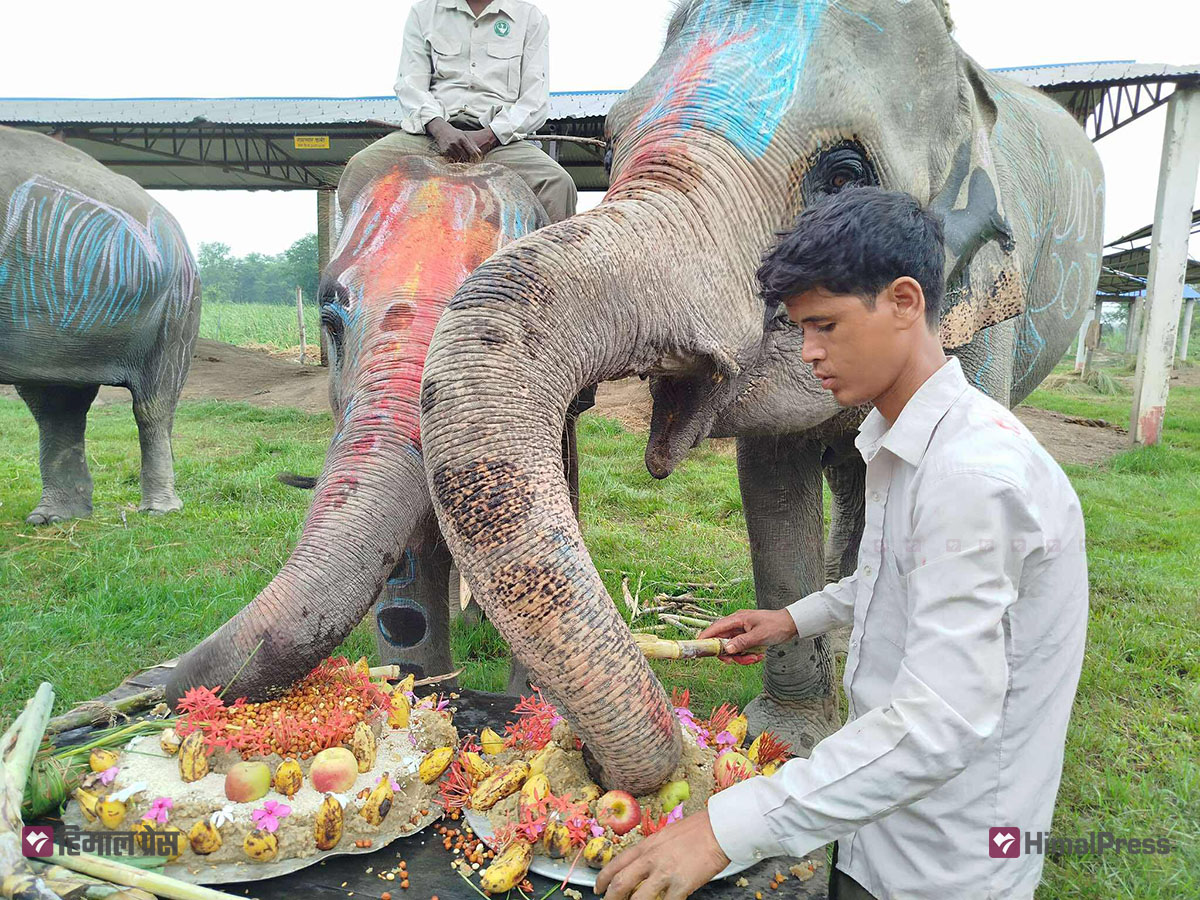
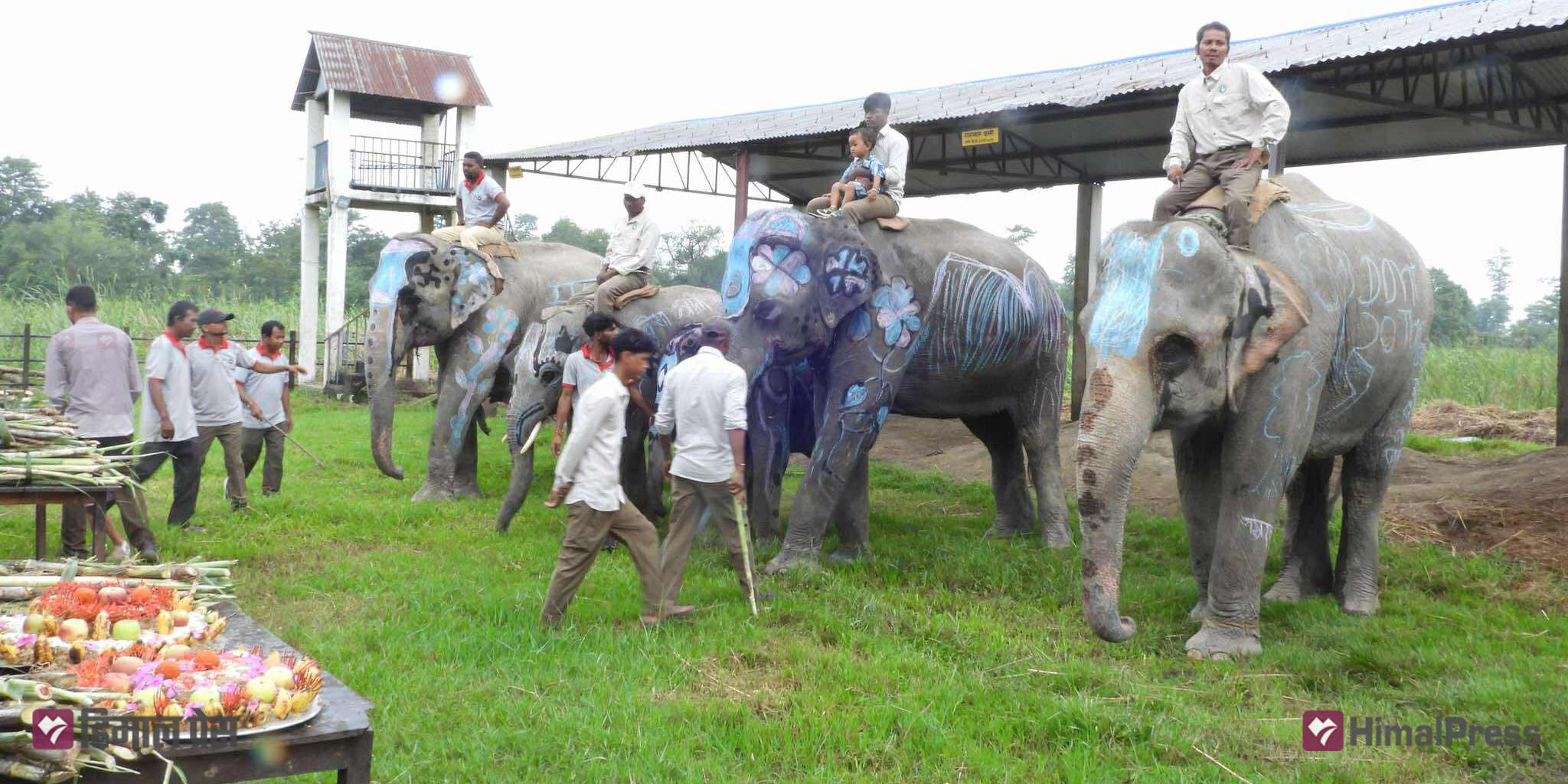
ITAHARI: Rice pudding, fruits and sugarcane were placed at the elephant feeding site at the Koshi Tappur Wildlife Reserve in Sunsari on Tuesday. The elephants slowly approached the feeding area and picked their treats using their feet and trunks, delighting tourists and locals with their playful behavior.
Nepal has been observing World Elephant Day annually on August 12 since 2012 to raise awareness about the existence and importance of elephants. Birendra Gautam, head of the Koshi Conservation Center under the National Trust for Nature Conservation (NTNC) said World Elephant Day is a pledge to protect elephants. “Elephants are not only part of our natural heritage but also an integral element of our culture. Active participation from everyone is essential for their conservation,” he added.
Gautam also said that increased public awareness about elephant behavior can reduce human-elephant conflicts. “I have seen changes in people’s perception about elephants. They are now seen not just as wild animals but as unique gifts of nature,” he added.
Although human-elephant conflicts have increased in the eastern Tarai region due to the construction of settlements, roads and other infrastructure along elephant corridors, wild elephants can be seen roaming freely in Koshi Tappu Wildlife Reserve. “People from not only Koshi and Madhesh provinces but also from India are coming to Koshi Tapput to see wild elephants up close,” said Gautam.
Since 2000, 345 people have died from elephant attacks in Nepal, while 55 elephants have died due to electrocution, gunshots and other causes.
Ankit Paudel, a ranger at the wildlife reserve, said there are currently 10 elephants in the reserve. “Their presence makes the reserve unique both in terms of conservation and tourism,” Paudel added.
Likewise, Jung Bahadur Khadka, chairperson of the Koshi Tappu Buffer Zone Management Committee, urged everyone to make unified efforts to minimize damage to crops, farmland and property. “All concerned stakeholders must work together to reduce human-elephant conflict,” he said.
Since 2000, 345 people have died from elephant attacks in Nepal, while 55 elephants have died due to electrocution, gunshots and other causes. Eleven elephants have died in Koshi in the past 12 years alone.
According to Gautam, the most recent elephant deaths were caused by electrocution and some by gunshots. He attributed these fatalities to human negligence and a lack of awareness about elephant behavior. “Elephant deaths can be prevented by increasing public awareness,” he said. “Awareness is key to peaceful coexistence between humans and elephants.”
Conservationists say protecting elephants is important for biodiversity, cultural heritage and maintaining environmental balance.