
In the 1960s, shortly after the Sino-Indian War, King Mahendra requested China’s support for the East-West Highway construction. While China allocated resources for the project, India strongly objected, insisting that Nepal should not allow Chinese involvement, particularly because the proposed highway would run close to the Indian border.
India responded by constructing a 256-km section of the highway, from Dhalkebar to Kakarbhitta, signaling its refusal to accept any Chinese presence in the area.
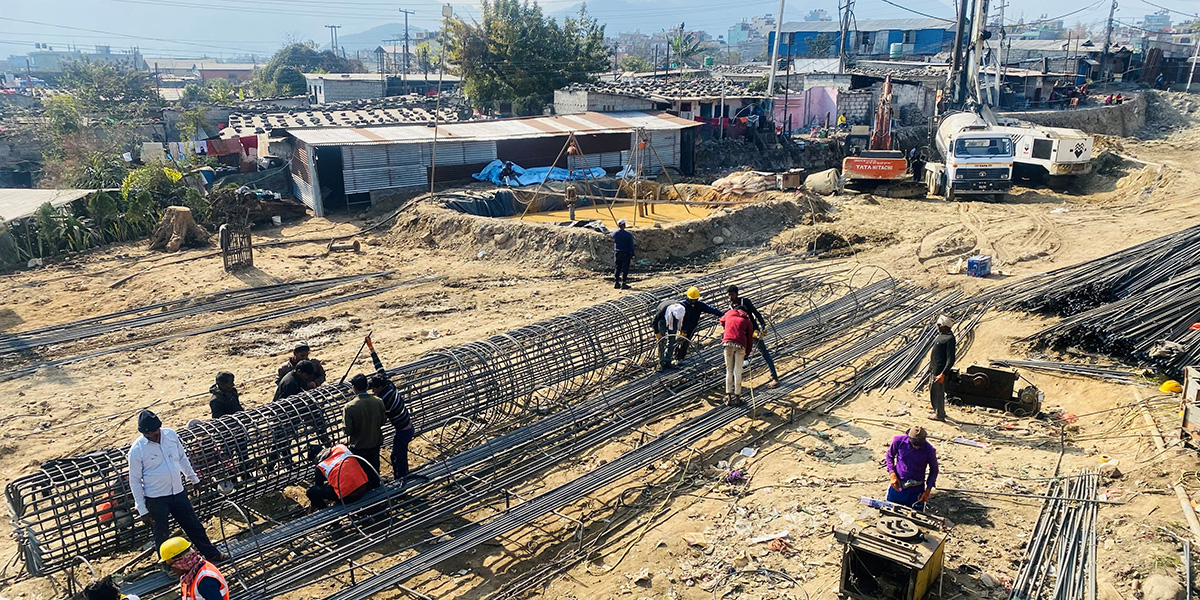
Today, multiple Chinese construction companies have been awarded contracts to upgrade different sections of the East-West Highway. Chinese activities at the community level in Madhesh Province are also on the rise. However, progress on the highway upgrade has been sluggish. For example, the China Railway No. 2 Engineering Group, which has been awarded the contract for the Kanchanpur–Kamala section in Siraha, Madhesh Province, has been accused of illegally extracting riverbed materials from protected rivers. Such activities have not ceased, even though the matter has been brought before parliament and the judiciary. Chinese workers and contractors have set up camps in various parts of Siraha and can often be seen roaming near border areas.
In geopolitics, timing and geostrategic location are very critical. Nepal’s open border with India and China’s growing presence in the southern plains must be viewed through this lens.
Security Dilemma in the Southern Plains
Since Nepal is a landlocked country located between two major powers, India and China, its geopolitical sensitivity attracts constant scrutiny. China seeks a commitment from the Nepali political leadership that no third country should use Nepali territory against it. Yet, Beijing appears less concerned about respecting the security concerns of others.
In recent years, there has been a growing trend of Chinese nationals entering India through Nepal under suspicious circumstances. For instance, on May 28, two Chinese nationals, Wu Hailong (38) and Sheng Jun Yong (30), were arrested by India’s Sashastra Seema Bal (SSB) at the Pipraun-Jatahi border while crossing the no-man’s land near border pillar number 284/35. According to SSB, Wu’s phone contained more than 50 anti-India and pro-Khalistani videos downloaded from the Internet. The two were also found filming the border area.
Earlier, on May 17, another Chinese citizen, Yu Shichao, was detained by the SSB while trying to enter India via Bariyarpatti Rural Municipality in Siraha. That same month, Indian security forces in East Champaran, Bihar, arrested five Chinese nationals attempting to cross from Birgunj into India.
It is surprising to see China expanding its presence in Madhesh Province, which shares its border with India. Any growing Chinese presence near the Indian border inevitably raises security concerns. In March, several Chinese nationals on tourist visas were found livestreaming from Chandrapur Municipality in Rautahat while conducting unauthorized Chinese language classes for over 200 children.
These are just a few examples that show the increasing number of Chinese citizens using Nepal’s southern plains to enter India illegally. In contrast, the difficult terrain and security restrictions along the Nepal-China border often discourage even Nepali citizens from venturing there.
Given 70 years of diplomatic relations, it is natural for China to expand cultural relations with Nepal. In 2009, a Chinese language program was jointly launched at Janata Secondary School in Itahari by Chinese Ambassador Qiu Guohong and Minister for Constituent Assembly, Parliamentary Affairs and Culture, Minendra Rijal. However, the lack of transparency and oversight in more recent cases, like the one in Rautahat, underscores Nepal’s failure to account for the growing security dimension of Chinese engagement.
Soft power in motion
While Chinese NGOs have been active in Nepal for years, their formal operations began only at around 2015. Recently, their influence has expanded into Madhesh Province and other parts of Nepal’s southern belt. In March 2024, under the banner of the China Foundation for Rural Development (CFRD), the Chinese Ambassador distributed educational materials in schools in Sarlahi and Rautahat.
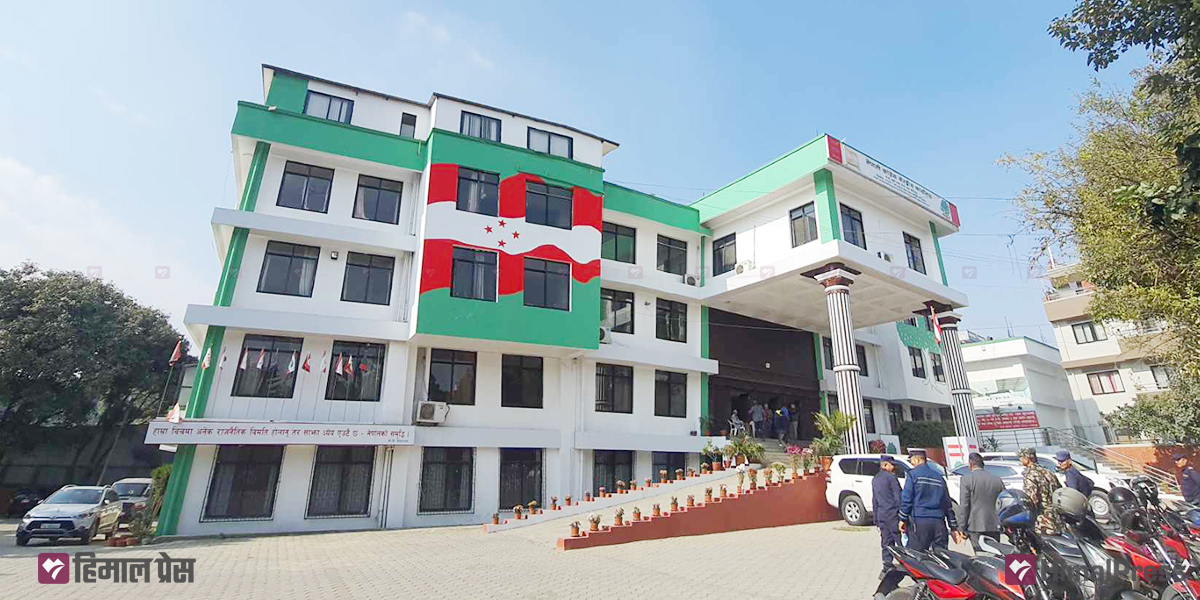
CFRD recently expanded its activities to Dhanusha, supporting local schools and the Madhesh Provincial Hospital. Its growing influence, especially in areas politically aligned with the CPN-UML, is quite significant. Prominent leaders such as Saroj Kumar Yadav, Ishwar Pokharel and Julie Mahaseth have publicly endorsed CFRD’s initiatives.
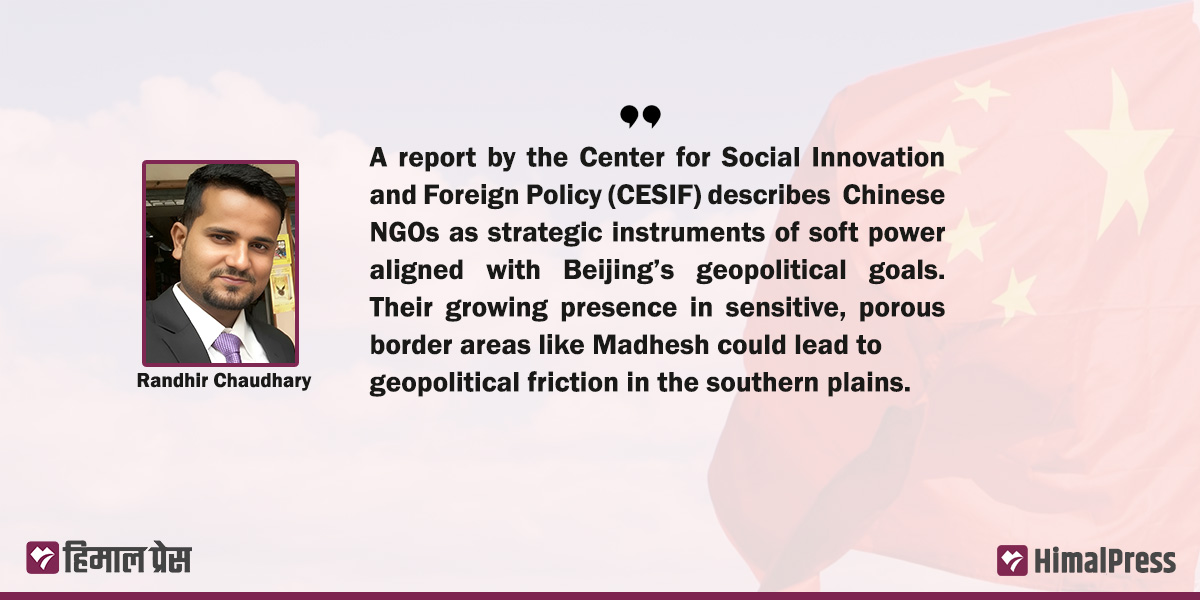
A report by the Center for Social Innovation and Foreign Policy (CESIF) describes Chinese NGOs as strategic instruments of soft power aligned with Beijing’s geopolitical goals. Their growing presence in sensitive, porous border areas like Madhesh could lead to geopolitical friction in the southern plains.
Nepal’s communist movement has long been rooted in Maoist ideology. It has drawn inspiration from Indian leaders of the Naxalbari movement, such as Charu Majumdar. The 1969 Jhapa Rebellion, a major milestone in Nepal’s leftist political evolution, was influenced by these ideas and eventually gave rise to senior leaders of the present-day CPN-UML.
Historical records also indicate that Maoist radicals, with covert backing from China, used Nepali territory to support insurgent activity in India’s “Chicken’s Neck” region, a 17-kilometer strategic corridor between Nepal and Bangladesh, especially after the Sino-Indian war.
Today, India remains highly alert about border security, especially in the aftermath of incidents like the recent terrorist attack in Pahalgam, Kashmir. This has heightened India’s sensitivity to Chinese engagement in Nepal’s borderlands.
As Chinese involvement, both official and unofficial, deepens in the southern plains, the security dilemma facing the country becomes more complex. While economic and cultural cooperation with China may offer opportunities, unchecked expansion and inadequate oversight risk undermining Nepal’s delicate geopolitical balance.
(The author is an independent researcher. He can be reached for comments at X.com/randhirJNK)