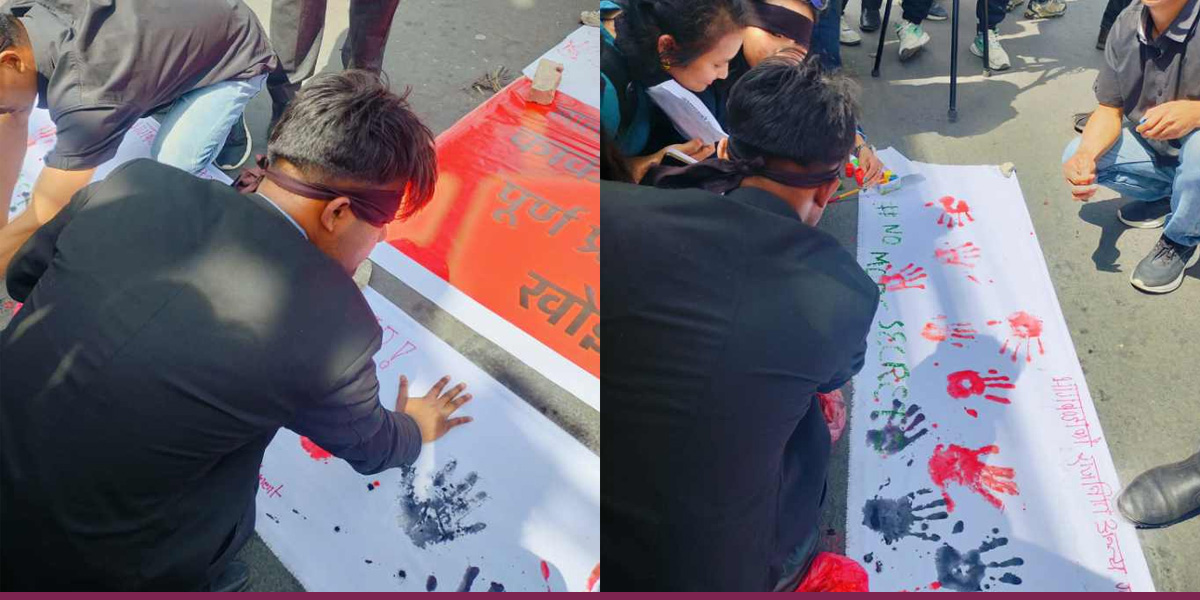
 Photo: Himal Press
KATHMANDU: Gen Z youths, who played a decisive role in toppling the government led by KP Sharma Oli through the September protests last year, have once again taken to the streets.
They have expressed anger after the interim government led by Sushila Karki, which was formed with their support, failed to make the report of the high-level commission probing the incidents of September 8 and 9 public.
The government had formed a three-member commission under the leadership of former judge Gauri Bahadur Karki to probe the incidents. The commission submitted its report to the government on March 8.
While handing over the report to the Prime Minister, commission chair Karki had warned that another uprising could occur if the report was not made public. However, the government has yet to release it.
After repeated requests from Gen Z activists to make the report public went unheard, they launched protests, chanting slogans such as “Where is the full report of the Karki Commission?” on the streets.
The protesters had demanded that the Cabinet meeting on Sunday decide to make the report public. But the meeting only decided to accept the report.
“We are not asking for anything else. We only want the report to be released,” Gen Z activist Raksha Bam said at Maitighar Mandala. “Why is the government hiding the report? We deserve to know.”
Another activist, Amit Khanal, says people have the right to see the report. “Why isn’t it being made public? The responsibility of a democratic government is not only to conduct elections. It must also investigate the incidents of September 8 and 9 in a fair, transparent, and serious manner,” he added.
Several reports of similar inquiry commissions formed in the past have also not been published. Because of this, the public has never been informed about those found responsible in such investigations.
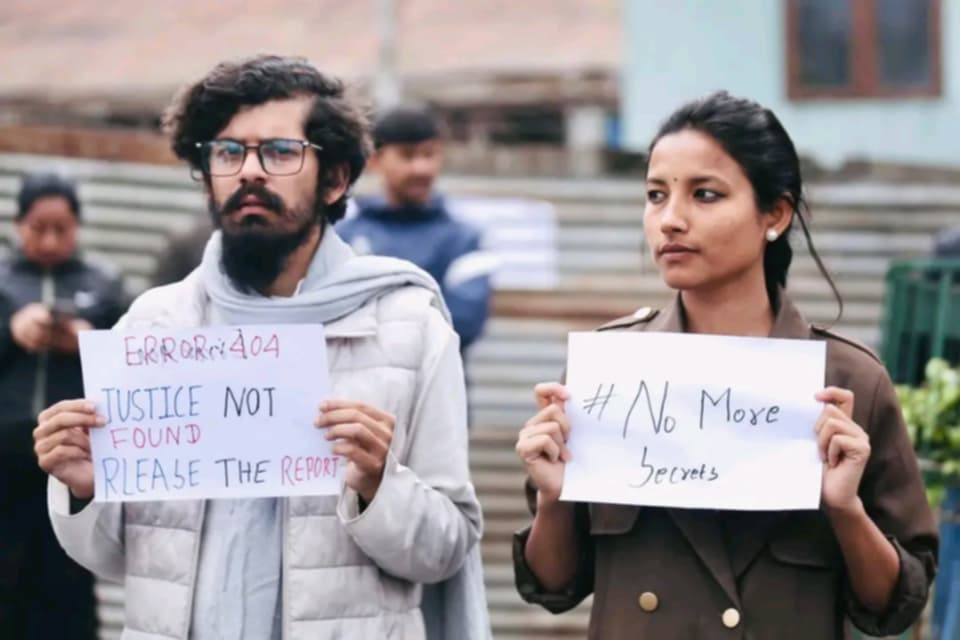
“Things are happening just like before. Our demands are not being heard,” said activist Monika Niraula. “The Karki government should have shown courage, but we don’t know why it is being delayed.”
Niraula suspects the report has not been released because it may mention names related to future members of the House of Representatives or a possible prime minister.
Former Kathmandu Mayor Balendra Shah is set to lead the new government, and there are suspicions that he may have been involved in the Gen Z movement from behind the scenes.
“It seems that the report has not been made public because of pressure from both old and new power centers,” he said, adding that media reports suggested that some newly elected lawmakers might also be implicated. “Despite our repeated pressures, the government has not listened. There must be some kind of pressure on it.”
Activists fear that if the current government does not release the report, the next government may not show interest either.
Some decisions taken by Sunday’s cabinet have further angered the protesters. The decision to recommend the appointment of Home Minister Om Prakash Aryal as a member of the National Assembly and the Prime Minister’s decision to appoint her personal secretary, Adarsha Kumar Shrestha, as chairperson of the National Trust for Nature Conservation have irked activists.
Karki had become prime minister with the support of the Gen Z movement, and many expected the new government to act differently from past administrations. However, activists say the government failed from the beginning. Neither Prime Minister Karki nor any minister has made their property details public.
“We protested against nepotism in politics, but the same thing is happening again,” said Niraula. “Only the faces changed; the tendency has remained the same. How can the prime minister be considered different from others?”
Activists say their movement was against nepotism and favoritism in political parties. “My friends were shot in the chest and head while chanting slogans for good governance and against nepotism and favoritism. Thousands of us came to the streets together. Do you know why?” said Raksha Bam. “It was for the dream that this country could finally breathe the air of good governance—even if slowly—not so that prime ministers and ministers could distribute positions in councils, departments, or committees as farewell gifts to their own people.”

![CAN announces dates for two WCL 2 tri-series [With fixtures]](https://en.himalpress.com/wp-content/uploads/2026/04/WCL-2-triseries.jpg)