 Himal Press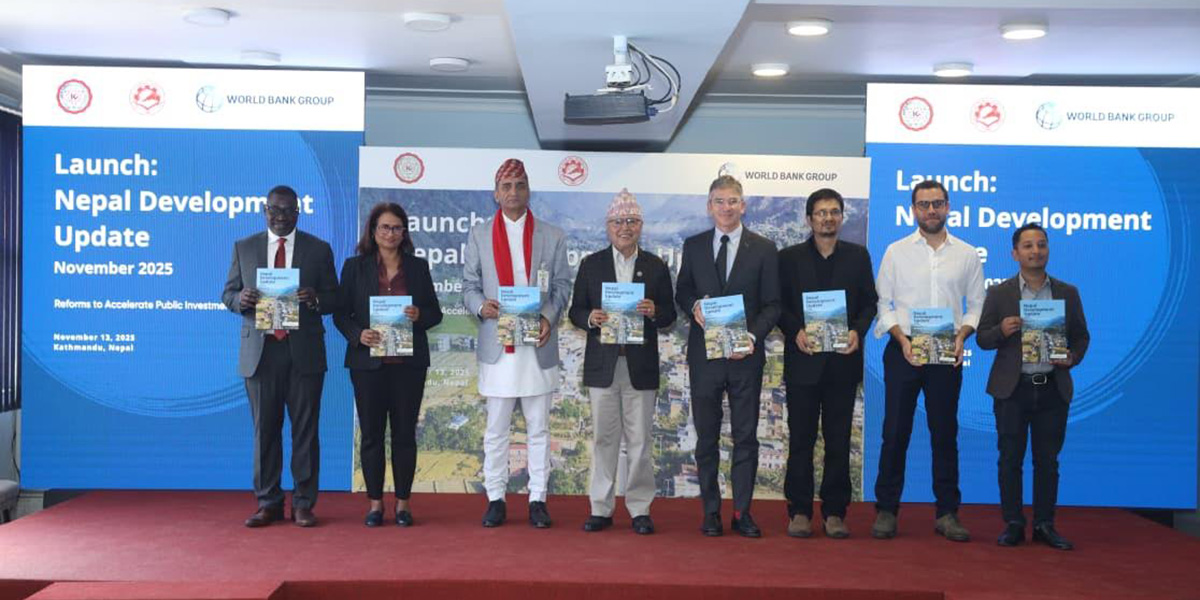
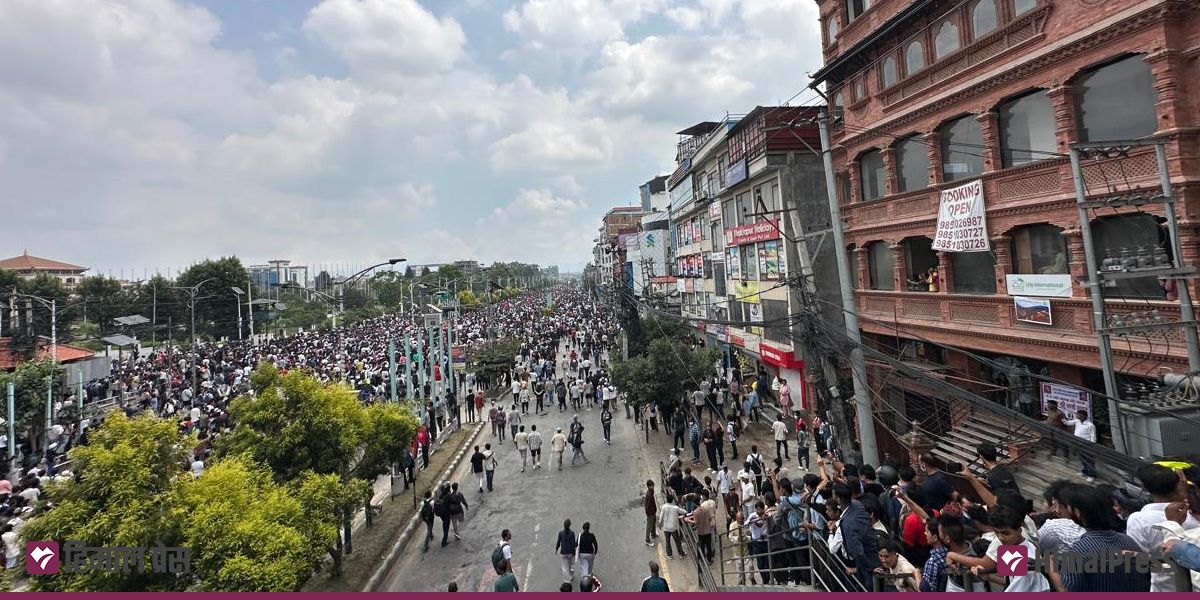
KATHMANDU: Nepal’s economic growth is projected to slow to 2.1% in 2025/26 from 4.6% in 2024/25, reflecting the impact of the September 2025 public unrest and ensuing political instability, according to the World Bank’s latest economic update released on Thursday.
The reconstruction efforts, however, are projected to support a rebound to 4.7% in the next fiscal year, the World Bank said in its Nepal Development Update: Reforms to Accelerate Public Investment report.
The report states that the services sector is expected to be the most affected. “The outlook remains highly uncertain. On the upside, a successful political transition and sustained sound economic management could strengthen investor sentiment, supporting a stronger economic recovery. On the downside, continued uncertainty could weaken investor sentiment,” the multilateral lender said.
Minister for Finance Rameshore Prasad Khanal said the government has launched an Integrated Business Recovery Plan, offering grants, tax incentives, and operational support to restore business confidence and accelerate recovery. “Public resources have been reprioritized toward infrastructure rehabilitation and election preparations, and a Reconstruction Fund has been established to help restore damaged public and private assets. These initiatives aim to reinvigorate private sector activity while laying the foundation for a more resilient economy,” he added.
Beyond immediate recovery measures, the report has underlined the need to strengthen public investment management to spur higher long-term growth.
In 2024/25, the government’s capital spending across the federal, provincial, and local levels stood at 7.9% of GDP, well below the 10-15% of GDP annual investment required to meet Nepal’s infrastructure needs.
David Sislen, World Bank Division Director for Maldives, Nepal, and Sri Lanka, said increasing public investment is critical for boosting growth, creating jobs, and building prosperity for Nepalis. “This requires implementing key reforms, including strengthening project planning and budgeting, streamlining land acquisition and tree-cutting processes, improving cash management efficiency, and amending procurement laws and regulations to speed up project delivery,” he added