 Himal Press
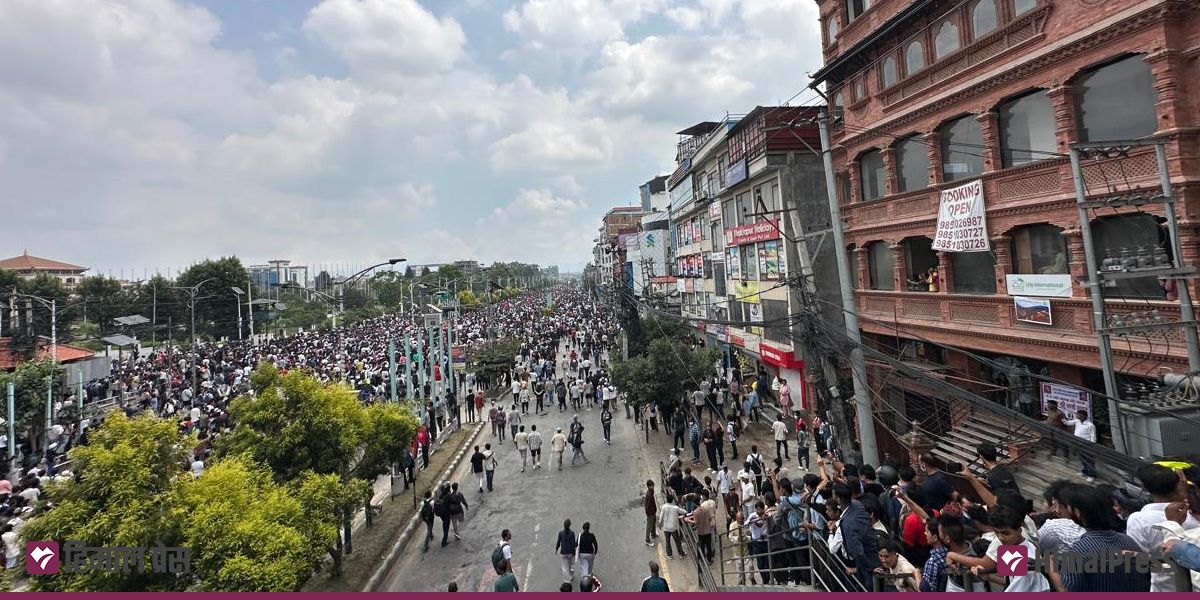
As voting concludes for a new House of Representatives, the nation owes a moment of reflection and gratitude to Sushila Karki, who has completed her historic responsibility as interim Prime Minister. At a time when the country was reeling from political uncertainty following the September 8 and 9 protests last year, few would have imagined that Nepal would arrive at this stage with the electoral process completed in a largely peaceful and orderly manner.
The fluid political environment, public anger, and institutional distrust had made the task daunting. With prisoners still at large after jailbreaks during the protest and many of the weapons looted by protesters yet to be returned to security agencies, the prospects for holding elections had looked grim. Senior leaders of three major parties were boycotting meetings called by the Election Commission to prepare for the elections. In such a situation, Prime Minister Karki took the initiative to listen to their grievances, open the door to dialogue, and create an environment conducive for them to participate in the electoral process. With the prudence of President Ram Chandra Paoudel, the active role of Chief of Army Staff Ashok Raj Sigdel, and the leadership of the Prime Minister herself, the constitutional process was prevented from being obstructed.
History will remember this interim period as a test of Nepal’s institutional maturity. It should also remember the woman who helped guide the country through it.
Her tenure was never meant to be a routine administration. It was transitional, fragile, and bound by limitations. She inherited a government grappling with scarce resources, deep partisan divisions, and an increasingly restless people. Several cabinet colleagues left midway to contest the very elections her government was tasked with conducting. There was pressure from many quarters to assign blame for the tragic loss of 76 lives and billions of rupees in property damage during last year’s unrest to the previous government. Many criticized her administration for delaying the release of the report of a high-level commission led by former judge Gauri Bahadur Karki to probe the incidents of September 8 and 9. That delay may have been necessary to ensure the smooth conduct of the elections, as either side could have accused her of shielding the other had the report been made public at a politically sensitive moment.
Conducting elections in stable times is a routine task. However, holding an election amid mistrust, logistical constraints, and lingering public grief is a different thing. Ensuring ballot security, administrative coordination, and adherence to constitutional timelines required quiet but determined leadership. Karki provided exactly that. Her role was to steady the ship. She did what the moment required: safeguard the democratic process and hand over the reins once the people had spoken. History will remember this interim period as a test of Nepal’s institutional maturity. It should also remember the woman who helped guide the country through it.