
KATHMANDU: The 2026 House of Representatives elections have formally concluded with the publication of the names of lawmakers elected under the proportional representation (PR) system.
As in the past, political parties have been accused of promoting nepotism and ignoring the principle of inclusion while selecting their nominees for the members of the House of Representatives under the PR system. This has triggered protests in Madhesh, while a writ petition has been filed at the Supreme Court.
The Election Commission on Monday published the final list of 110 lawmakers elected under the PR system. It is planning to hand over certificates to the elected members on Thursday and submit the final report to the president on the same day.
The process of forming a new government will begin once the President receives the election report.
The Rastriya Swatantra Party (RSP) emerged as the largest force under the PR system, securing 57 out of 110 seats. The Nepali Congress (NC) came second with 20 seats, followed by the CPN-UML with 16, the Nepali Communist Party (NCP) with nine, and the Shram Sanskriti Party (SSP) and the Rastriya Prajatantra Party (RPP) with four seats each.
The RSP, which won 125 seats under the first-past-the-post (FPTP) system, is two seats short of a two-thirds majority in the 275-member lower house. The party has already begun internal preparations to form the next government. This will be the first government formed under Article 76(1) of the constitution since the new constitution was promulgated 11 years ago.
The PR nominations have triggered controversy yet again. Local leaders and activists have criticized the parties for prioritizing relatives of senior leaders and loyalists yet again, undermining the spirit of inclusion. Discontent has been particularly strong in Madhesh Province, where people are protesting the lack of representation of Madheshi Dalits. A writ petition has also been filed at the Supreme Court, arguing that the PR system failed to ensure separate representation for hill and Madheshi Dalits. The court has ordered the Election Commission and other defendants to submit written replies within 15 days.
Former lawmaker and Dalit rights activist Ramprit Paswan said they have decided to launch a phase-wise protest against this discrimination.
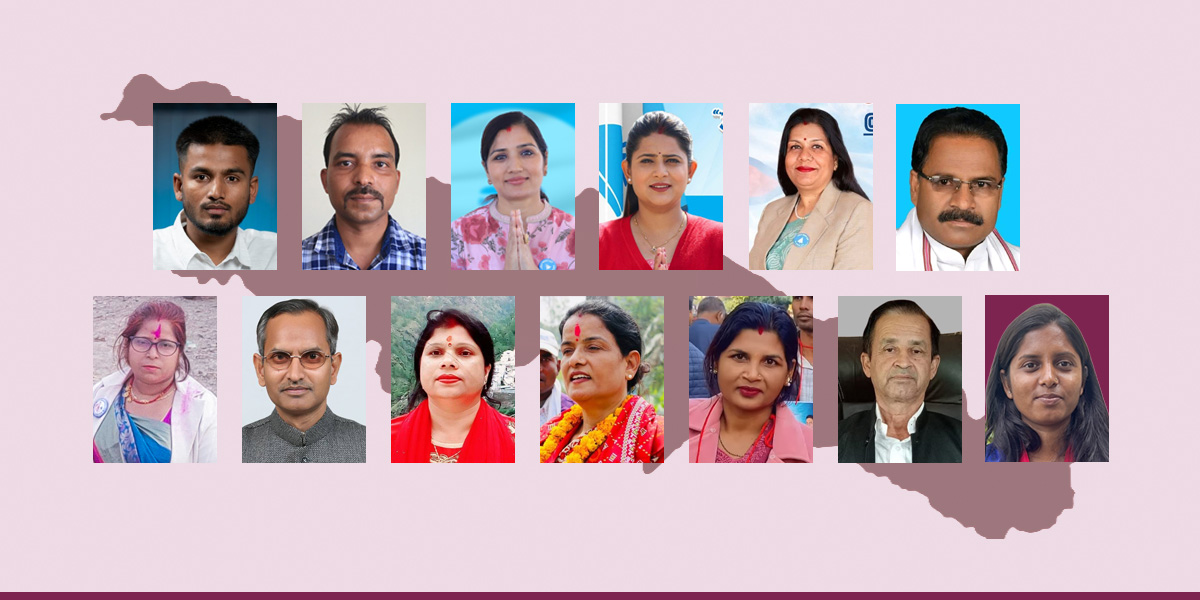
Despite the controversy, the PR system has also brought several new and young faces, including members of the Gen Z generation, from Madhesh into Parliament. Five political parties have picked 13 lawmakers from Madhesh under the PR system.
The RSP, which dominated Madhesh by winning 30 out of 32 FPTP seats and secured over 1.3 million PR votes, has sent six lawmakers to the lower house from the province under the PR system.
Among them is Khagendra Karn of Saptari. Karna, who was earlier associated with the NC, had switched to the RSP before the election. An engineer by profession, Karn is credited with helping build the party’s organization in Madhesh.
Another notable entrant is Purushottam Suprabhat Yadav (27) from Siraha. Yadav rose to prominence during last September’s youth-led protests in Kathmandu.
The RSP has also elected four women lawmakers under the PR system: Lalit Kumari (Siraha), Ankita Thakur (Saptari), Kamini Kumari (Mahottari), and Sunita Kumari Chaudhary (Parsa).
The NC, which secured 20 PR seats, has sent three lawmakers, including two females, from the province. However, its selections have drawn sharp criticism for alleged nepotism.
Dr Chandra Mohan Yadav, son of Nepal’s first president Ram Baran Yadav, has been elected under the PR system. He will be entering Parliament for the second time. He lost Raghubir Mahaseth of CPN-UML under the FPTP system in the 2009 by-elections. Yadav, however, defeated Mahaseth in 2013.
Similarly, Rekha Kumari Yadav, a niece of former President Yadav, and Ninu Kumari Karn, also a niece of senior NC leader Bimalendra Nidhi, have been elected under the PR system from the party from Madhesh Province.
The CPN-UML has elected two lawmakers from Madhesh—Chandeshwar Mandal of Siraha and Yashoda Kumari Yadav of Dhanusha. Both are entering Parliament for the first time.
The NCP has sent Jog Kumar Barbaria Yadav, a long-time Maoist leader from Dhanusha, to the lower house under the PR system. Yadav, a long-time supporter of NCP Coordinator Pushpa Kamal Dahal, faced multiple defeats in the FPTP elections. He will finally enter Parliament through the PR system.
The SSP has picked Ruby Kumari (25) to represent Madhesh in the House of Representatives under the PR system. Ruby, a student pursuing a bachelor’s degree in engineering, comes from a modest background. Ruby’s father is a barber by profession, while her mother works in a brick kiln.