 Photo: AFP/RSS
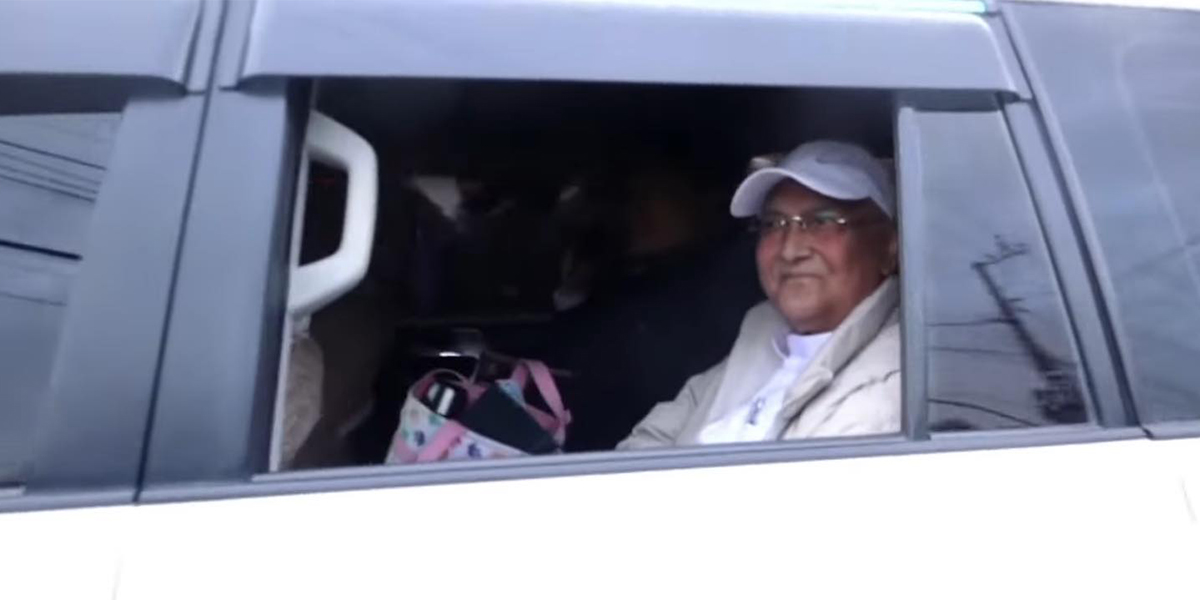
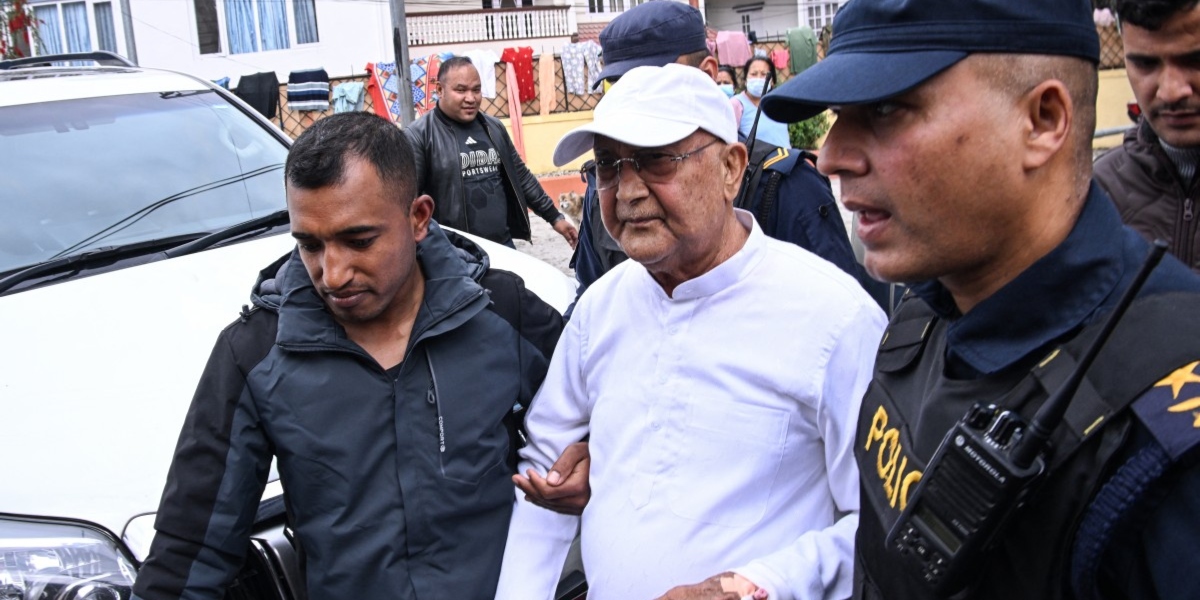
KATHMANDU: CPN-UML Chairperson KP Sharma Oli, who was leading a government with a comfortable majority about a year ago, has been arrested on a homicide-related case linked to last September’s deadly protests.
In July 2024, the UML formed a power-sharing deal with the Nepali Congress (NC), the largest party in the 2022 parliament, to form a government. He led the powerful government with a near two-thirds majority for nearly 14 months. After the September 2025 protests, however, he found himself stripped of office, politically weakened, and ultimately detained—a steep and sudden decline in his illustrious political career.
Oli’s return to power in July 2024 was the product of political maneuvering. After initially backing Pushpa Kamal Dahal, now coordinator of the Nepali Communist Party (NCP), Oli shifted course and joined hands with then NC President Sher Bahadur Deuba. The two leaders struck a deal to split the remaining three years of the lower house among themselves. But Oli was removed from office before completing his term and handing power to Deuba.
Oli had secured his fourth term as prime minister based on numbers and coalition arithmetic. However, the foundations of that power were fragile, and it soon collapsed.
“We failed to channel the public movement and did not correct ourselves in line with people’s aspirations. This resulted in the current situation we are in,” said UML leader Madhav Pant.
Even while in power, Oli remained active in using various tactics — made attempts to remove Deputy Speaker Indira Rana on human trafficking charges, and delayed appointments in several government appointments.
Pant says Oli failed to grasp the growing public dissatisfaction. “Oli was not satisfied even with that level of power. He kept trying to expand it,” he added.
One example is his effort to strengthen his control over the party. Under his leadership, the UML scrapped provisions such as the 70-year age limit and the two-term cap for leadership through the statute convention held on September 5-7. This paved the way for him to remain party chair for a third term. He also prevented former Vice Chairperson Bidhya Devi Bhandari from becoming a party member after completing his term as President of the country.
“Oli did many things to strengthen himself. First, he weakened us by joining hands with Madhav Kumar Nepal. In the end, he sidelined Nepal as well,” recalls Oli’s former party colleague and political analyst RK Mainali.
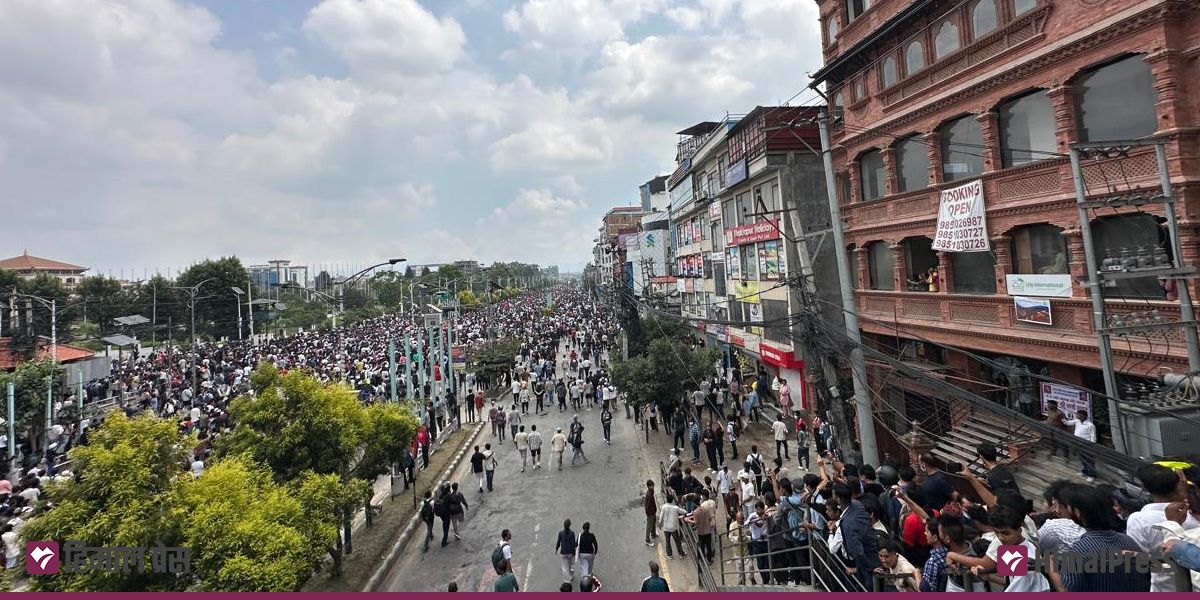
Soon after the statute convention, he made a decision from the cabinet to shut down social media platforms. However, the decision proved costly for Oli and his party. It was in response to this ban that the Gen Z movement began on September 8. The ban added fuel to the youth protest against corruption and nepotism in Nepali politics. The protest escalated dramatically when security forces opened fire on demonstrators, resulting in 19 deaths. The incident intensified public anger and transformed scattered protests into a nationwide uprising.
Violence spread the next day, public and property were vandalized with damages running into billions of rupees. As the government’s grip weakened, Oli was forced to resign on September 9 and had to leave the Official Residence of the Prime Minister under military protection.
“Had there been no bloodshed by the state on September 8, the events of September 9 would likely not have happened,” said Gen Z activist Jasmin Ojha. “This was unprecedented in Nepal’s history.”
Following Oli’s exit, former Chief Justice Sushila Karki was appointed Prime Minister as part of a transitional political arrangement reached with the protesters.
Nearly two weeks after his resignation, Oli appeared in Gundu of Bhaktapur. Many expected Oli to step down from active politics. Instead, he attempted a comeback, calling an early general convention and securing re-election as UML chair.
But the victory proved largely symbolic for Oli as the March 5 elections became one of the party’s weakest performances in history. The UML won only nine first-past-the-post (FPTP) seats and only around 1.4 million proportional representation (PR) votes, nearly half of the 2.8 million PR votes received in 2022. From being a dominant political force in the country, the party slipped to a distant third.
Oli’s Rise to Power
Although Oli first became Prime Minister in 2015, following the promulgation of the 2025 Constitution, he emerged as the country’s most powerful leader after the 2017 elections, commanding a near two-thirds majority in parliament from the UML–Maoist Center alliance. As prime minister, he included Nepali territories under India’s control, like Lipu Lekh and Limpiyadhura, in the new national map, and brought groups led by Netra Bikram Chand and CK Raut into peaceful politics.
But his nearly 40-month tenure was not free from controversy. Oli twice dissolved the House of Representatives and failed to hold together the Nepal Communist Party (NC) that was formed following the UML-Maoist Center merger.
The Supreme Court ruled Oli’s decision to dissolve the House unconstitutional and reinstated Parliament. This paved the way for Deuba to become prime minister. By then, the NCP had split, and further divisions had weakened the UML.
Analysts say Oli’s and his party’s decline reflects the costs of power centralization and internal fractures.
Ghanshyam Bhusal left the party after being denied an election ticket by the UML, while another leader, Bhim Rawal, was expelled. Bamdev Gautam, who repeatedly sought to rejoin the UML, was never allowed back. Bidhya Devi Bhandari’s party membership was also revoked. Despite this, KP Sharma Oli continued to see himself as all-powerful. After being elected party chair for a third term, he told cadres that the country must come to a halt the day UML is touched and that the government led by Sushila Karki must fall — and will fall.
UML leaders now say the party is in its weakest position in history. Once a dominant electoral force, it has shrunk to around 15% of the vote. Its chair, Oli, has also been arrested. “Disorder has a limited lifespan. Oli has ended in the same way,” political analyst Bishnu Dahal. “We are expecting the new government to open other corruption scandals from the past.”