 Himal Press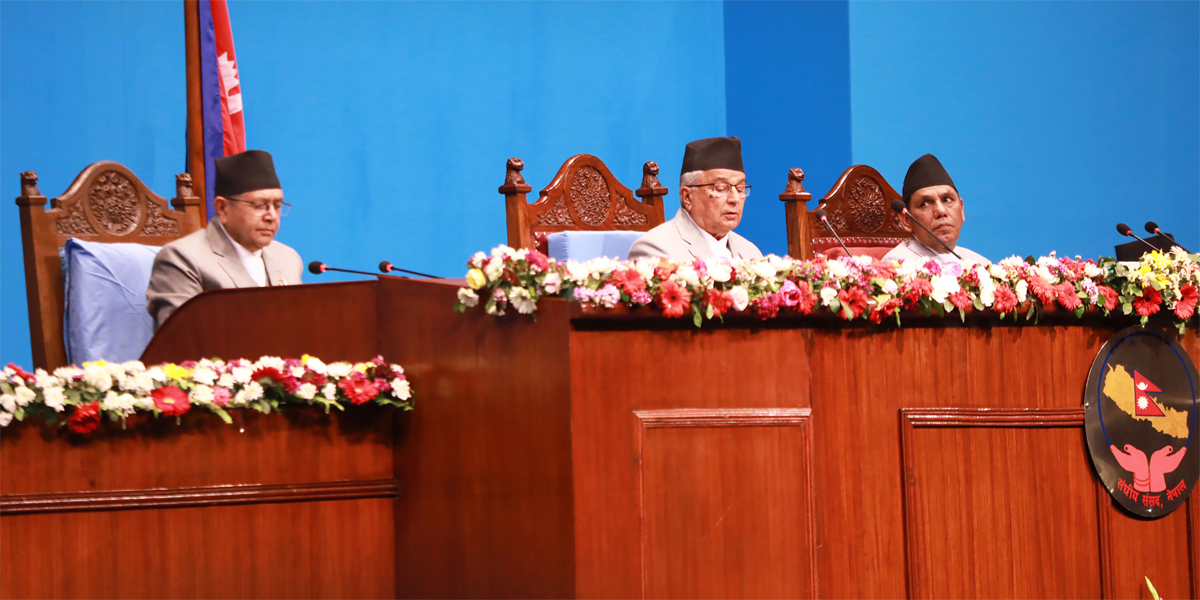
KATHMANDU: The government has said that its priorities will be on economic and infrastructure development, agriculture, employment, health, industrial expansion and overall socio-economic progress in the upcoming fiscal year 2025/26.
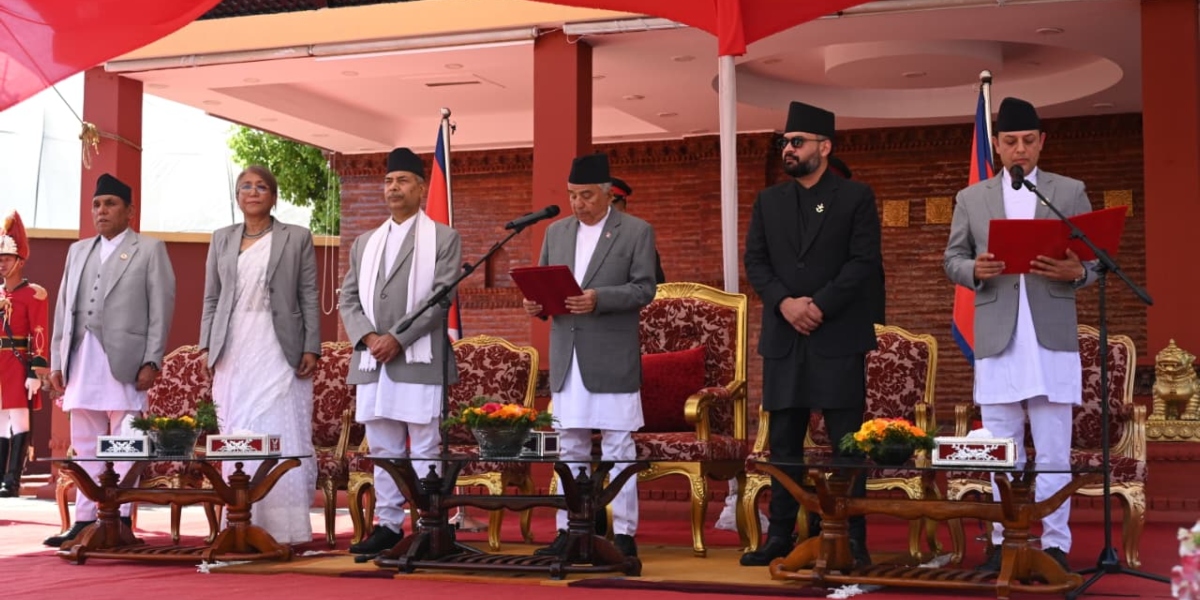
President Ram Chandra Paudel presented the policies and programmes for the upcoming fiscal year before a joint session of the federal parliament on Friday.
Here are the major highlights of the policies and programs:
- Adopt necessary policies aimed at helping Nepal make a developmental leap and reach the threshold of a developing country by 2030. With Nepal set to graduate from Least Developed Country (LDC) status in 2026, the government will implement strategies to ensure a smooth transition.
- Implement recommendations made by the High-Level Economic Reform Advisory Commission, led by Former Finance Secretary Rameshore Khanal.
- All government services will be made available online by expanding the services of the citizen app – Nagarik App.
- Start-up programmes tailored to youth, especially Gen-Z, to be introduced, with priority on ensuring business plans and support ecosystems. Employment opportunities will be created through entrepreneurship and income-generation schemes.
- Introduce an Integrated Project Bank to eliminate overlap in plans at the federal, provincial and local levels. A “bad bank” will be established to manage non-performing loans and non-banking assets of financial institutions. A digital bank will also be set up. ICT infrastructure will be expanded to support the development of a digital economy.
- Overhaul development models, pace and practices to resolve persistent issues in the implementation of development projects. Projects to be categorised with set timelines.
- In the health sector, all subsidies and support programmes will be integrated into the National Health Insurance Program which will be restructured for sustainability.
- The Securities Board of Nepal (Sebon) will be strengthened and the Nepal Stock Exchange (Nepse) restructured to improve the capital market’s efficiency and transparency.
- Redundant public structures to be scrapped. Foreign aid and investment to be mobilised only as required and directed toward priority sectors.
- Euro 6 emission standards to be enforced for petroleum vehicles, requiring fuel and engines to meet stricter environmental criteria.
- An Alternative Finance Fund will be established for resource mobilisation.
- Legal and policy reforms will be introduced to address challenges in school education.
- Agricultural enterprise projects to be made eligible for collateral-based loans. A market ecosystem will be developed through access to land, agricultural inputs, insurance and procurement contracts. Pilot projects will promote agriculture as a business, including advanced purchase agreements to secure markets
- The Prime Minister’s Agriculture Modernisation Project to be restructured and merged into a unified national agricultural modernisation programme. The promotion and commercialisation of indigenous crops to be carried out in coordination with local governments.
- Farmers engaged in commercial agriculture will be incentivised. Minimum support prices will be announced before sowing, and advance procurement agreements will follow harvesting.
- Savings of small depositors in troubled cooperatives to be returned. A Cooperative Loan Recovery Tribunal will be established, and cooperative data will be digitised.
- Social security schemes under various agencies, including the Employees Provident Fund and Citizen Investment Trust, to be streamlined. Needful strategies to be taken to strengthen the Social Security Fund.
- National forests to be commercialized through legal facilitation.
- Curricula in community and private schools to be unified.
- Nepal Airlines Corporation will be restructured.
- Pumped-storage hydropower projects to be prioritised to prevent power shortages and reduce energy imports.
- An advanced National Neurosciences Centre to be established in Kathmandu for the treatment of brain, spinal, mental and neurological disorders.
- Railways and water transport systems to be developed to reduce logistics costs. Storage capacity, price regulation and quality control will also be improved to ensure the steady supply of essential goods and services.
- Chure Master Plan to be reviewed, and the President Chure-Terai-Madhesh Conservation Project will be restructured and upgraded to a national program.
Published On: 02 May 2025
Comments