 Himal Press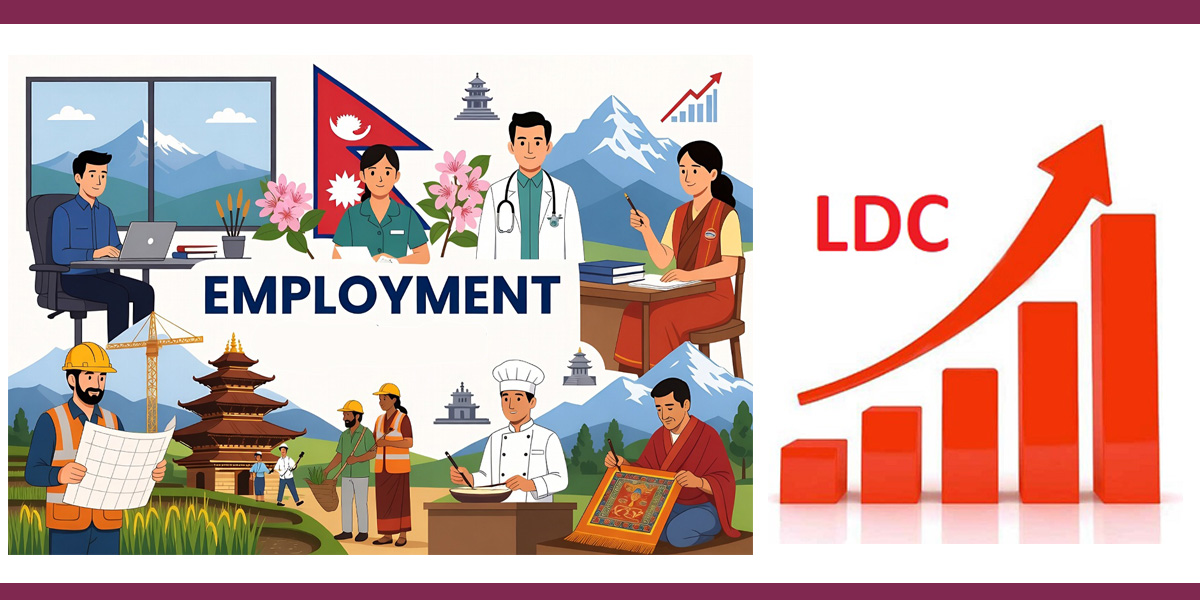
KATHMANDU: The International Labour Organization (ILO) has warned that Nepal could face export losses of up to 4.3% following its graduation from the Least Developed Country (LDC) category.
In a recent study titled ‘Employment Impact Assessment on Nepal’s LDC Graduation’, which assesses the employment impact of LDC graduation, the ILO projected that Nepal’s exports could decline by 2.5% to 4.3% after losing preferential trade benefits that it has been enjoying as an LDC.
The hardest-hit sectors are expected to be apparel, synthetic textiles, and carpets, especially in key markets such as China, the European Union, and Turkey.
“Post-graduation, Nepal’s average tariffs are expected to increase, particularly in sectors like vegetable products and cereals. Losses would be concentrated in sectors such as apparel, synthetic textiles, and carpets,” the report stated. “Given that the labor force profile in these sectors is highly informal with substantial shares of female workers, the impacts of the graduation will likely be harder on women and informal sector workers.”
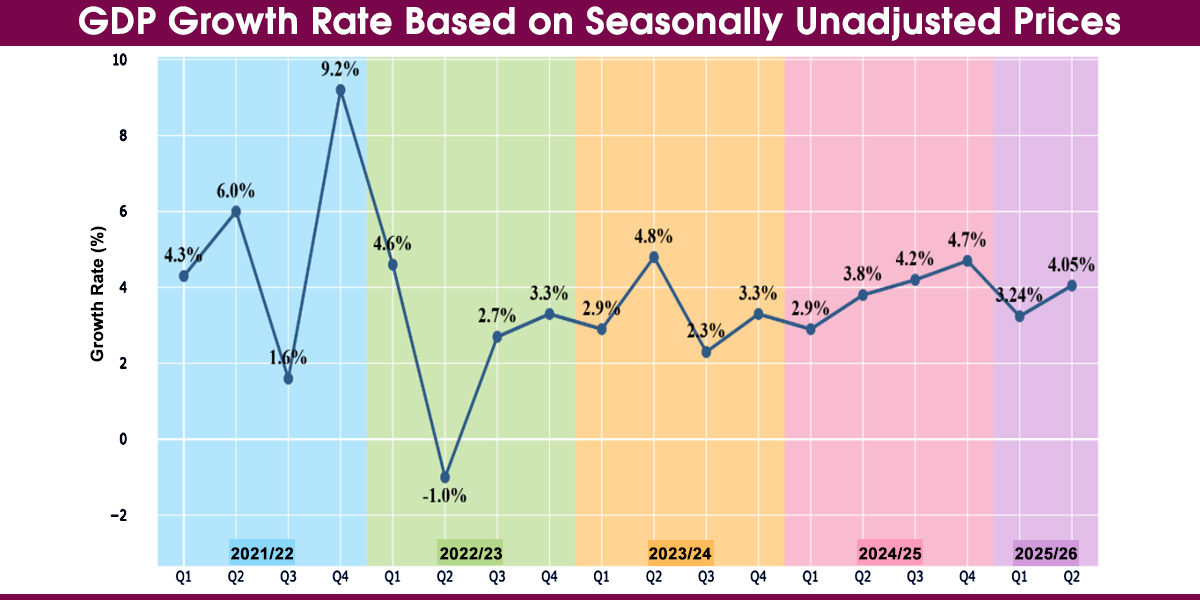
According to the study, Nepal’s GDP is projected to reach $22 billion in 2026 and $29 billion in 2030. However, the LDC graduation shocks are projected to reduce real GDP by $398 million in 2026 and $63 million in 2030, with a total loss of $988 million over five years.
The study estimates that up to 132,000 jobs could be lost over five years under a worst-case scenario in which no mitigating measures are taken by the government. The manufacturing sector, especially textiles, is expected to suffer the most.
Women are likely to be disproportionately affected, as nearly half of the manufacturing job losses are predicted to impact women. “This disproportionate impact on women is concerning due to their lower labor force participation rate,” the report added.
According to the study, Nepal’s GDP is projected to reach $22 billion in 2026 and $29 billion in 2030. However, the LDC graduation shocks are projected to reduce real GDP by $398 million in 2026 and $63 million in 2030, with a total loss of $988 million over five years.
The report also warned of a potential reverse migration trend, with women in urban areas more likely to lose jobs and return to rural areas where employment is often informal, low-paid, or unpaid.
The report has also recommended prevention measures to reduce the negative impacts of graduation. First is expediting ratification of international Labour Standards required for GSP+ and similar support schemes, such as ILO Convention 81 on Labour Inspection (1947) and Convention 87 on Freedom of Association and Protection of the Right to Organize (1948).
Second is expediting preparations to request access to the European Union GSP+ and other similar schemes, as continued access to preferential trade treatment will reduce short-term losses in trade volume and allow a longer window of adaptation for Nepali industries.
Third is advocating for preference-granting countries to emulate the European Union and the United Kingdom’s three-year post-graduation transition period for LDCs, and for a less stringent Rules of Origin (RoO) Benchmark.
Building business resilience, policy planning and implementation, and intensifying collaboration with the private sector are the other recommendations of the study.
Nepal, Laos, and Bangladesh are scheduled to graduate from LDC on November 24, 2026. However, Bangladesh has requested a three-year deferral of its graduation, citing disruptions from global economic instability and domestic turmoil.