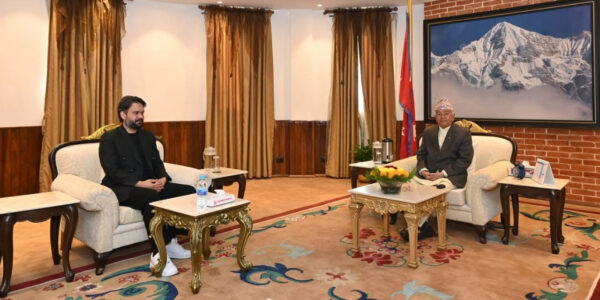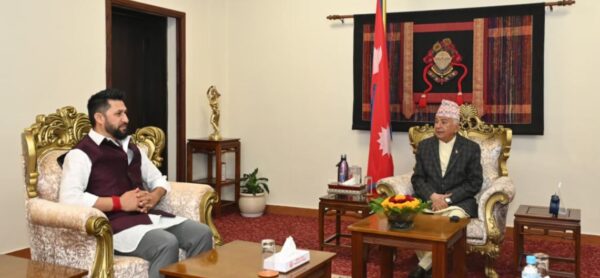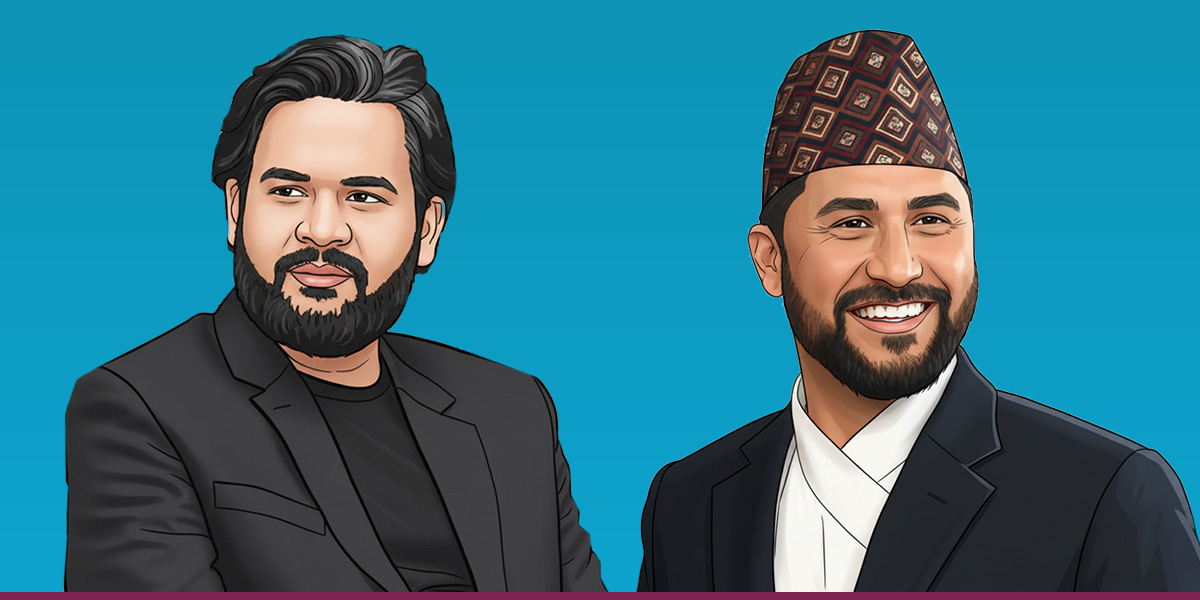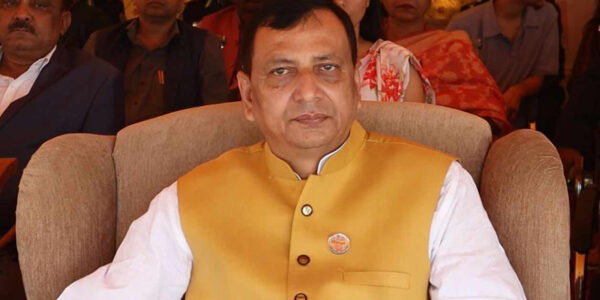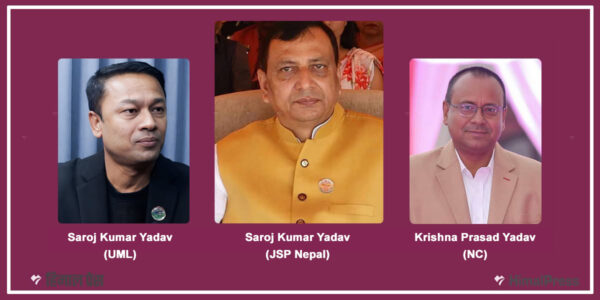

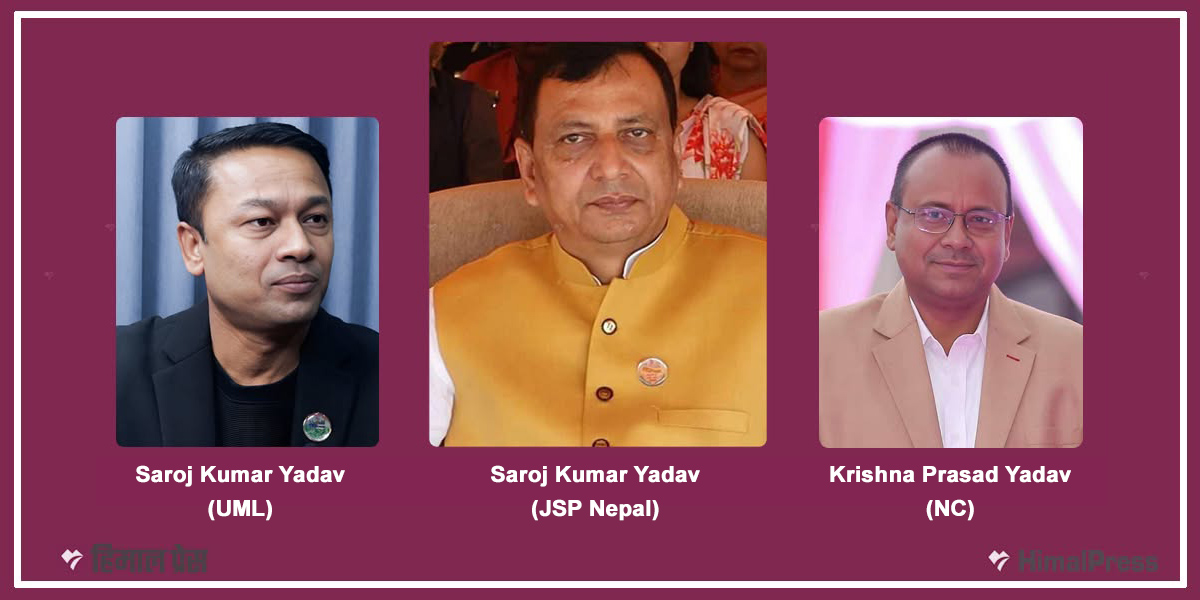
KATHMANDU: Madhesh Chief Minister Saroj Kumar Yadav has not been able to expand his cabinet even after a week of his appointment.
Province Chief Surendra Labh Karn appointed Saroj Kumar, the parliamentary party leader of the Janata Samajbadi Party (JSP) Nepal—the largest party in the Madhesh Province Assembly—as per Article 168(3) of the Constitution of Nepal, 2015, after no party could stake a claim under Article 168(2).
After assuming the office of the chief minister for a second time, Saroj Kumar told journalists that he would take a vote of confidence from the provincial assembly within a week and soon form an all-party government. He has repeatedly stated that he will form an all-party government in the province.
As Yadav’s party, JSP Nepal, is also part of an eight-party alliance, Chief Minister Yadav expects to gain the support of the Janamat Party which is also in the alliance. However, Janamat Party Chairperson CK Raut has announced that the party will not join any government in Madhesh Province until the provincial assembly elections.
Although the alliance had decided not to join the provincial government until the provincial assembly elections were completed, JSP Nepal sidelined the alliance’s decision and assumed leadership of the provincial government.
Chief Minister Yadav wants to secure a majority in the provincial assembly with the support of at least the Nepali Congress (NC) and CPN-UML. Leaders close to him say he believes that if UML extends support, the Nepal Communist Party (NCP) will also support him.
Meanwhile, the NC appears divided over whether to support the current government or form another government under its own leadership. One faction of the party is in favor of supporting Chief Minister Yadav to maintain a stable government until the elections. Another faction, however, is seeking to form a government under its own leadership and share power in rotation with UML and NCP.
An NC provincial lawmaker claimed that outgoing Chief Minister Krishna Prasad Yadav, the parliamentary leader of NC in the provincial assembly, is seeking to share power with UML and NCP rather than give a vote of confidence to the current government led by JSP Nepal.
“We have heard that he wants to share power by assuming leadership of the government for three months, and handing over power to NCP for three months and UML for five months,” the NC lawmaker told Himalpress. “We are not in favor of this. Six chief ministers have already been appointed in four years. Regardless of who leads, there should be a stable government until the elections.”
He said they favor forming a stable government until the upcoming elections because repeated moves to topple and form governments have spread disillusionment among the general public toward federalism and the provincial government itself. Stating that the Gen Z uprising occurred in the past when leaders engaged in rotational government-making, he claimed that protests in Madhesh Province are certain if they follow the same path now.
Most party lawmakers are dissatisfied with parliamentary party leader and outgoing Chief Minister Krishna Prasad Yadav. Lawmakers accuse him of acting unilaterally. NC lawmakers became irritated with Krishna Prasad after he recently approached the province chief to extend the deadline to stake a claim to form a government together with UML.
“He went to ask the province chief to extend the time to form a government together with the very party that caused the government to fall. Shouldn’t it be made clear why UML withdrew support and why it would support us again?” the NC lawmaker said. “Shouldn’t there be a discussion in the party about whether to form a government with UML or someone else? There is no discussion; he is acting unilaterally. Things cannot go on like this.”
According to NC sources, a secret meeting of a majority of NC lawmakers was also held on Friday. The meeting reportedly discussed forming a stable government in the province rather than rotating power now.
Seeing a prospect of support from a faction within NC, Chief Minister Yadav claims he will form an all-party government. However, NC has not made a formal decision on whether to support the government or sit in opposition.
Former Chief Minister Krishna Prasad said no formal discussion has been held within the parliamentary party regarding the government so far. He said the chief minister has not even proposed that they support him. “How he said an all-party government will be formed, only he knows,” he said. “We have received no formal or informal proposal so far.”
He said a decision will be made after discussion in the parliamentary party on whether to support JSP Nepal’s government or form a government under his own leadership. “All possibilities remain open in politics,” the NC parliamentary leader said in response to a question on whether he would form a government under his own leadership or support JSP Nepal. “We will move forward based on whatever decision comes out of discussions in the parliamentary party.”
NC is preparing to hold its provincial convention in Madhesh Province in a few days. Parliamentary party leader Krishna Prasad, who is also the president of the party’s Madhesh Province Committee, is eyeing his re-election. He assesses that competing for provincial president while serving as chief minister would be easier for him.
Risk of provincial assembly dissolution
Chief Minister Yadav needs the support of at least the NC or UML to reach a majority. Under the current circumstances, however, he does not appear likely to win a vote of confidence. If Chief Minister Yadav fails to win a vote of confidence, a situation will arise to form a government under Article 168(5) of the constitution.
Article 168(5) provides that if a chief minister appointed under Clause (3) fails to obtain a vote of confidence under Clause (4), the province chief shall appoint as chief minister any member under Clause (2) who appears able to command a vote of confidence in the provincial assembly.
Some NC lawmakers argue that if the current government fails to win a vote of confidence, the chance of forming a government under Article 168(5) is even slim. They say it would create a situation in which the provincial assembly itself would be dissolved.
Provincial lawmaker Birendra Prasad Singh, who is also vice president of NC’s Madhesh Province Committee, said it would be unfortunate if the situation reached Clause 5. He argued that a government could not be formed under this clause because party whips do not apply.
“I see further problems if we have to go to Clause 5,” Singh said. “If such a situation arises, party whips cannot be issued to lawmakers and there remains no situation to form a government. Then there is no alternative but to dissolve the provincial assembly and go to elections.”
Clause (7) states that if a chief minister appointed under 168(5) fails to obtain a vote of confidence or a chief minister cannot be appointed, the province chief, on the recommendation of the chief minister, shall dissolve the provincial assembly and set an election date to hold elections for another provincial assembly within six months.
Lawmaker Singh said the party had not decided whether to join the JSP Nepal-led government or sit in opposition has yet to be settled.
“No formal decision has been made; talks are moving forward on an individual basis,” he said. “A decision on this matter will be made soon after discussion in the parliamentary party.”
Although Chief Minister Yadav claims he will form an all-party government, UML has stated that it will not support this government.
UML Chief Whip Hari Narayan Mahato said UML will not support the government because JSP Nepal betrayed them and broke the agreement.
“The chief minister will remain in office for 29 days. He has said he will form an all-party government, which only he knows,” Mahato said. “Be sure of this: we will not support this government.”
He said UML will also not support JSP Nepal’s government because it pledged to share power and broke the agreement at the last moment.
“They had agreed with UML to form a government under Article 168(2). However, at the last moment, they broke the agreement and formed a government under Clause 3,” Mahato said. “We will not support the chief minister when he seeks a vote of confidence. We will decide how the course moves forward after that.”