South Asia has gone nearly 12 years without a SAARC Summit, leaving the region without sustained, summit-level political leadership. The 18th Summit was held in Kathmandu on November 26–27, 2014, while the 19th Summit, scheduled for Islamabad in November 2016, was postponed indefinitely. As of November 2026, no summit has taken place since.
Against this backdrop, the three-day SAARC Regional Seminar on “Interpreting Shared Heritage: Cross-Cultural Narratives in Museums in the SAARC Region,” organized by the SAARC Cultural Center in Kathmandu from September 30 to October 2, 2026, carried special significance. It brought regional voices together in the same city that hosted the last summit, creating a rare sense of a “mini-SAARC Summit.”
Although the SAARC Charter originally envisaged annual meetings of heads of state or government, member states agreed at the 18th Summit to convene summits every two years, or earlier when necessary. That commitment remains unfulfilled. The consequences are evident in weakened political dialogue, declining mutual trust and slower collective action on trade, connectivity, climate resilience, health and cultural cooperation.
Through dialogue on culture, heritage, museums and archives, the SAARC Cultural Center has helped keep regional cooperation alive by using soft power as a neutral bridge across political divides. Its work sustains the human and cultural foundations of South Asian solidarity even as high-level political engagement stalls.
Last year’s SAARC Heritage Forum in Colombo, Sri Lanka, from September 30 to October 2, was another important step toward institutionalizing regional heritage cooperation. Its agenda included a proposed SAARC Heritage List, Buddhist pilgrimage routes, cultural trails, and stronger regional collaboration in safeguarding and promoting heritage.
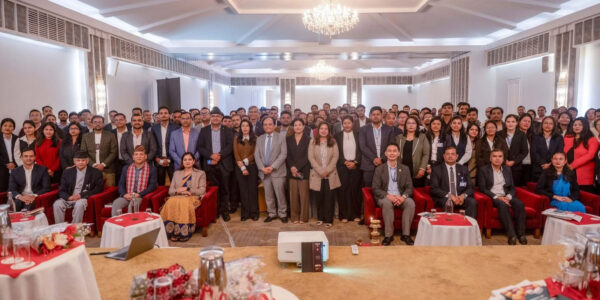
The Kathmandu seminar brought together scholars, museum professionals, researchers, cultural practitioners, policymakers and institutional representatives from across the region. With 29 academic papers, a high-level panel discussion and extensive exchanges, it created a dedicated regional platform to examine how museums can interpret South Asia’s interconnected histories and diverse cultural traditions.
More importantly, the discussion offered an opportunity to translate longstanding regional commitments into practical action grounded in research, interpretation, professional collaboration and public engagement. They demonstrated that even when political cooperation stalls, culture can help preserve shared memory, deepen mutual understanding and keep South Asia connected.
A Vision Rooted in SAARC
Regional blocs such as the European Union, ASEAN, MERCOSUR, CARICOM and the African Union have placed shared culture and heritage at the heart of regional integration. They have supported joint museums, academic research, cultural exchanges and initiatives to safeguard common historical narratives. South Asia, despite being home to one of the world’s richest and most interconnected civilizations, has yet to fully translate its shared heritage into sustained regional cooperation.
The SAARC Charter recognizes cultural development, mutual understanding and active cooperation as core regional objectives. At the 10th Summit, held in Colombo from July 29–31 July, 1998, leaders acknowledged South Asia’s cultural and religious plurality while emphasizing its common civilizational continuum as a basis for harmonious relations.
On September 25, 2014, the Third Meeting of SAARC Culture Ministers in New Delhi adopted the Delhi Resolution, calling for transnational World Heritage nominations, a regional heritage list, and recognition of maritime routes, inland trade, migration and cultural interaction.
The declaration of the 18th SAARC Summit in Kathmandu further directed member states to preserve and restitute South Asian cultural property, develop a SAARC Heritage List with operational guidelines and establish cultural trails connecting major Buddhist historical sites. It also called for improved access to prominent sacred sites associated with different religious traditions.
These commitments provide a strong policy foundation. However, declarations alone cannot generate lasting cultural understanding. Their realization requires institutions, collaborative research, accessible knowledge, professional networks and opportunities for people to encounter the histories connecting their societies.
The museum-focused dialogue in Kathmandu extended this agenda by placing museums at the center of regional heritage cooperation. With sustained institutional support and broader participation, it could help bridge the gap between South Asia’s immense shared heritage and its unrealized potential for regional cultural integration.
From Heritage Trails to Museum Networks
South Asia’s history has been profoundly shaped by the movement of traders, pilgrims, scholars, artists and religious communities. Buddhist pilgrimage networks, maritime commerce, traditional crafts, manuscripts, architectural traditions, performing arts and indigenous knowledge all provide evidence of these connections.
Cultural trails connect heritage places across landscapes, while museums connect the objects, knowledge, histories and community experiences associated with those places. The approaches are complementary: one creates physical and symbolic routes across the region, while the other makes their cultural significance visible through research, exhibitions and public engagement.
Shared heritage does not necessarily mean joint ownership of a monument, object or tradition, nor does it diminish the distinctive identities of individual countries and communities. Rather, it recognizes the historical relationships, cultural exchanges and knowledge systems that developed across the boundaries of present-day nation-states. It encourages the region to view itself not merely as a collection of separate national histories but as an interconnected cultural landscape.
South Asia has 59 UNESCO World Heritage properties following the 2026 inscription of India’s Ancient Buddhist Site of Sarnath, along with 23 elements of Intangible Cultural Heritage, 17 Memory of the World entries and nine UNESCO Creative Cities. Many more cultural properties remain to be documented and recognized. These figures reflect the region’s exceptional cultural wealth, although they do not fully capture its heritage or represent every SAARC member equally.
Beyond internationally recognized sites, archaeological collections, local museums, oral histories, traditional technologies, community knowledge and living cultural practices reveal a much wider cultural landscape. The challenge is not a lack of heritage but limited connections among the institutions, research, collections and public narratives through which it is understood.
Museums offer a practical way to translate regional cultural aspirations into tangible activities. Their collections provide material evidence of historical connections, while exhibitions, research, educational initiatives and digital platforms can communicate those connections to diverse audiences.
Buddhist Heritage as a Starting Point
Buddhist philosophy originated in South Asia and has left a rich cultural and historical heritage across the region. The South Asian Buddhist Trail, endorsed by the regional leaders at a SAARC Summit, offers a practical starting point for systematic and sustained cooperation on shared heritage.
Lumbini in Nepal, Bodh Gaya and Sarnath in India, Paharpur in Bangladesh, Taxila and Takht-i-Bahi in Pakistan, Bamiyan and Mes Aynak in Afghanistan, Anuradhapura in Sri Lanka, Kyichu Lhakhang in Bhutan, and Buddhist archaeological remains in the Maldives together provide the foundation for a regional Buddhist heritage network.
These sites and their museums could collaborate to preserve and present sculptures, inscriptions, manuscripts and archaeological records that trace the movement of Buddhist ideas, art and scholarship across the region.
A collaborative museum initiative could connect selected collections through a regional digital exhibition, allowing audiences to explore Buddhist knowledge and pilgrimage networks across national boundaries. Such an initiative would complement SAARC’s existing commitment to Buddhist cultural trails without requiring countries to surrender ownership of their collections or merge their national narratives.
Similar opportunities exist in maritime trade, textiles, traditional crafts, architecture, manuscripts, music and community traditions. Objects held in different museums may reveal shared techniques, artistic influences, trade relationships and religious practices. Collaborative interpretation can make these connections visible while respecting the distinct histories of the communities concerned.
Recognizing shared heritage must not become a substitute for addressing legitimate restitution or repatriation claims. Instead, the goal should be to build a regional museum culture capable of celebrating connections, investigating contested histories and facilitating informed, respectful dialogue.
A Historic Beginning and Work Ahead
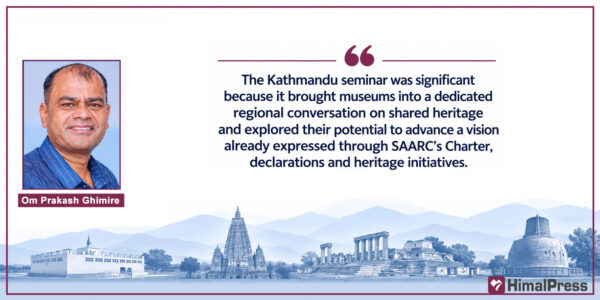
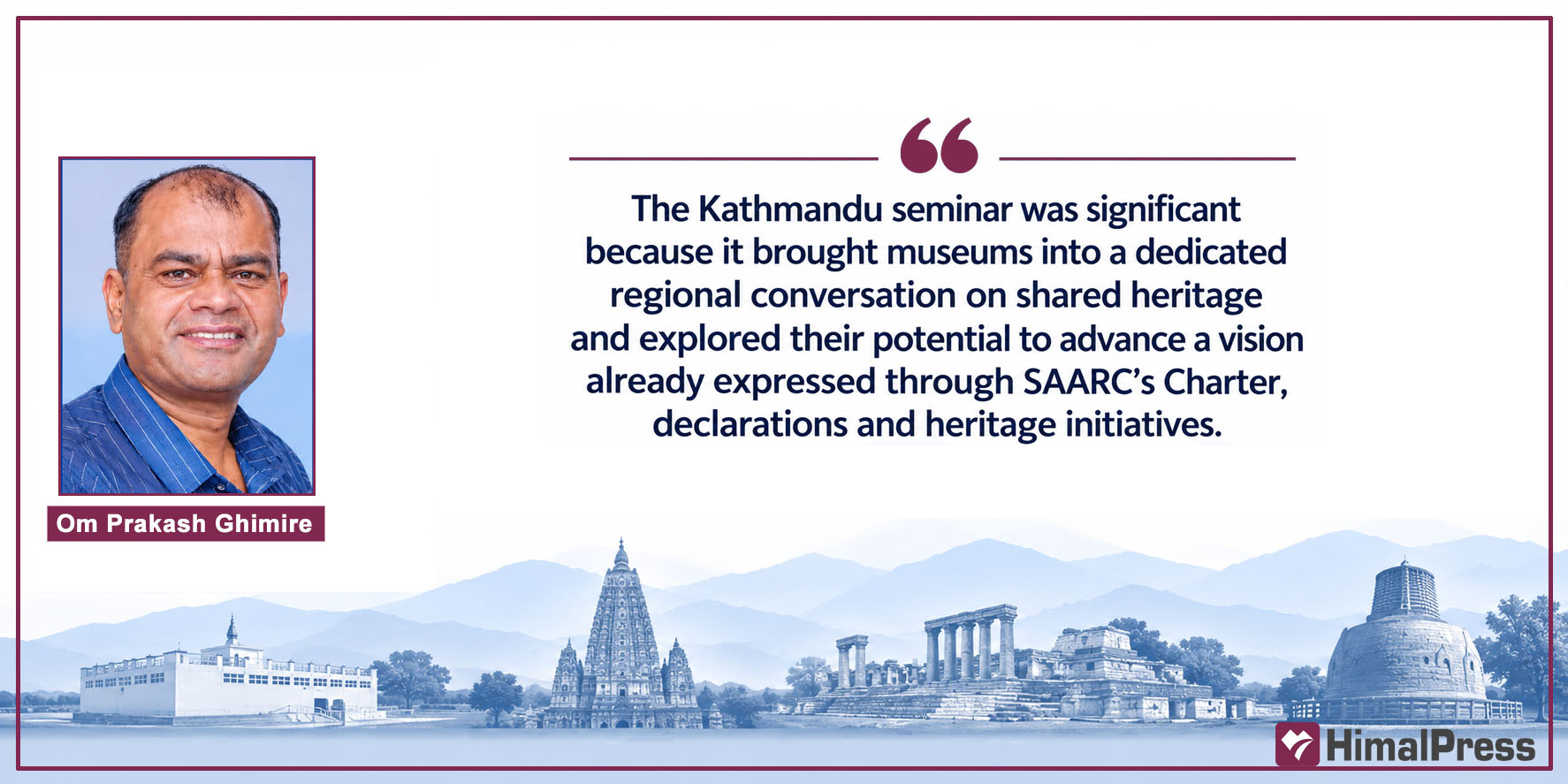
The Kathmandu seminar was significant because it brought museums into a dedicated regional conversation on shared heritage and explored their potential to advance a vision already expressed through SAARC’s Charter, declarations and heritage initiatives. Its importance lies not only in being a first-of-its-kind regional gathering focused on museums but also in opening a pathway toward practical cooperation.
For SAARC, museums can help bridge the gap between regional policy commitments and public understanding. For UNESCO, the initiative offers an opportunity to encourage collaborative interpretation, strengthen museum capacity and connect tangible heritage with living traditions. For ICOM National Committees, it provies a strategic opportunity to build stronger regional networks, engage with the global museum community and affirm a shared South Asian identity. It can also promote regional dialogue on contemporary museum issues, capacity-building and the sustainable development of the museum sector.
Likewise, for the people of South Asia, such cooperation offers a means of understanding both the diversity of their societies and the historical relationships that unite them.
The seminar should therefore be seen not as the culmination of a discussion but as the beginning of a continuing regional process. South Asia does not need to invent a shared heritage; it needs to recognize, research, connect and communicate the heritage that already exists. Museums can make those connections visible, meaningful and accessible.
The next step should be to establish a SAARC Museum and Shared Heritage Network, supported by the SAARC Cultural Centre, to connect museums, universities, archives and professional organizations. A regional shared-heritage inventory, common documentation standards and thematic pilot projects beginning with Buddhist heritage and pilgrimage networks could provide a practical foundation.
Collaborative digital exhibitions, joint research, professional training, curatorial exchanges and regular regional forums would help sustain momentum. These efforts should also connect museum initiatives with the SAARC Heritage Forum and UNESCO’s regional cultural programs to ensure long-term institutional collaboration across South Asia.
(Ghimire is the Secretary of the International Council of Museums Nepal (ICOM Nepal). He can be reached for comments at [email protected])