
KATHMANDU: Leaders and cadres of established political parties are joining the newly formed Shram Sanskriti Party (SSP) in growing numbers across the hill districts of Koshi Province, signaling rising discontent with traditional political forces and rising interest in alternative platforms.
Founded by former Dharan mayor Harka Sampang, just before the 2026 elections, the party has attracted former office-bearers, local leaders and grassroots activists—particularly from the CPN-UML, the Communist Party of Nepal (CPN), and the Nepali Congress (NC).
In Ilam, Umesh Gurung, who spent nearly four decades in the UML and previously served as the party’s district secretary, recently announced his departure on social media. He subsequently joined the SSP. Gurung, a former journalist known locally for his outspoken views, had twice aspired to contest the Sandakpur Rural Municipality chair on the UML ticket. However, the party passed him over for Uday Rai on both occasions.
“I have no regrets about not getting the ticket. What I regret is having wasted my entire life in the UML,” Gurung wrote, adding that he had failed to secure the nomination because he lacked access to the right networks of influence. He also apologized to well-wishers who had hoped to see him serve in an elected executive role.
Gurung is now being discussed as a potential SSP candidate for the Sandakpur Rural Municipality chair.
Kewal Rai, a young UML leader from Jamuna in Sandakpur-5, has also joined the new party. Similarly, Jit Bahadur Rai, former chairperson of neighboring Maijogmai Rural Municipality, left the UML to join the SSP. Rai, who previously led the local government and contested a parliamentary election, said he concluded that old parties no longer hold political significance.
“We expected the UML to become a party of a different caliber, but it failed to live up to those expectations. That is why we moved toward a new political force,” Rai told Himal Press.
Rai had aspired to become UML’s Ilam District Committee chairperson. He was considered close to senior leader and former prime minister Jhalanath Khanal, who himself is no longer with the party.
These departures reflect a broader trend that SSP leaders say is gathering momentum across Koshi’s hill districts, including Panchthar, Taplejung, and Bhojpur. According to party leaders, those abandoning established parties are gravitating mainly toward the SSP and the Rastriya Swatantra Party (RSP). However, they added that the SSP has recently attracted more entrants.
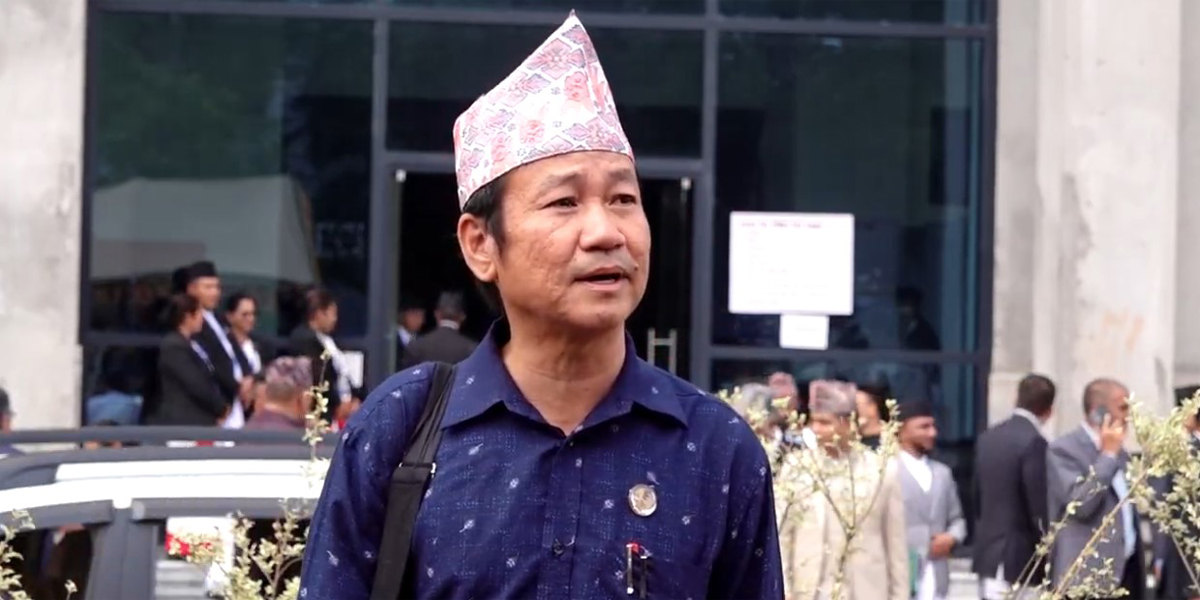
Samir Tamang, the SSP’s joint general secretary, said the party had been seeing a steady stream of new members, particularly former UML, NCP, and NC.
“Since the formation of a new government, we have not seen much of a public wave toward the RSP, whereas people are joining our party in significant numbers,” Tamang said. “As many as 1,311 joined us during my first visit to Panchthar, and another 903 joined during my second visit.”
Tamang attributed the lower number of entrants joining the RSP to its limited organizational reach at the grassroots level.
Disillusionment with Established Parties
The SSP’s momentum has grown following its performance in the House of Representatives election. Although formed only months before the polls, the party secured three first-past-the-post (FPTP) seats in Koshi Province: Khotang, Bhojpur and Sunsari-1, and four more under the proportional representation system (RPP). Aaren Rai, formerly associated with the Mongol National Organisation, won in Khotang, while Dhruva Rai was elected from Bhojpur. Party chairperson Sampang emerged victorious in Sunsari-1.
Political observers say the party’s appeal emerges partly from the public image of its leaders as grassroots activists rather than conventional politicians.
“Their working style and temperament resemble those of grassroots leaders. This has helped them resonate with the public,” political analyst Dharma Gautam said.
Disillusionment with traditional parties, their working practices and unpopular leadership is another reason behind the shift, according to Rajan Sameep, a former Maoist leader who recently joined the SSP.
“We spent a long time in these traditional parties, but did not see them working to address people’s problems,” Sameep said. “Since people no longer trust the old parties, we felt it was better to quit rather than continue defending their failures.”
He claimed that the SSP’s campaigns had generated fresh expectations among voters.
“The party’s appeal is growing in every area where it is active,” he added.
The SSP is seeking to consolidate its presence across Koshi Province ahead of the next provincial assembly and local body elections. It has been promoting senior leader Sudan Kirati, a former Maoist politician and federal minister, as its prospective chief minister. Kirati has been traveling through villages in eastern hills, wearing T-shirts featuring Sampang’s image. The party is also conducting the “Kechana–Kanchenjunga to Sagarmatha” campaign, aimed at connecting communities from Koshi’s southern plains to its Himalayan districts through political and organizational activities.
Tamang claimed that the party was positioned to secure a two-thirds majority in the provincial assembly. “There, however, is a lot more work to do,” he added.
Party sources say the SSP has established a strong presence in Panchthar, Ilam, Khotang and Udayapur, as well as areas north of the East-West Highway in Morang. Its influence, however, is comparatively weaker in Tehrathum, Okhaldhunga and Solukhumbu.
“We have not been able to focus as much on the Himalayan areas yet. Our influence can grow if we take our campaigns there as well,” Sameep said.
He also added that the party was expanding its presence in Tarai districts, where it previously faced accusations of promoting identity-based politics.
The SSP has set its sights on winning a majority of the 137 local governments in Koshi. Party leaders believe recruiting prospective candidates and local representatives ahead of local elections will strengthen their prospects.
“It is difficult to give an exact figure at this stage, but we believe we can win in many places,” Tamang said.