 Himal Press
KATHMANDU: Minister for Finance Swarnim Wagle has said that the long-standing political narrative in Nepal that opposing India amounts to nationalism must change.
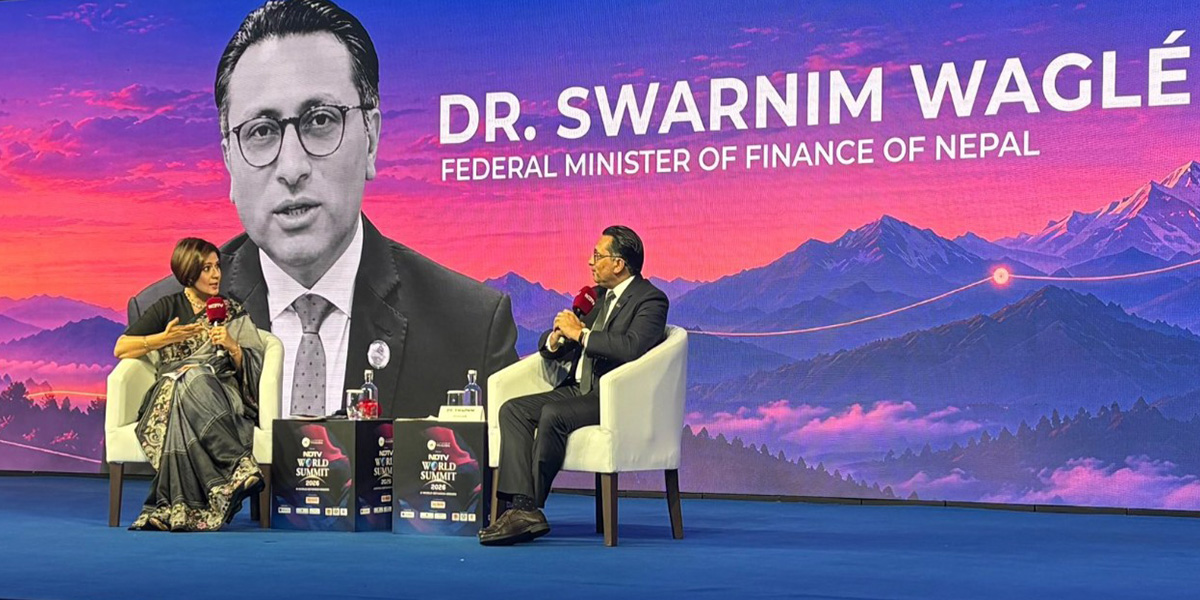
Speaking at a special session titled “Proximity to Prosperity: The India-Nepal Opportunity” during the NDTV World Summit 2026 in New Delhi on Friday, he urged the two neighbors to turn their deep-rooted ties into opportunities for economic prosperity.
“India and Nepal have a very deep relationship. Problems arise from time to time, but we are joined at the hip,” Wagle said.
He added that neither Nepal nor India had a relationship with any other country comparable to the one they shared.
“There was a time in Nepal when nationalism was associated with anti-India sentiment. That era is over,” he said, adding that the younger generation was focused on economic growth, good governance and stronger relations with neighboring countries.
Wagle also indicated that Prime Minister Balendra Shah would visit India by the end of 2026 and expressed confidence that the visit would take bilateral relations to a new level.
Nepal’s political discourse has long been intertwined with its relations with India . Criticism of New Delhi is often framed as an expression of national sovereignty. Wagle’s remarks signaled a shift toward a more pragmatic approach that prioritizes national interests, economic development and improved living standards while maintaining the ability to address bilateral disagreements.
His argument did not suggest that Nepal should overlook disputes or refrain from questioning Indian policies. Rather, he emphasized the need to protect Nepal’s interests while pursuing dialogue and cooperation.
India is Nepal’s largest trading partner and plays a crucial role in the country’s petroleum supplies, investment, transit facilities and cross-border energy cooperation. The two countries also share an open border and extensive family, cultural and economic ties.
However, bilateral relations have come under strain at times over border disputes, trade and transit arrangements, and issues involving sovereignty and national identity.
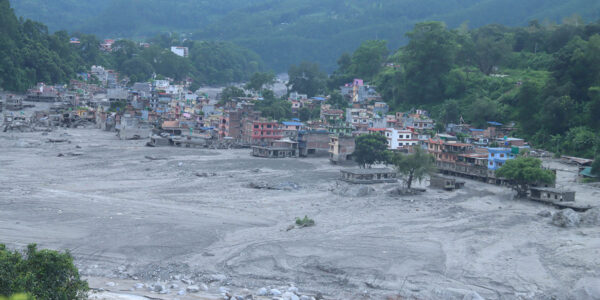
Wagle praised India’s assistance to Nepal during natural disasters. He recalled the support provided after the devastating 2015 earthquakes and the recent Bhotekoshi floods.
“India has stood with Nepal in every difficult time,” he said.
He also referred to Indian Prime Minister Narendra Modi’s telephone conversation with Shah following the recent floods and his assurance of assistance, highlighting the importance of solidarity between the two neighbors during crises.
Wagle called for a broader international debate on climate justice, questioning why countries such as Nepal, which contribute very little to global climate change, should have to borrow money to rebuild infrastructure damaged by climate-related disasters.
Wagle also discussed Nepal’s Gen Z movement and the changing political expectations of its younger generation. He said young people who had grown up with smartphones and social media were increasingly unwilling to accept traditional political practices and the status quo.
He stressed the importance of channeling public anger into democratic institutions and translating it into lasting reforms, saying the current government was working with these concerns in mind.
Wagle also highlighted the potential for Nepal to benefit from India’s economic expansion, particularly through tourism. As India’s middle class grows wealthier and gains greater purchasing power, more Indians are likely to travel abroad, he said.
Nepal could capitalize on this trend by attracting more Indian visitors to its tourism destinations, an opportunity the current government wants to pursue.
Wagle also had a brief meeting with Modi on the sidelines of the summit, which brought together political leaders, economists, policymakers and other prominent figures to discuss global and regional issues.