 Himal Press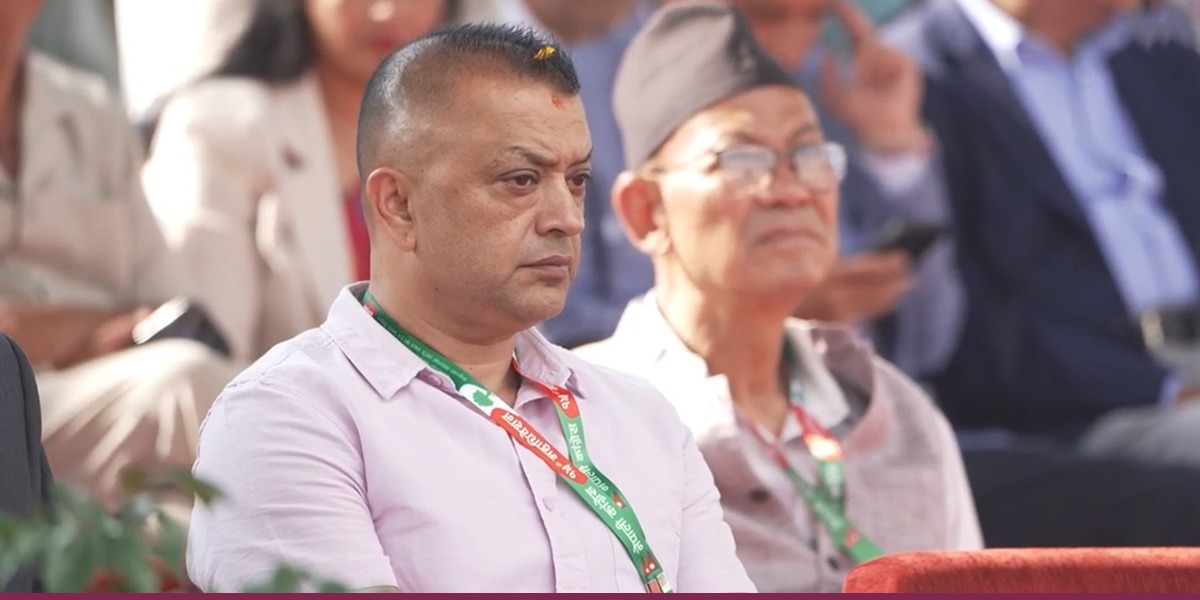
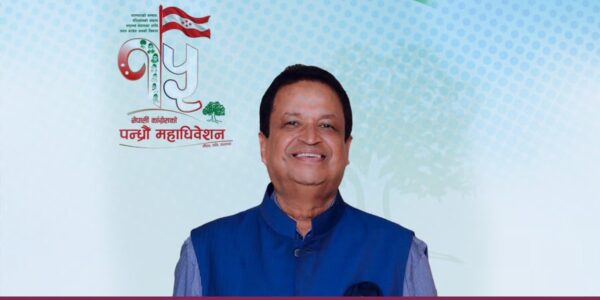
KATHMANDU: Nepali Congress (NC) President Gagan Kumar Thapa has proposed that the party not form pre-election alliances with any political party and instead contest elections under its own election symbol, with its own candidates and agenda.
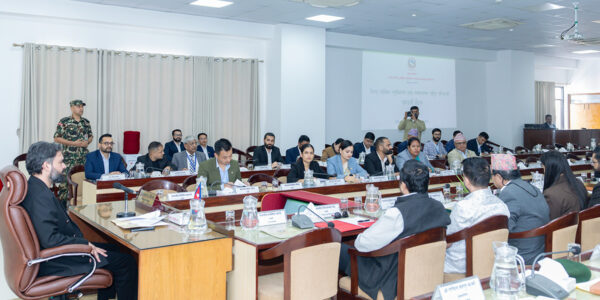
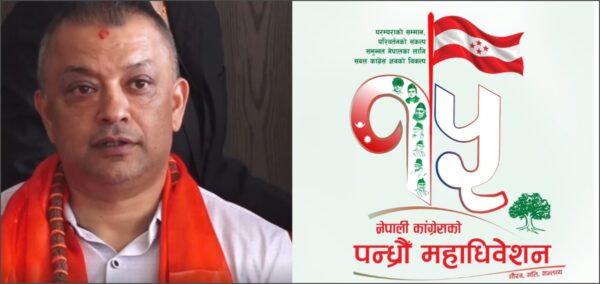
Thapa made the proposal in his political report to be presented at the party’s 15th General Convention which kicked off in Kathmandu on Sunday.
The report outlines the party’s political, ideological, organizational and economic direction for the next four years.
The report calls for a review of the party’s performance over the past two decades, saying that the NC had increasingly prioritized positions and power over its values and objectives. It says coalition management, power-sharing, factionalism and transactional politics weakened the party’s moral standing, while the tendency to protect its own members accused of corruption and irregularities undermined the autonomy of public institutions.
Thapa has acknowledged in the report that the party has grown increasingly distant from the younger generation and failed to understand changing public expectations. “That is why tendered an apology through the special general convention and made a commitment to reform the party,” he added in the report.
The report states that the party would contest future elections without pre-election alliances, relying on its own election symbol, candidates and agenda. “Candidate selection will prioritize merit, contribution and performance over factional affiliation, access and patronage,” it adds.
Thapa has also proposed giving greater importance to primary elections, public opinion polls and direct votes by party members in selecting candidates. The report commits not to change membership rules at the last minute to influence party conventions or candidate selection.
The report also said the party will push for constitutional provisions to prevent any individual from serving as prime minister for more than two terms. “Setting a limit on the prime minister’s tenure would prevent prolonged personal control over state power and party leadership,” it added.
It identifies “national renaissance and prosperity” as its central theme and links the party’s proposed revival not only to leadership and organizational changes but also to political culture, economic policy, the private sector, employment, social security, federalism, good governance, youth participation, technology, climate and national independence.
Thapa has proposed recognizing the private sector not merely as a source of tax revenue but as a key engine of wealth creation, production, innovation and employment.
The report calls for ensuring the security of private investment and policy stability and creating a business-friendly environment. It also proposes shifting the relationship between the government and private sector from regulation and tax collection toward cooperation and partnership.
The report places production, entrepreneurship and employment expansion at the center of economic policy. It proposes channeling remittances into productive investment in agriculture, industry, tourism and technology, while using Nepal’s water resources and clean energy potential as the basis for industrialization and green-energy exports.
Thapa said in his political report that the public uprising of September 2025 should not be dismissed merely as a conspiracy. It acknowledges demands for good governance, opportunities and fairness as legitimate public grievances.
He said in the report that it would be wrong for new political forces to claim sole ownership of the movement.
The report calls for an impartial investigation into the use of force by the state, violence, loss of life and property and alleged repression during the movement. Likewise, it has demanded legal action against those responsible and guarantees of truth, justice and reparation for victims.
The report assesses the party’s defeat in the March 5 election as a consequence of the party’s growing distance from people and political weaknesses over the past two decades. It says the party accepts the electoral mandate and is committed to playing a responsible role as the main opposition.
Thapa has proposed restructuring the NC from an election-focused organization into a political institution that remains continuously connected with citizens.