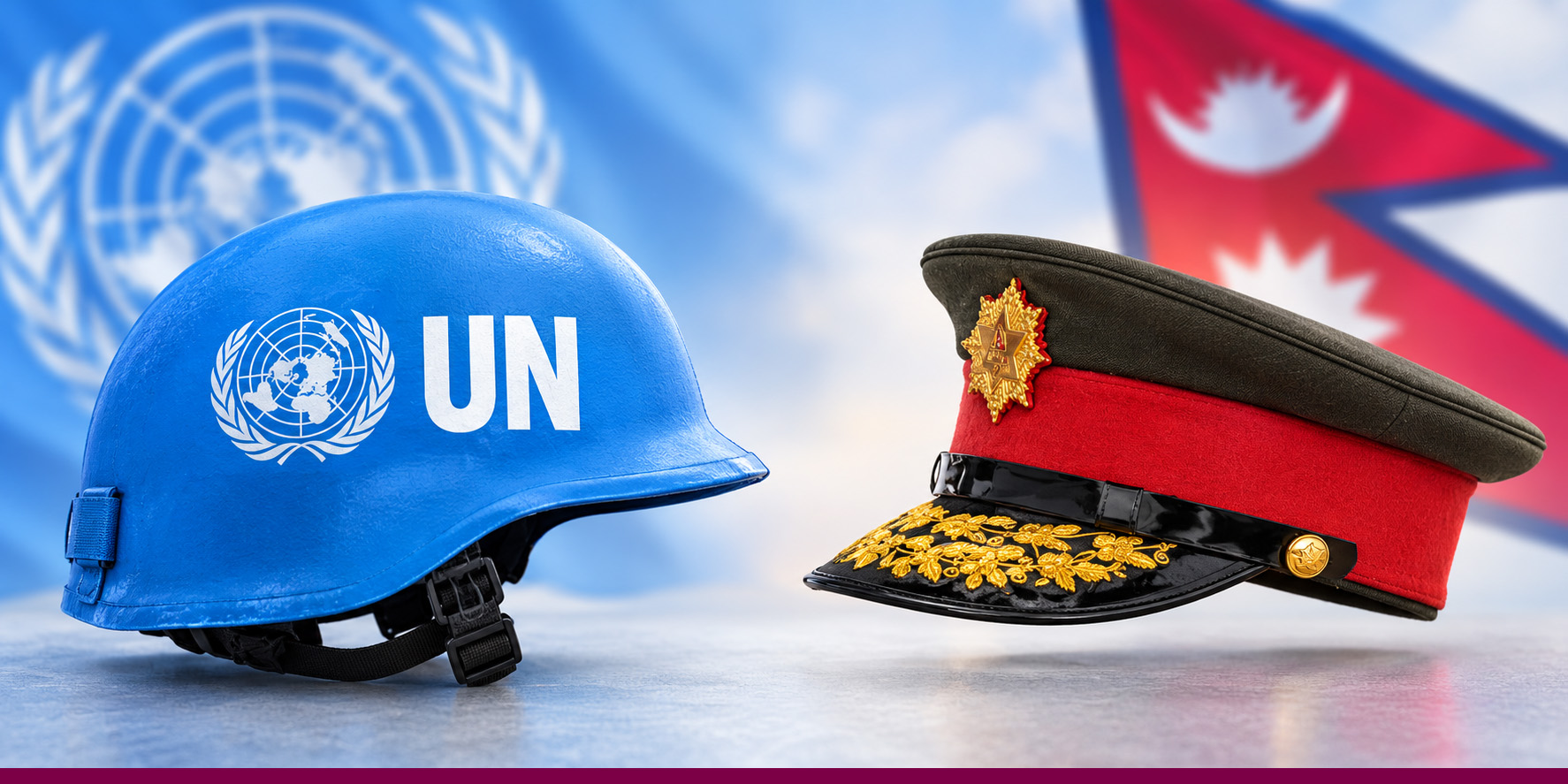
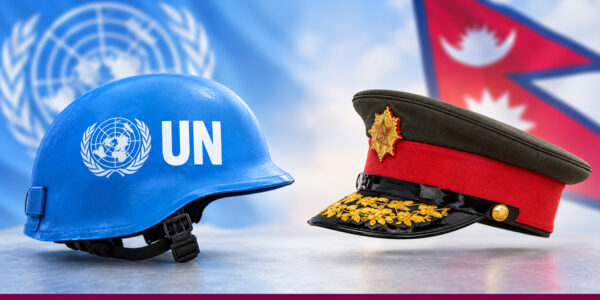
NEW YORK: After nearly seven decades of deploying troops to United Nations peacekeeping operations, Nepal is among the world’s top troop-contributing nations today.
The trust earned by Nepali security personnel through their willingness to take risks in conflict-affected regions has made Nepal a reliable partner of the United Nations. As a result, Nepal’s expectation of moving beyond its identity as a troop-contributing country and seeking a meaningful role—from force commanders to policy and decision-making levels—is increasingly becoming part of its diplomatic agenda.
Nepal’s engagement with UN peacekeeping began in 1958, when a small group of military observers was dispatched to the United Nations Observation Group in Lebanon (UNOGIL). Over the past 68 years, more than 150,000 security personnel from the Nepali Army, Nepal Police, and the Armed Police Force have participated in more than 40 international peacekeeping missions.
As Nepal’s contribution has grown, so have its expectations. The expectation is that Nepal should be given leadership roles in those missions. Nepal is now preparing to take further initiatives toward that goal.
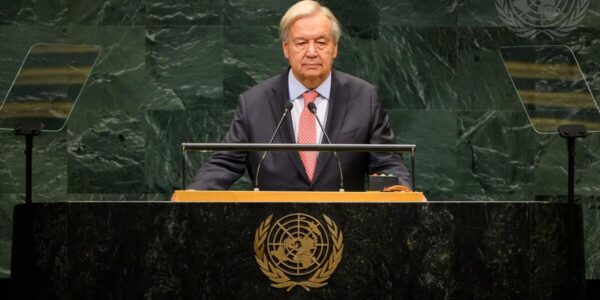
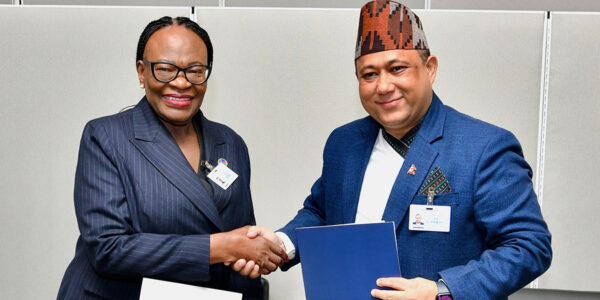
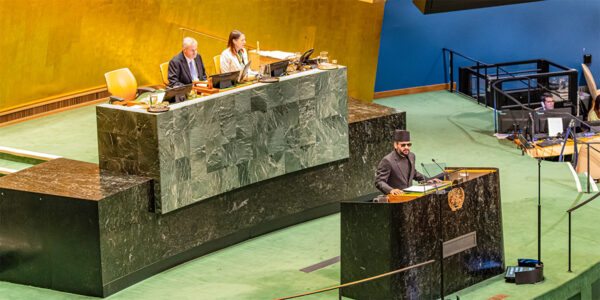
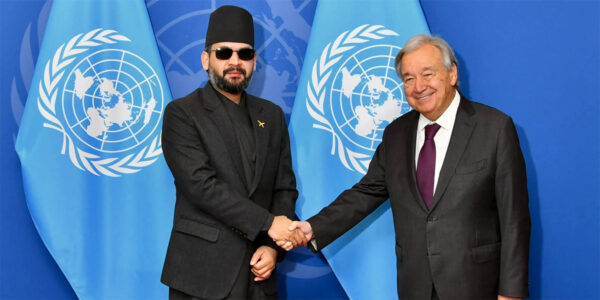
During the 81st session of the United Nations General Assembly, Minister for Foreign Affairs Shishir Khanal met with Jean-Pierre Lacroix, Under-Secretary-General for Peace Operations. During the meeting, Khanal thanked the United Nations for the trust it has placed in Nepali peacekeepers and said Nepal would continue contributing to UN peace operations in the coming days. Khanal also said Nepal should be given leadership opportunities in UN peacekeeping missions commensurate with its substantial presence.
“Nepal attaches great importance to its long-term cooperation with the United Nations and has moved forward with a commitment to world peace,” Khanal said. “Nepal is always ready to further strengthen this relationship, which is based on mutual trust, respect and cooperation. The world must be able to work together toward this goal.”
Khanal’s statement is more than a routine diplomatic commitment. It carries another message: Nepal’s contribution to global peace should be appropriately reflected in the Security Council and at other leadership and decision-making levels. He has said Nepal will formulate its policies with a proper understanding of the UN’s working mechanisms and Nepal’s role within them.
Seven decades under blue flag
According to the United Nations, Nepal is currently among the largest contributors of troops to UN peace operations. Latest data from the Nepali Army sow more than 6,000 Nepali peacekeepers and police personnel, including 593 women, are currently serving in 10 peacekeeping missions.
Nepali peacekeepers are deployed in areas including Abyei, the Central African Republic, Cyprus, the Democratic Republic of Congo, Kosovo, Lebanon, the Middle East, South Sudan and Western Sahara. Nepali security personnel have worked in difficult terrain, civil wars, humanitarian crises and highly insecure environments.
More than 150,000 Nepali security personnel have served under the blue flag over the years. Around 95 have lost their lives in the course of their service.
UN documents have specifically recognized the service and sacrifices of Nepali peacekeepers over the past several decades. For Nepal, participation in peacekeeping missions is no longer simply deploying security personnel abroad. Such participation has given Nepali security institutions direct experience in multinational command, civilian protection, humanitarian assistance, election security, conflict management and post-conflict stabilization.
Time spent under the blue flag is also a valuable asset in Nepal’s international diplomacy. Nepal should be able to use this experience at the diplomatic level. Assigning experienced military personnel to diplomatic missions or sending them as advisers to countries where they can contribute could also strengthen Nepal’s diplomacy. But such assignments should be based on active professional military experience rather than access or political influence.
In Nepali society, there is a common perception that soldiers are simply personnel who carry guns. Soldiers may carry guns, but officers who have attended staff college and risen through the ranks from lieutenant colonel to full colonel and then attended war college before becoming brigadiers possess considerable knowledge and understanding as well. Otherwise, how could the Nepali Army have successfully led multinational forces?
Large presence, limited leadership
However, the question is whether a country that contributes one of the largest numbers of personnel to UN peace operations has received a commensurate share of senior leadership positions in those missions. Nepal has long sought greater opportunities to serve as force commanders, deputy force commanders, heads of mission and in strategic and policy-level positions. Wherever Nepali officers have been given such opportunities, they have demonstrated strong performance in leadership roles.
Nepal’s journey in high-level UN peacekeeping leadership began when Major General Krishna Narayan Singh Thapa became the first force commander of the United Nations Iraq-Kuwait Observation Mission (UNIKOM).
Major General Victor Shumsher JB Rana served in a leadership role with the United Nations Peacekeeping Force in Cyprus (UNFICYP), Major General Balananda Sharma led the United Nations Disengagement Observer Force (UNDOF) in the Golan Heights, and Major General Pawan Jung Thapa led the United Nations Mission in Sudan (UNMIS), according to UN records.
Senior army officers have continued to serve as force commanders since then. Former CoAS Purna Chandra Thapa served as both head of mission and force commander of UNDOF as Major General. Major General Shibaram Kharel, Lieutenant General Ishwar Hamal and Lieutenant General Nirmal Kumar Thapa have also led the mission in the Golan Heights.
Since late 2025, Lieutenant General Ganesh Kumar Shrestha has been serving as the force commander of the United Nations Interim Security Force for Abyei (UNISFA). This is the first time Nepal has received the position of force commander in that mission. Shrestha is also currently serving as acting head of the mission.
Similarly, Major General Chitra Bahadur Gurung served as deputy military adviser at the UN headquarters from 2000 to 2002. Nepali officers continue to serve in various missions as sector commanders, staff officers and military observers.
Nepal’s expectations appear to have moved beyond numbers. That is a natural progression. Nepal’s advancement in military leadership and the trust it has earned from the United Nations are largely the result of its successful performance in UN responsibilities. Given the breadth of Nepali contributions to the United Nations, Nepal’s representation in the organization should increasingly be backed by highly capable personnel.
When Nepali officers are appointed to leadership positions, capable support personnel should also be deployed alongside them. There is a need to strengthen mechanisms for diplomatic lobbying alongside military advisers. Nepal should place greater emphasis on diplomatic lobbying in countries and locations where the United Nations has a significant presence, rather than limiting its diplomatic engagement to a narrow range of consular services.
UN peace operations around the world are themselves facing new challenges. The nature of conflict has changed. Alongside conventional warfare, terrorism, ethnic violence, political instability, threats to civilian security, humanitarian disasters and climate-related risks have emerged as new challenges for peace operations.
Therefore, having large numbers of troops alone will not be enough for future peace missions. Technology, expertise, leadership, civilian protection, humanitarian coordination and political understanding will be equally important. Nepal has an opportunity to build expertise in these areas.
The experience gained by Nepali security personnel at the Birendra Peace Operations Training Centre and in various international missions can now be linked to national capabilities. Increasing women’s participation, deploying specialized personnel, expanding the roles of military police and staff officers, and systematically preparing Nepali officers for senior command positions are also important.
Minister Khanal has expressed the expectation that Nepal’s contribution will be appropriately recognized and that its interests will be duly considered when opportunities arise for new deployments.
The issue raised by Foreign Minister Shishir Khanal in New York, therefore, should not remain limited to a routine diplomatic formality. It could mark the beginning of Nepal’s evolving diplomatic claim: Nepal no longer wants to be merely a country that sends peacekeepers, but also a partner in shaping the policies and leadership of international peacekeeping.


![Yosin pole raised as Indrajatra festival begins in Kathmandu [In Pictures]](https://en.himalpress.com/wp-content/uploads/2026/09/Indrajatra-5-600x300.jpg)