 Himal Press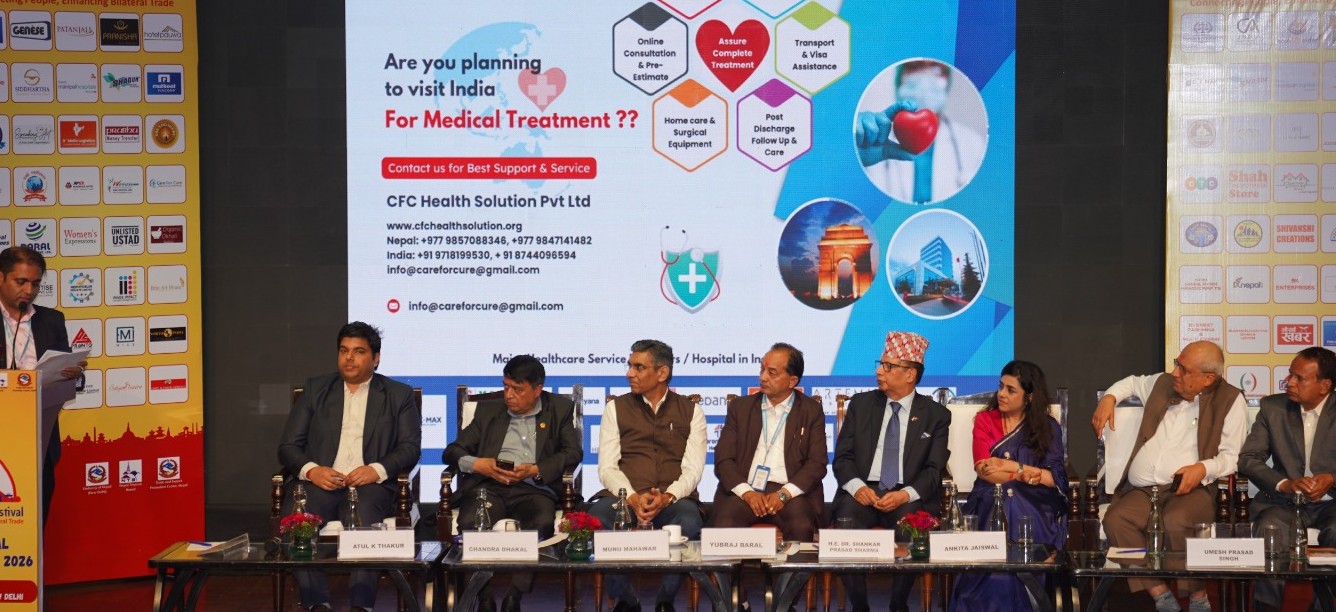
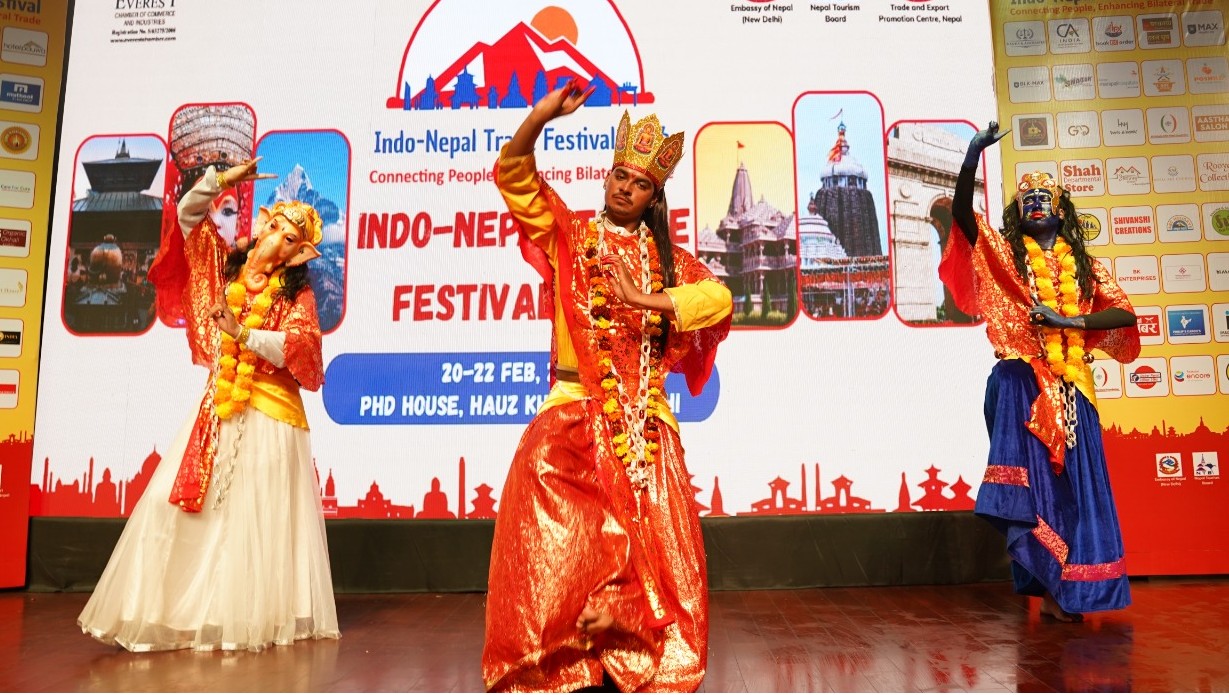
KATHMANDU: The second edition of the Indo-Nepal Trade Festival is underway in New Delhi. The event aims to elevate the centuries-old historical relationship between Nepal and India to new heights through modern trade, investment, and tourism cooperation.
The festival, which began on Friday and concludes on Sunday, features discussions on a wide range of topics.
Speaking at the inauguration session on the theme “Connecting People, Enhancing Bilateral Trade,” participants emphasized the need to transform the traditional “roti-beti” (bread-and-marriage) ties between the two countries into a new chapter focused on investment and shared prosperity.
Ambassador of Nepal to India, Dr Shankar Prasad Sharma, said Nepal-India relations extend far beyond diplomacy and are deeply rooted in emotional and cultural bonds. “Nepal and India are connected not only by geography but also by shared culture, religion, and history. We must now convert this natural connectivity into economic gains and tourism promotion,” he said. Dr Sharma also expressed concern over the low publicity of Nepal’s scenic and historic destinations in India. He specifically highlighted the need to promote Ramgram, a sacred site believed to contain relics of the Buddha, among Indian tourists.
He also urged the Nepali diaspora in India to invest in Nepal and said the embassy was ready to support the private sector in preparing a clear investment roadmap.
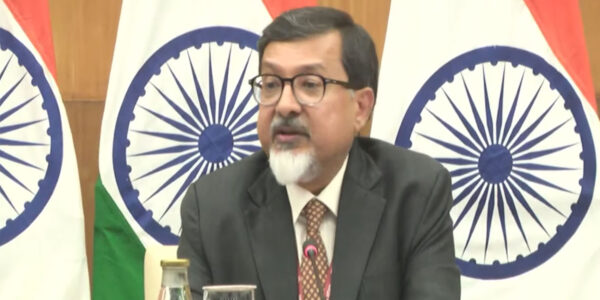
The event’s chief guest, Munu Mahabar, Additional Secretary at India’s Ministry of External Affairs, conveyed best wishes for Nepal’s upcoming elections and shared that 24 Nepali entrepreneurs received training at IIT Madras under the India-Nepal Startup Partnership Network. “Nine of them have been selected for investment support,” he added.
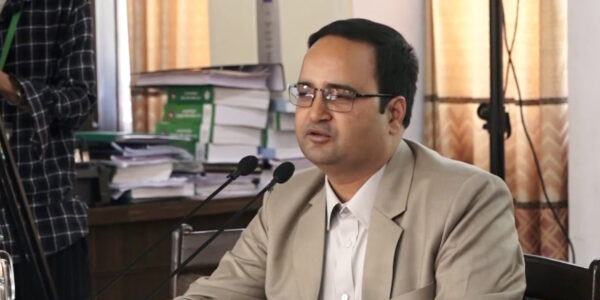
Chandra Prasad Dhakal, president of the Federation of Nepalese Chambers of Commerce and Industry (FNCC), called on Indian investors to turn the two countries’ historic ties and geographic proximity into concrete business opportunities. He presented proposals for joint venture investments in Nepal’s hotel sector, cable cars, and religious tourism infrastructure. Dhakal also encouraged non-resident Nepalis in India to participate in the initiative through Nepal Development Public Limited, a Rs 10 billion investment vehicle.
Similarly, Umesh Prasad Singh, President of the Federation of Nepal Cottage and Small Industries, said that nearly one million Indian citizens are employed in Nepal’s small-scale industries, reflecting the close economic and social ties between the two countries.
Ankita Jaiswal, president of Sustainable Tourism Uttar Pradesh, said Nepal and India are linked not only geographically but also through deep familial and human connections. She emphasized the need to align service, hospitality, and cultural ties with sustainable development.
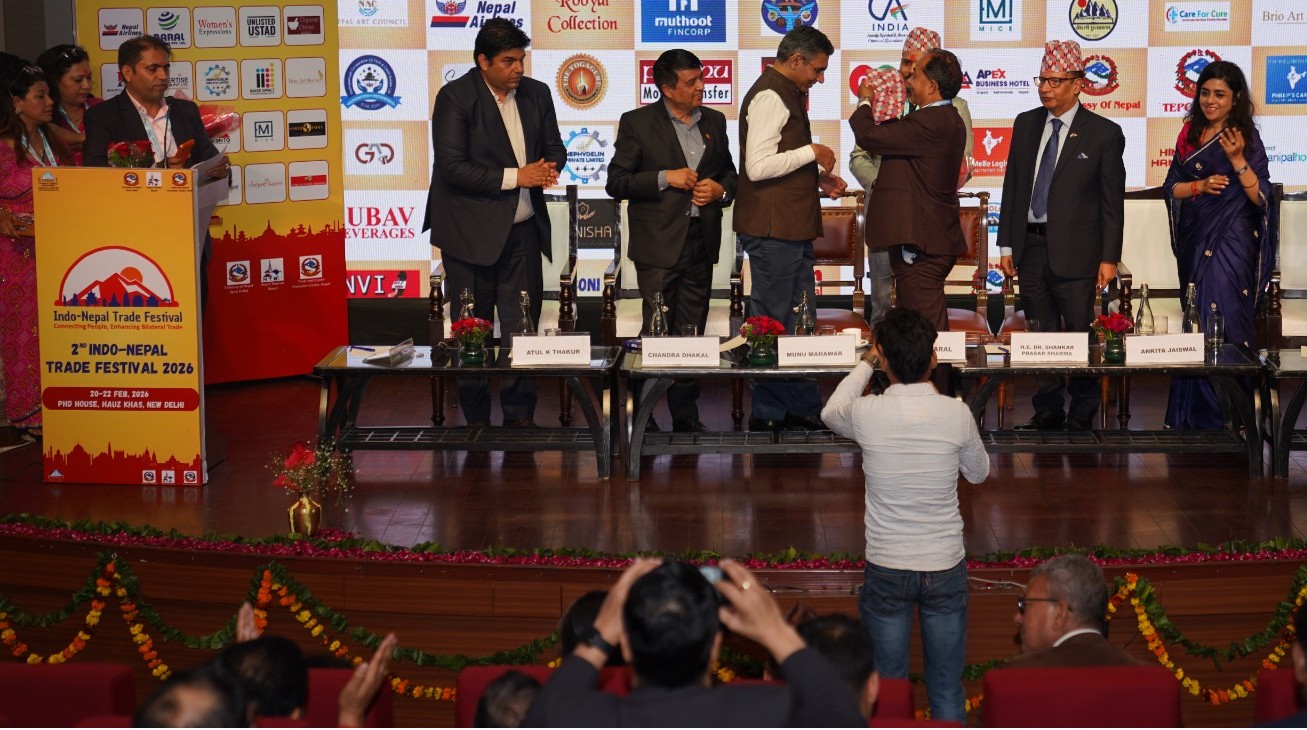
Festival organizer Yubaraj Baral, President of the Everest Chamber of Commerce and Industries, expressed confidence that the event would become a milestone in strengthening people-to-people relations through trade, art, and cinema.
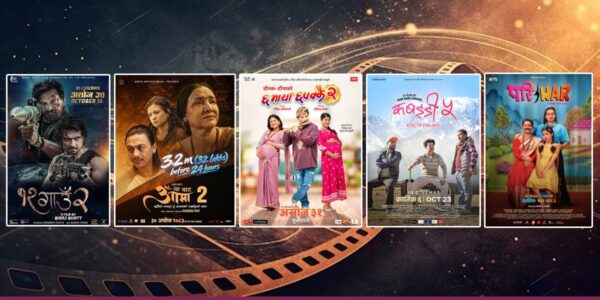
On the first day, the Nepali film Gorkha Warrior, directed by Milan Chamlng Rai and based on the bravery of British Gurkhas, was screened. This was followed by a panel discussion on “The Role of Cinema as Soft Power in Nepal-India Relations.” The discussion featured speakers including Nepal’s Deputy Chief of Mission Surendra Thapa, director Rai, Nepal-India relations expert Ashok Mehta, President of the Film Directors Guild of Nepal Janakdeep Parajuli, and Anand Jha, Vice President of India and South Inc. The session was moderated by Delhi-based Nepali journalist Akanksha Shah.
The three-day festival features more than 10 high-level sessions on topics such as hydropower, cross-border trade, the digital economy, and Vision 2030.