
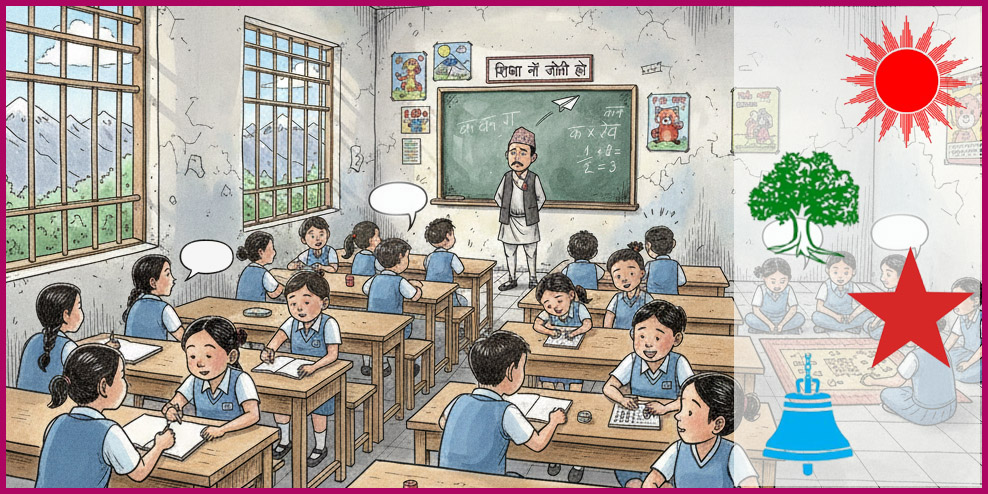
KATHMANDU: Major political parties have included ambitious and attractive policy commitments for the education sector in their election manifestos for the House of Representatives elections scheduled for March 5.
The CPN-UML, Nepali Congress (NC), Nepali Communist Party, and Rastriya Swatantra Party (RSP) have pledged sweeping reforms in the education sector and increased access to school-level, higher, and technical education.
Among others, the parties have proposed increasing the education budget, initiating legal reforms, promoting research, and introducing digital education, model schools, university reform, and employment-linked education policies.
The NC has pledged to allocate 20% of the national budget to education, reform teachers and schools, implement digital infrastructure and smart learning systems, and develop universities into hubs of research and technological innovation.
Similarly, the UML has promised to ensure free and compulsory education for all children and to orient the education system toward nationalism, entrepreneurship, and innovative thinking. It has also emphasized reforms in community schools and higher education.
The CPN has vowed to endorse the Federal Education Act in the first meeting of Parliament, establish smart residential schools, improve teacher and student management, and promote technical and employment-oriented curricula.
Meanwhile, the RSP has pledged to end political interference in education, establish advanced inclusive model schools in every province, provide necessary services to children with disabilities, and make universities research- and employment-focused.
CPN-UML
The UML has expressed similar commitments in both school and higher education through its manifesto. The party has prioritized the enactment of the School Education and Higher Education Acts.
The party has pledged to maintain academic autonomy in universities and develop schools and universities as autonomous institutions with accountability. It plans to ensure free and compulsory education for all children, including pre-primary level, and to guarantee that no child is deprived of education due to geographical, economic, or physical constraints.
The manifesto states the education system will move beyond an enrollment- and exam-centric approach toward producing human resources that promote nationalism, entrepreneurship, social responsibility, innovative thinking, and national capacity building. To achieve this, the party has pledged to develop contemporary, practical, ethical, patriotic, and digital-friendly curricula and learning materials.
The party also aims to reverse the trend of students going abroad for higher education by enforcing the education calendar strictly, and expanding employment-oriented technical education and “earn while you learn” programs.
It has also promised safe school environments with laboratories, libraries, drinking water, nutritious mid-day meals, and world-class creative and vocational learning opportunities.
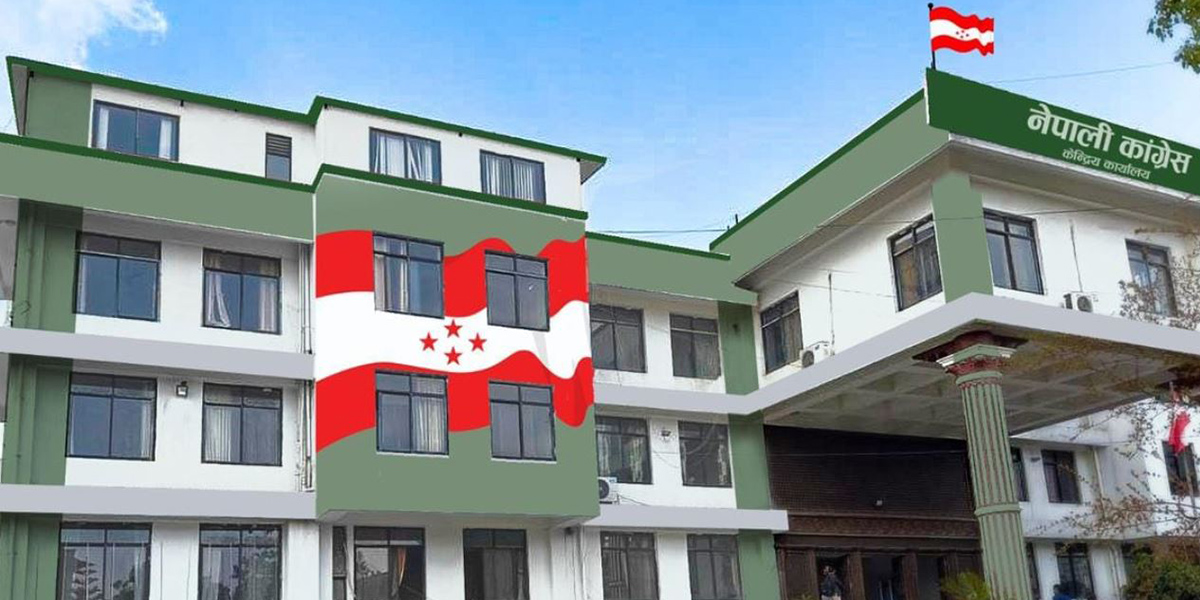
Nepali Congress
NC has outlined a range of education policies through its manifesto. According to the document, separate laws related to higher education, school education, and technical education will be passed within one year. The party has also pledged to free the School Education Act from pressure groups and remove the provision that makes the prime minister the chancellor and the education minister the pro-chancellor of universities.
Under its teacher policy, the NC has promised to address the problems of permanent, temporary, contract, relief, special, and Early Childhood Development (ECD) teachers and provide them with benefits equivalent to civil servants. Headteachers will receive an additional allowance of at least 10% percent of their salary, and teachers working in remote areas will be given special incentives.
The party has proposed expanding digital infrastructure in schools, developing digital learning materials, promoting smart teacher training, and enhancing the digital skills of teachers and students. It has also pledged to ensure new textbooks at the start of each academic year and to expand at least two model schools at every local level.
At the university level, the party plans to prioritize research, innovation, and technological advancement, establish a National Research Fund, and provide merit-based scholarships. It has also pledged joint research, internships, technology transfer, and employment guarantees in collaboration with industry, business, and service sectors. The party has also proposed establishing accredited universities linking education, research, employment, and learning.
Nepali Communist Party (NCP)
The NCP has expressed commitment to pass the Federal Education Act in Parliament’s first meeting. It has proposed running schools through local governments and forming a fully autonomous and politically independent Higher Education Commission by integrating the University Grants Commission and the Medical Education Commission.
The party has also pledged to build one smart residential model school per municipality, provide technology-friendly education, and expand digital literacy.
It plans to use digital technology to ensure transparency in teacher attendance, student progress, and examination systems.
Rastriya Swatantra Party (RSP
Through its commitment paper, the Rastriya Swatantra Party has proposed ensuring the political independence of teachers, professors, and students. It has pledged to completely prohibit teachers and professors from engaging in any political affiliation, curb disorder and obstruction through student organizations, and develop a non-partisan academic student representation system.
The party has also promised to improve the quality, access, and competitiveness of public education by establishing advanced inclusive model schools in every province, providing necessary services to children with disabilities, and making universities research-driven and employment-oriented.
The RSP has further pledged to simplify procedures for foreign universities to operate constituent campuses and degree programs in Nepal, make it easier for foreign faculty and students to study and reside in the country, and expand the health insurance program under a strengthened model.