 Himal Press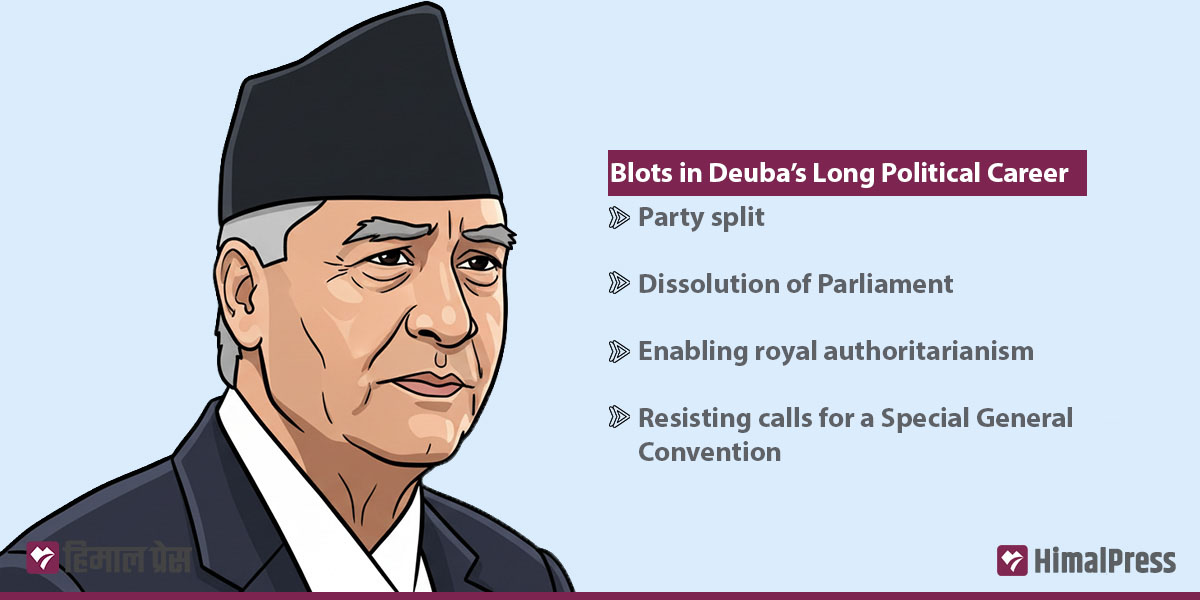
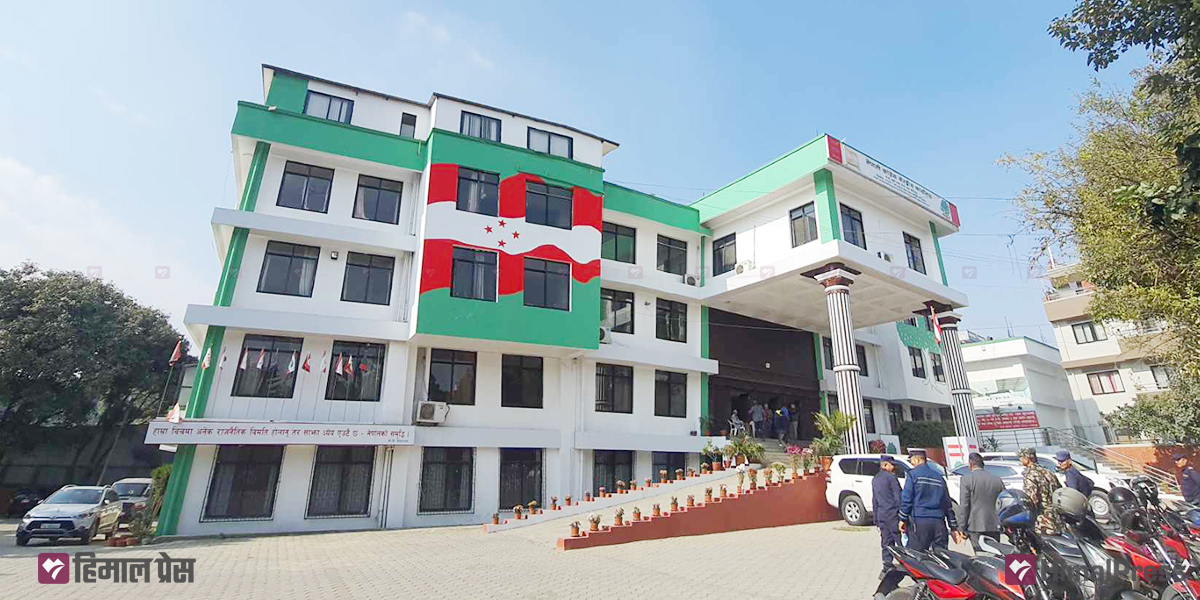
KATHMANDU: Another bitter chapter has been added to the political life of Nepali Congress (NC) President Sher Bahadur Deuba. While he still holds the party presidency, a special general convention began in Kathmandu on Sunday at the call of General Secretaries Gagan Kumar Thapa and Bishwo Prakash Sharma. Deuba is not participating in the convention, which, according to his faction, is against the party statute.
Deuba has made major contributions to the party during his long political career, and also suffered painful experiences. He has endured bitter episodes such as the split of the Nepali Congress, the dissolution of Parliament, and his public humiliation after being declared ‘incompetent’ by the king. These controversies have often overshadowed his role in Nepal’s social transformation and development.
Deuba entered politics as a student leader. He went on to become the founding president of the Nepal Students’ Union (NSU) – the student wing of the NC, a Central Working Committee member of the party, Home Minister, and a five-time Prime Minister.
Internal conflict within the party led Deuba to split the Nepali Congress in 2002 and form the Nepali Congress (Democratic) under her leadership. Ahead of the first Constituent Assembly election in 2007, the party was merged back into the parent party.
During his second tenure as the Prime Minister, Deuba recommended the dissolution of the House of Representatives to then King Gyanendra Shah in 2002. He was accused of paving the way for royal authoritarianism by dissolving an elected parliament. Yet, the same king dismissed Deuba as prime minister on October 4 of the same year.
Deuba became Prime Minister for the third time in June 2004, leading a coalition government of the CPN-UML and Nepali Congress (Democratic), famously declaring that the “regression had been half-corrected.” However, King Gyanendra again removed him from office on February 1, 2005, terming him “incompetent,” and placed him under house arrest for 10 months.
Deuba was the Prime Minister when the Maoists launched the “People’s War” in 1996. The Maoists submitted a 40-point demand to his government before going underground. Critics often argue that had some of those demands been addressed at the time, the country might have avoided a decade of violence.
During the Gen Z movement of September 8 and 9, Deuba and his wife were physically attacked at their residence on September 9.
Addressing a Central Working Committee meeting on October 14, he handed over acting party leadership to Vice President Purna Bahadur Khadka and left for Singapore for treatment. Many young leaders welcomed the smooth transfer of responsibility, while others believed he was preparing to step back from active politics.
Deuba’s term as party president ended in late November. Having already served two consecutive terms, he is not eligible for a third term under the party statute. This led to expectations that he would stay away from controversial party decisions. However, since returning from Singapore, Deuba has increased his political engagement and meetings. He has extended the term of the party’s Central Working Committee. Even though Deuba does not attend party meetings, leaders claim that meetings chaired by Acting President Khadka proceed as per Deuba’s wishes.
After the Central Working Committee failed to address the demand for a special general convention due to Deuba’s stance, General Secretaries Thapa and Sharma took the initiative to convene the event.
Deuba is now facing growing criticism for failing to resolve internal disputes despite holding the top post, for being surrounded by narrow interest groups, and for not understanding the sentiments of the younger generation.
If the special general convention removes him from the presidency, another bitter label will be added to Deuba’s record: a president forcibly ousted.
Supporters of the convention, however, say it is too early to discuss leadership change and that the final decision will be made during the closed-door session scheduled for Monday.