
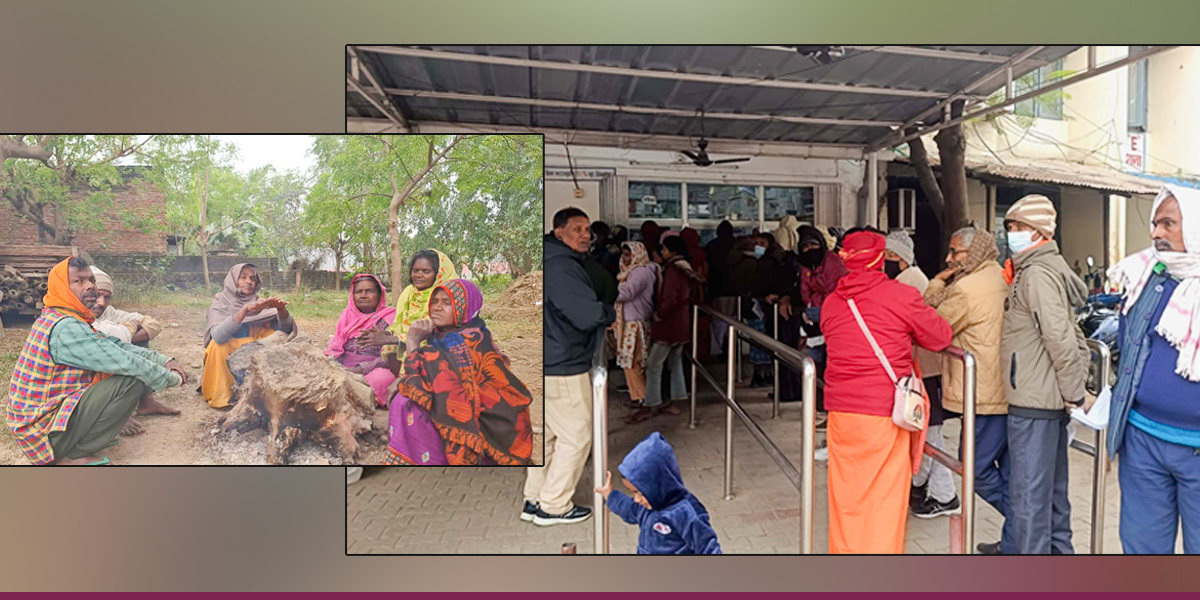
JANAKPURDHAM: Extreme cold weather has made life difficult across the Madhesh Province. People have been burning firewood, cow-dung cakes, and coal to keep themselves warm. As a cold wave grips the region, people are staying indoors except for essential work.
According to the Weather Forecasting Division under the Department of Hydrology and Meteorology, dense fog and mist have spread a cold wave across various parts of Madhesh since last week.
As more people light fires to keep themselves warm, cases of burn injuries have increased in the province. Doctors at the Provincial Hospital, Janakpurdham, say the number of patients with burn injuries and hypothermia is rising with each passing day. They say an average of 400–500 patients are seeking treatment at the hospital daily. About 40% of them suffer from burns and hypothermia, they added.
Dr Jamun Singh, director of the hospital, said the drop in mercury has led to a rise in cases of hypothermia, burns, viral pneumonia, cold-induced diarrhoea, asthma, and heart-related problems. “Most hypothermia and burn patients are from poor and working-class backgrounds, including the elderly, children, and people living in open or poorly sheltered areas in rural regions,” he added.
According to Dr Singh, most patients coming for treatment are suffering from hypothermia, burns, viral pneumonia, cold diarrhoea, asthma, and heart attack. “Among them, cases of hypothermia, burns, and viral pneumonia are the most common,” he added.
Doctors say prolonged exposure to cold can cause an abnormal drop in body temperature that can result in hypothermia.
“Hypothermia occurs when the body is unable to maintain warmth after prolonged exposure to extremely cold conditions,” Dr Singh said. “In Madhesh, people often burn firewood, coal, and cow-dung cakes indoors with doors and windows closed. The smoke cannot escape, oxygen levels fall, and carbon monoxide enters the body. This causes breathing difficulties and even leads to death.”
Sitting in cold air, wearing inadequate or wet clothing, sleeping outdoors at night, poor nutrition, and inhaling smoke from indoor fires are among the main causes of hypothermia, he said.
Dr Singh added that newborns and children, the elderly, the poor and daily wage laborers, people living on the streets, those with chronic illnesses such as asthma, diabetes, or heart disease, malnourished individuals, and pregnant women are most vulnerable to hypothermia. “Since these groups have a reduced ability to regulate body temperature, hypothermia sets in more quickly,” he said.
What is hypothermia?
Hypothermia is defined as a medical emergency that occurs when the body temperature falls below 95°F. The human body normally maintains a core temperature of around 98.6°F, and even a slight drop can disrupt normal bodily functions.
Based on severity, hypothermia is classified into three stages: mild (95°F to 89.6°F), moderate (89.6°F to 82.4°F), and severe (below 82.4°F). Each stage presents different symptoms and requires varying levels of medical intervention, according to doctors.
Common symptoms of hypothermia include shivering, difficulty breathing, slurred speech, cold and bluish skin, and loss of consciousness.
Senior physician Dr Vijay Kumar Singh said anyone experiencing breathing difficulties or symptoms such as fainting should seek immediate medical care. He said hypothermia cases are rising due to poverty and a lack of public awareness. “Poverty levels are high in Madhesh Province. Those who cannot afford warm clothing or nutritious food are forced to rely on open fires, which increases the risk,” he said.