 Himal Press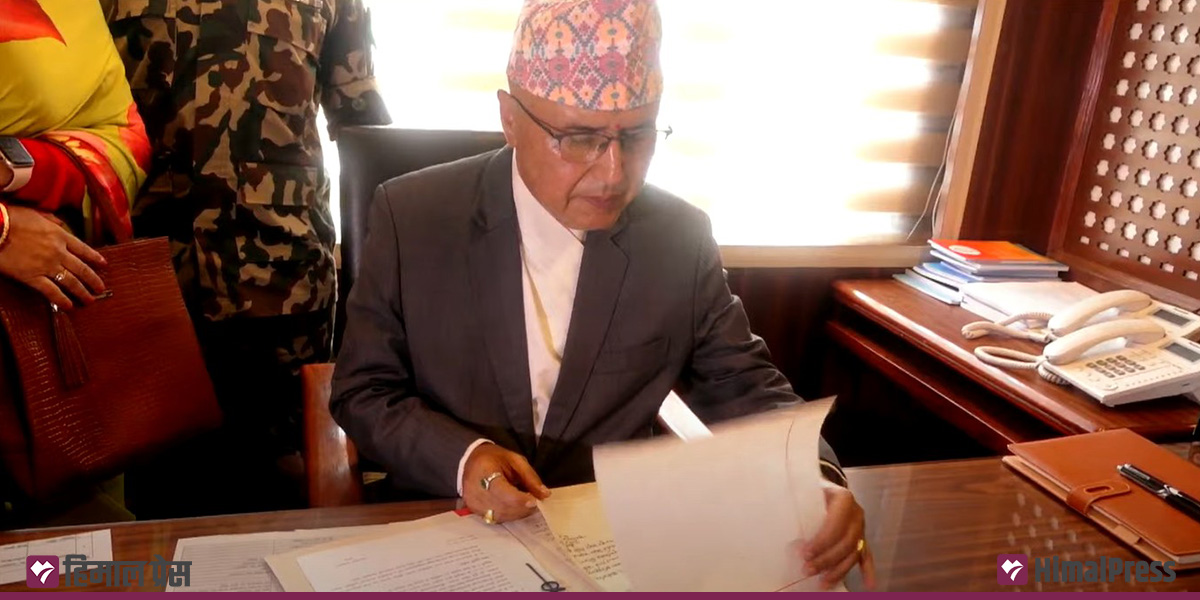
KATHMANDU: Minister for Finance Rameshore Prasad Khanal has said that the government is continuously working to boost private sector confidence and create a conducive environment for business and investment.
Speaking during a meeting with leaders of Nepal’s three major private sector umbrella organizations — Chandra Prasad Dhakal, President of the Federation of Nepalese Chambers of Commerce and Industry (FNCCI); Birendra Raj Pandey, President of the Confederation of Nepalese Industries (CNI); and Kamlesh Kumar Agrawal, President of the Nepal Chamber of Commerce (NCC), Minister Khanal said the government has introduced several policy measures to facilitate post-crisis recovery.
He said that the government has announced tax concessions, banking facilities and insurance facilitation to support reconstruction and business continuity. Similarly, the recent abolition of the customs reference price system and the introduction of an online customs valuation database are expected to make trade more transparent and efficient, he added.
The private sector leaders welcomed the government’s initiatives and urged entrepreneurs and member organizations to fully utilize the new database system.
The database system has addressed long-standing complaints about the reference price list which is revised every six months. It collects and compares real-time data on all customs-cleared imports, and helps to identify the actual transaction price.
During the meeting, the private sector leaders expressed concern over the recent infiltration and violent incidents during youth-led protests, which they said had disproportionately affected industries and businesses. “The private sector, which contributes 81% to the national economy and 86% to employment, has been discouraged by such attacks,” they said, calling on the government to take immediate legal action against those involved in arson, looting and vandalism.
They reiterated their commitment to maintaining zero tolerance against corruption and urged the government to ensure that entrepreneurs and investors can operate without political or bureaucratic interference.
While acknowledging that the current government’s main focus is on holding elections, the three organizations said this period also offers an opportunity to lay the groundwork for long-term economic reforms. They proposed organizing a multilateral finance conference under private sector leadership to attract investment and reassure stakeholders about Nepal’s economic stability.