
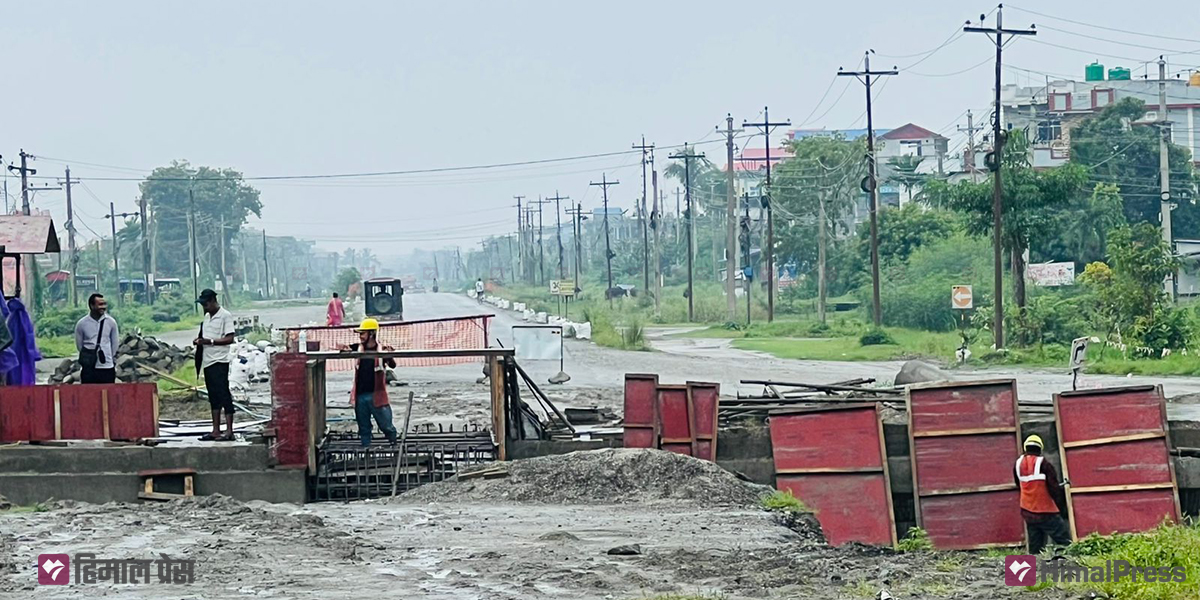
ITAHARI: The construction of the Kakarbhitta–Laukahi section of the East–West Highway, which is being upgraded to meet Asian Highway standards, is moving forward at a sluggish pace, with only 27% of the work completed so far.
The project, which covers 95.7 kilometers from Sitapuri in Jhapa to Labipur in Itahari of Sunsari, is being implemented in two parts – the eastern and western sections.
Pallav Shrestha, the information officer at the Itahari office of the Kakarbhitta–Laukahi Road Project, said about four kilometers of road (both lanes) have already been blacktopped between Laxmimarg and Bhaunne. Works will also continue during the Dashain festival period, he added.
However, electricity poles that have yet to be removed by the Nepal Electricity Authority (NEA) and shortages of construction materials have slowed down the work, according to the project office. “Supply of construction materials is inadequate,” Shrestha said, adding that this could delay progress.
The project office aims to achieve 60% work progress within the current fiscal year if construction materials are secured and right-of-way cleared on time.
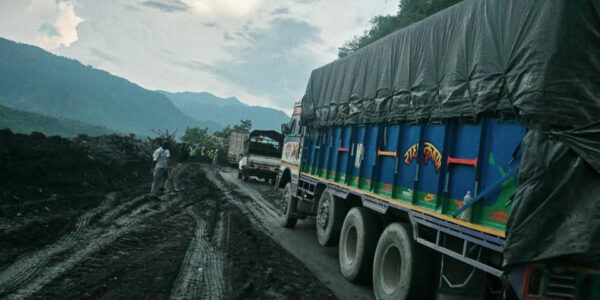
Diversions that had made travel difficult have now been closed, and traffic has resumed along the highway. Similarly, 31 bridges – including three longer than 300 meters over the Ratuwa River in Jhapa, and Bakraha and Lohandra rivers in Morang – are being constructed. Likewise, 10 overpasses in key urban locations such as Itahari of Sunsari Damak of Jhapa and Bansbari of Morang are also being built.
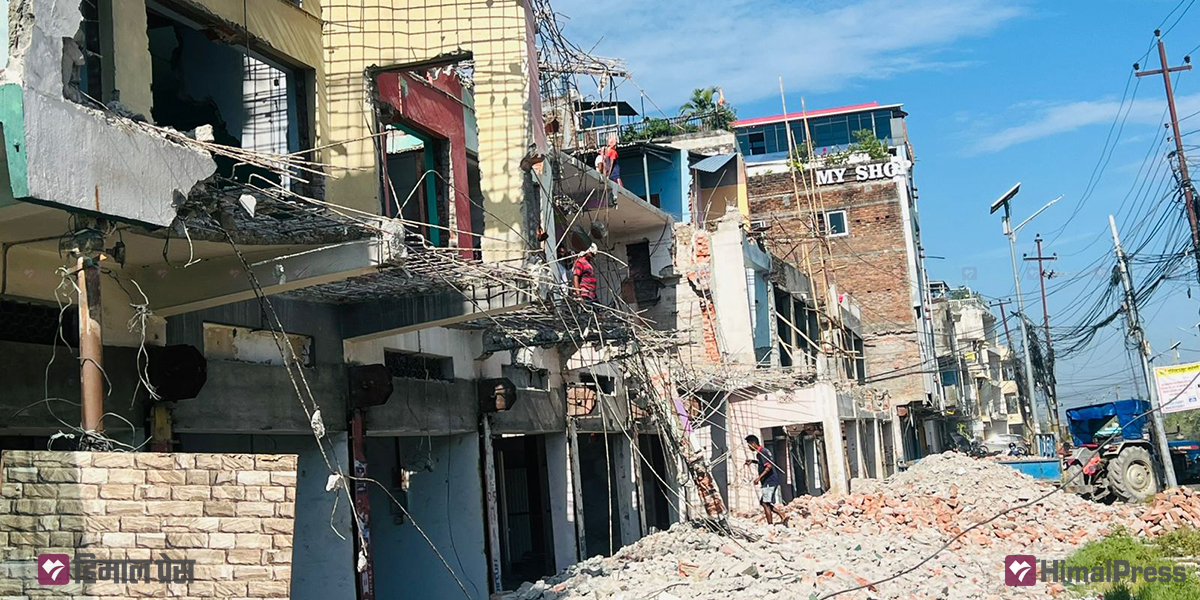
In the Itahari section, 124 roadside structures need to be demolished to widen the highway. Of them, only 25 have been removed so far.
Progress in the eastern section is slower, with only 22–25 percent of the work completed so far, according to Project Officer Ashish Dev.
Upon completion, the highway will have six lanes in urban areas and four lanes in forest stretches, designed for a speed of up to 100 km/h.
The project, which began on February 1, 2024, is slated for completion by February 1, 2027. It is being implemented with financial support from the Asian Development Bank, which is covering 84.1% of the Rs 34.91 billion budget, with the government funding the remaining 15.9%.
The Kakarbhitta–Laukahi stretch forms part of the Asian Highway that begins in Bangkok, Thailand, and passes through Myanmar, Bangladesh, India, Nepal and Pakistan.
India has already extended the highway up to the Kakarbhitta border point in eastern Nepal.