
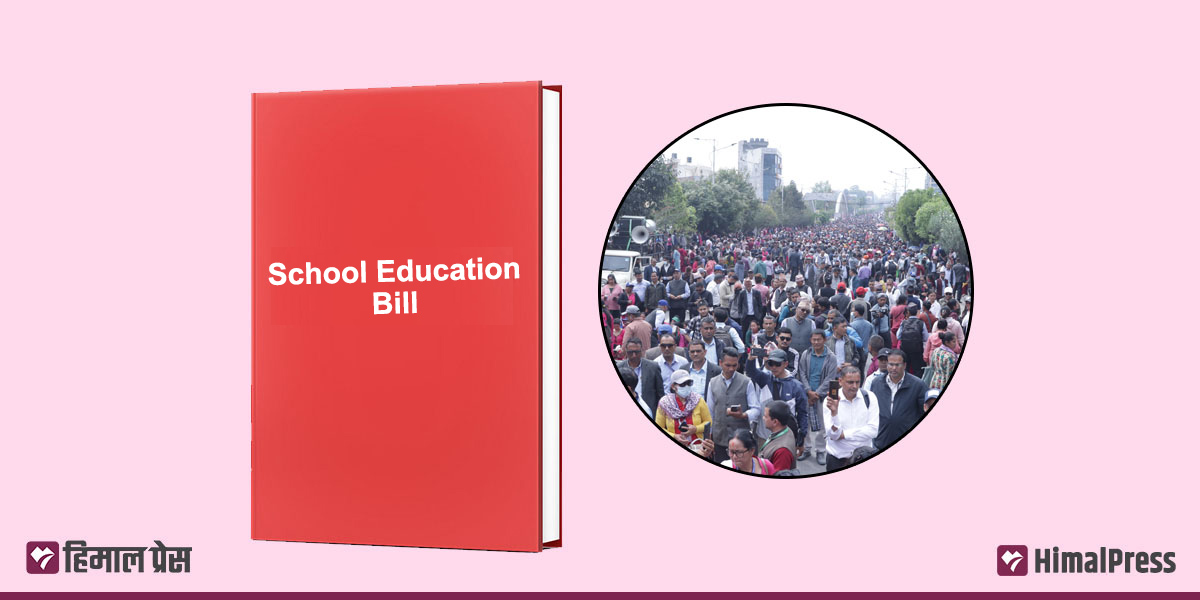
KATHMANDU: The School Education Bill, which was drafted to amend and consolidate existing laws related to the education sector, has become defunct with the dissolution of the House of Representatives.
The Bill, which was set to replace the 54-year-old Education Act, had reached its final stages before being rendered inactive.
The political situation created by the Gen-Z protests earlier this week led to the formation of an interim government with a mandate to hold elections within six months. In this context, a new education bill can only be introduced if the next government, formed after the elections, decides to bring it forward.
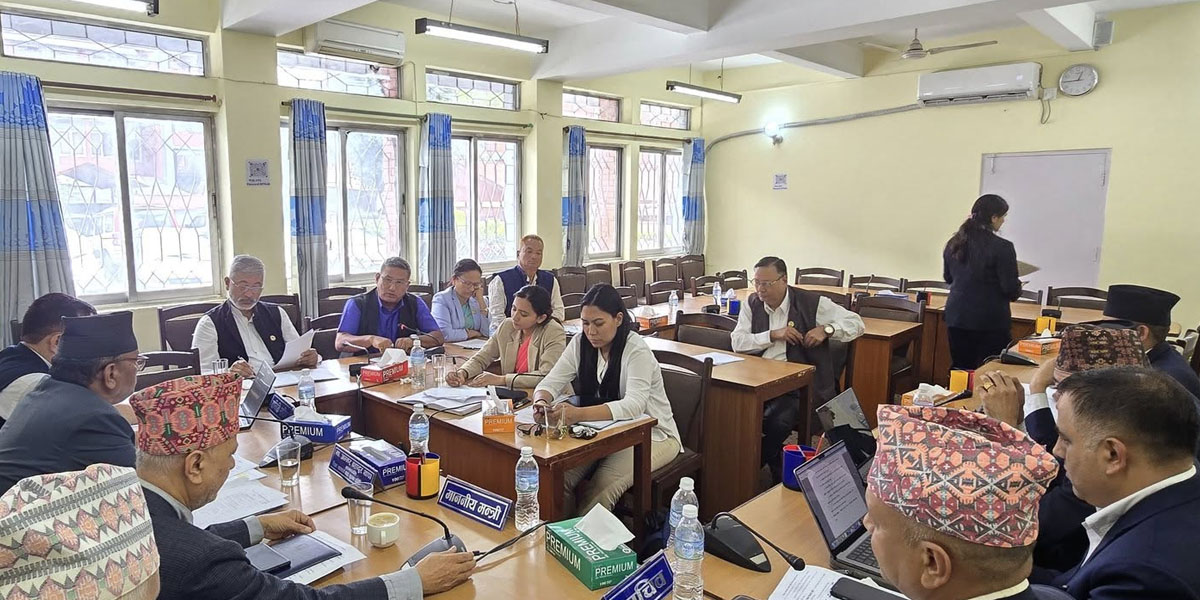
The defunct bill originated in the House of Representatives. It was introduced by the government in mid-2023, following pressure from private school operators in July and from the Confederation of Nepalese Teachers (CNT) in October. Then-Education Minister Ashok Kumar Rai tabled the bill in parliament on September 13, 2023. It was sent to the Education, Health, and Information Technology Committee for clause-wise discussion on October 12. By the time the bill reached its final stages, nearly Rs 10 million had already been spent, according to the committee.
Committee Secretary Dasharath Dhamala confirmed that the Bill has become void following the dissolution of the House. “Bills originating in the National Assembly remain there, while those originating in the House of Representatives automatically become defunct when the House is dissolved. Since this Bill had originated in the lower house, it has lost its validity,” he explained.
The country has seen frequent changes in government since the inception of the Bill. Giriraj Mani Pokharel and Devendra Paudel of the Maoist Center, Ashok Kumar Rai of the Janata Samajbadi Party (JSP), Sumana Shrestha of Rastriya Swatantra Party (who has since left the party), and UML leaders Bidya Bhattarai and Raghujii Pant all oversaw the Bill’s progress at different stages in their capacity as the education minister.
Secretary Dhamala said vested interests of political parties and teacher groups delayed the Bill before it eventually became void. “Had teachers not applied unnecessary pressure, the subcommittee would have tabled the report and the law would already be in place. Instead, they lobbied different leaders, piled up demands and blocked its passage,” he said, adding that passing a new education law in the near future now looks difficult.
Amar Bahadur Thapa, chairperson of the House committee on Education, Health and Information Technology, which has now been dissolved, said all progress made so far has gone to waste. “The bill has returned to zero. Now it all depends on how the government formed after the elections will move forward,” he added.
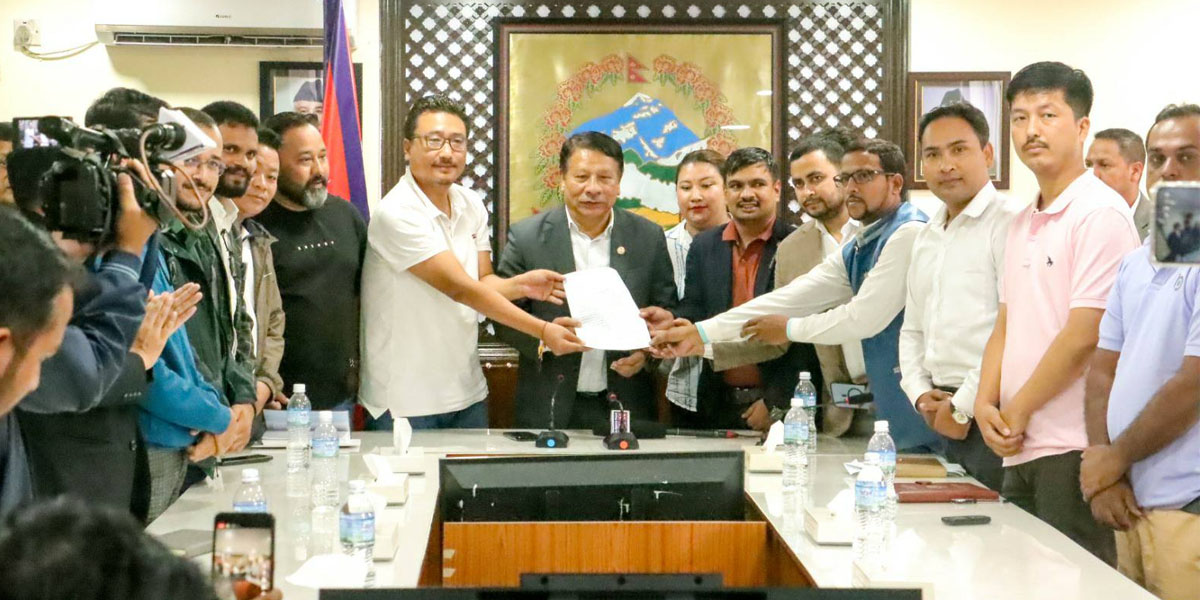
CNT President Laxmi Kishor Subedi said the organization will adjust its approach according to how the new political situation develops. “A new education minister will come. We will meet with them and respond according to the evolving circumstances,” he said, expressing hope that a new government after the elections will revive the bill.
The Federation had raised objections to provisions in the bill, including recruitment quotas for temporary teachers (60% internal competition and 40% open, instead of the current 75–25 ratio), lack of guaranteed promotions for permanent teachers, exclusion of temporary service periods from calculations, omission of license renewal provisions, and disciplinary measures imposed against past agreements. Likewise, it had opposed unclear provisions on school staff positions and benefits, ambiguous terms for early childhood teachers, impractical transfer rules, and the transfer of teacher positions to local governments.
Former education minister Raghujii Pant was also accused of dragging his feet, frequently postponing committee meetings and discussions with the CNT, citing reasons such as the need to review the bill or respond to private school demands. Teachers blame this lack of urgency for the bill’s failure.
Private school operators also resisted the Bill. On August 20, 2023, they issued a joint statement and announced protests, demanding that provisions such as compulsory full scholarships, mandatory arrangement of uniforms, stationery and food to scholarship students, and the gradual conversion of private schools into non-profits be scrapped.