
KATHMANDU: With the Education, Science and Information Technology Committee’s report on the School Education Bill already presented in the federal parliament, concerns have emerged that lawmakers are siding with private interests in such a way that it is against the constitutional guarantee of free and compulsory education.
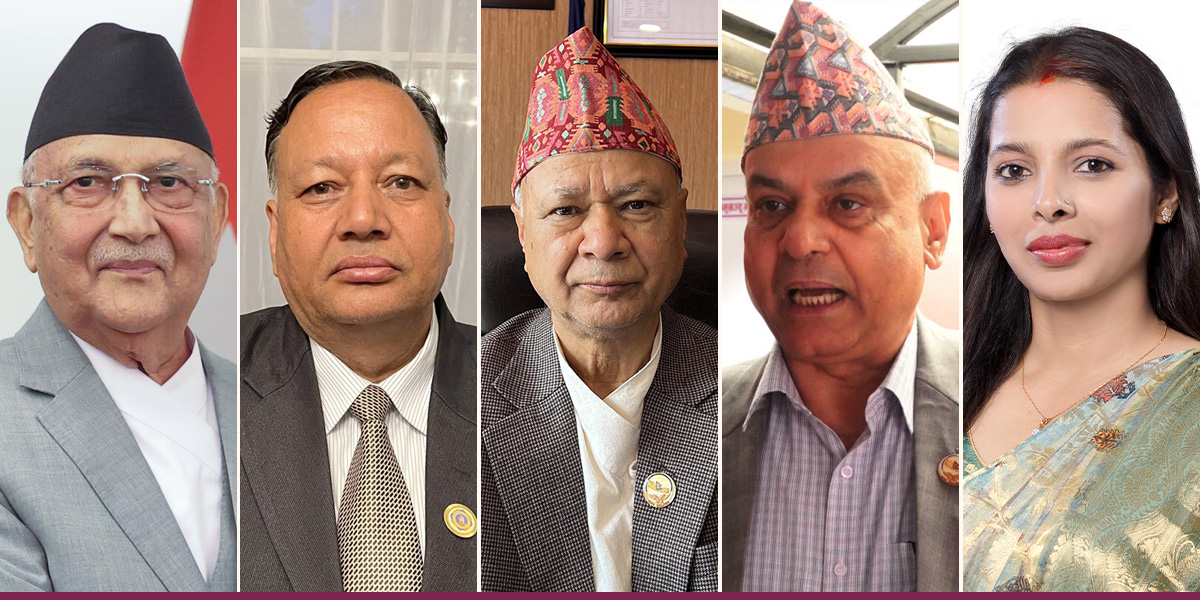
Prime Minister KP Sharma Oli, Education Minister Raghujī Pant, Nepali Congress (NC) Chief Whip Shyam Kumar Ghimire, and former Education Minister and incumbent Education Committee member Devendra Paudel, among others, have been accused of advocating on behalf of the private sector. Stakeholders of the education sector warn that instead of strengthening public schools, the advocacy of private school operators will further weaken Nepal’s school education system.
The Constitution enshrines school education as a fundamental right, declaring it both free and compulsory. However, stakeholders say, instead of drafting laws and policies aligned with this provision, political parties are moving in the opposite direction.
The quality of public and private schools in Nepal is starkly different. The share of private schools has steadily grown over the past years, while public schools are struggling with inadequate infrastructure and teacher shortages. Three decades ago, private schools accounted for just 11% of the total number of schools in the country. Today, that figure has risen to 30%, according to the education ministry.
The CPN (Maoist Center), once a champion of free and quality education for the poor, Dalits, women and marginalized communities, has now emerged as a strong supporter of private schools. Education Committee member and Maoist Center leader, Devendra Paudel, openly defends private school operators. Speaking at a program in Bhaktapur on Friday, Paudel reassured private school operators, saying that the law will protect their businesses. “We have simply used the language of the Constitution in the Bill. You are free to open companies, operate, invest, establish trusts and take loans. The law will protect your investments and your businesses,” Paudel said. “I urge school operators and educators to move forward with full confidence.”
He went on to say that private schools have upheld the dignity of Nepal’s education sector.
This is a sharp departure from the Maoists’ earlier stance during the armed conflict, when they rejected “job-oriented education” and argued for an education system linked to production class consciousness and social transformation.
Rastriya Prajatantra Party (RPP) lawmaker Bina Jaiswal also objected to a proposal to make private schools non-profit. “How can schools registered under the Company Act, operating with loans or huge capital investment, suddenly be made non-profit?” she questioned.
Nepali Congress Chief Whip Shyam Kumar Ghimire defended private schools in the committee meeting, claiming that they were easing the burden on the state. “Private schools are educating one-third of total students free of cost for the state. Without private schools, the state would face an impossible task,” Ghimire said.
He called for stronger regulations to promote private schools. “The solution is effective regulation, not prohibition. We must allow new private schools to open while ensuring proper teacher management. Otherwise, the state itself would be accused of running a monopoly,” he added.
Education Minister Raghuji Pant has openly advocated for the private sector-friendly legislation. He suggested that provisions requiring full scholarships with boarding facilities should be kept out of the law. “Let’s keep such details in the bylaws, not the Act. The law should not be made overly restrictive,” he said.
Prime Minister Oli has also expressed views favoring private schools, while criticizing the performance of community schools. Earlier this year, he warned government school teachers against demanding permanent positions and higher pay without improving results. “Why should salaries be raised for teachers if 52% of students are failing? Our youth are not lazy or stupid—they are talented. The fault lies in a system that fails to provide them with quality teaching,” he added.
He heaped high praises on private schools. “Without private schools, what would Nepal’s education system look like? The SEE (School Education Examination) pass rate would plummet. It is only because of PABSON schools that we are maintaining even 48%,” he said, addressing the anniversary of PABSON – the umbrella body of private schools in the country.
Despite private sector growth, public education continues to deteriorate. Suprawat Bhandari, president of the Nepal Parents’ Federation, told Himal Press that school education has veered away from constitutional mandates. “Private schools may compete, but their sheer expansion is not necessarily positive. Public schools have been neglected, which is why private schools have climbed,” he added.
He pointed out that children of lawmakers, ministers, senior officials, businesspeople and industrialists all attend private schools. “Community schools have lost their appeal. Teachers are not respected. A perception has taken root that community schools are failing, and that belief has started dominating parents’ thinking,” Bhandari added.
Narayan Prasad Gautam, principal of Ranidevi Secondary School, Kathmandu, said community schools do not receive the level of support they need from the state. “Instead, policymakers themselves are actively promoting institutional schools, pushing public schools toward collapse,” he added.
Former Prime Minister Baburam Bhattarai, however, is for regulating private schools. “The national circus over the school education bill, the extreme opportunism of political parties, the naked profiteering of education entrepreneurs, the self-interest of teachers, the helplessness of parents and the despair of students—all of this should make any sensible and self-respecting person bow their head in shame,” he wrote in a social media post. Bhattarai, who is also the Chairperson of the Nepal Samajbadi Party (Naya Shakti), argued that compulsory, free and life-oriented education is being destroyed as the state falls under the control of education entrepreneurs.