 Himal Press
 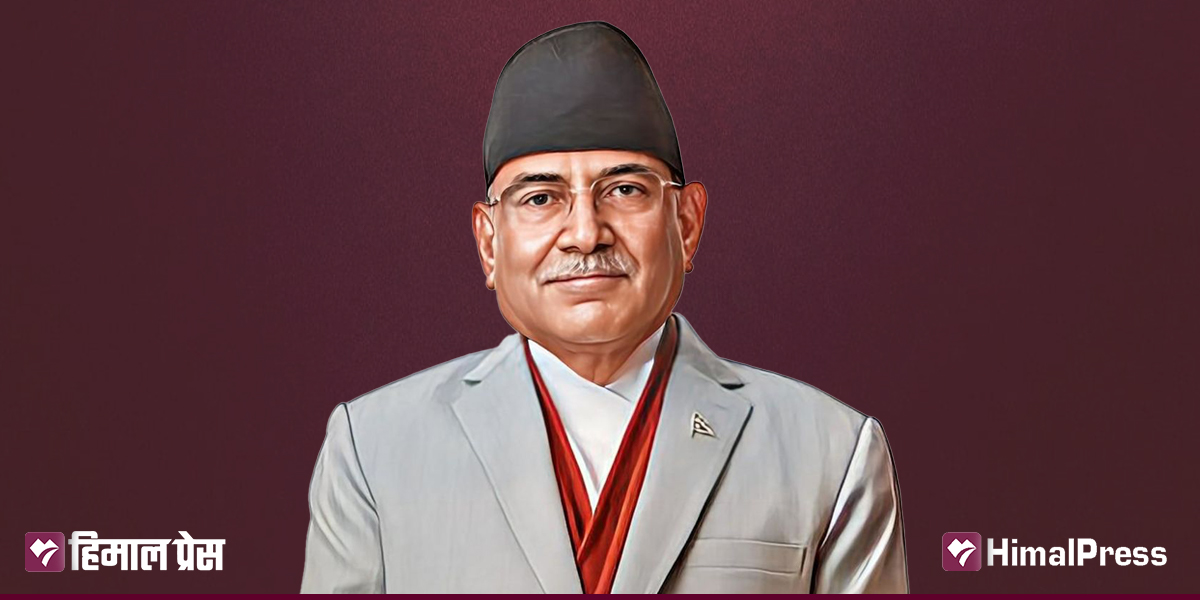 CPN (Maoist Center) Chairperson Pushpa Kamal Dahal
KATHMANDU: When out of power, CPN (Maoist Centre) Chairperson Pushpa Kamal Dahal does not forget to use the word ‘reactionary’ in his public statements to target his critics.
The term, which was widely used by the Maoists during the decade-long insurgency to criticise the monarchy and mainstream parties, has been one of the tools of political attack in the former Prime Minister’s vocabulary.
Dahal has repeatedly ascended to power since 2008. Every time he finds himself outside government, he blames “reactionaries” for conspiring against him. On Sunday, he accused “reactionary forces” of plotting to divide and weaken the Maoist movement. He, however, did not mention who they were.
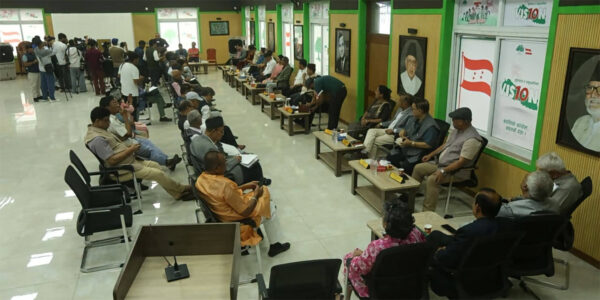
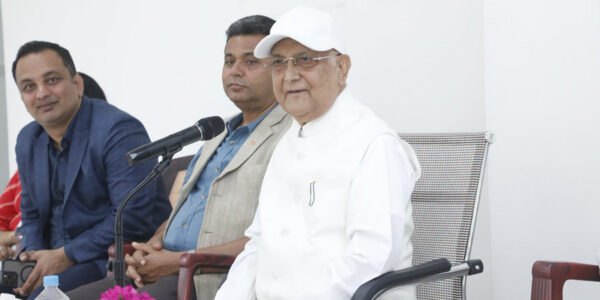
Speaking at an event at the Maoist Center headquarters, Dahal claimed that reactionaries have consistently conspired to split his party and derail its agenda even since the Maoists entered mainstream politics. He also said reactionary elements are trying to sabotage his efforts to unite all Maoist factions and genuine revolutionary communists. “We must defeat the reactionaries through a new kind of rebellion,” he declared.
Political analyst Dr Bishnu Dahal believes that Dahal’s use of the term “reactionary” is mainly a scare tactic. “It’s a tool to instill fear in the public,” said Analyst Dahal. “He often resorts to such rhetoric after losing power, using it to distract from corruption, misgovernance and political failures.”
However, left-wing political commentator Narendra Jung Peter sees it differently. He believes Dahal uses the word “reactionary” to deflect attention from personal or political crises.
According to Peter, anyone who challenges Dahal’s ideology, plans or leadership, whether inside or outside the party, is branded a reactionary. “It can refer to internal rivals or opposition forces,” he said.
Peter likened Dahahl’s use of “reactionary” to the way former Prime Minister Girija Prasad Koirala used the phrase “grand design” whenever a political crisis emerged. Like Koirala, who never revealed who was behind the so-called grand design, Prachanda rarely names names when invoking reactionaries.
“In both cases, the term serves to shift focus away from the actual problem,” Peter said. “It is a political tactic, a way to avoid addressing the real crisis.”