 Himal Press
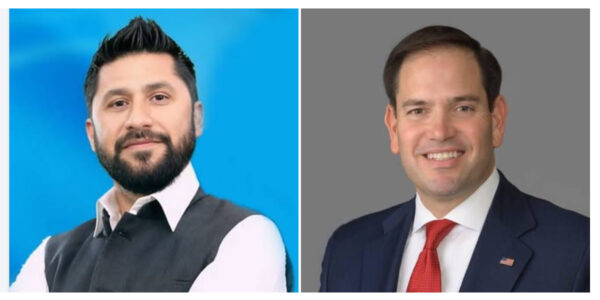
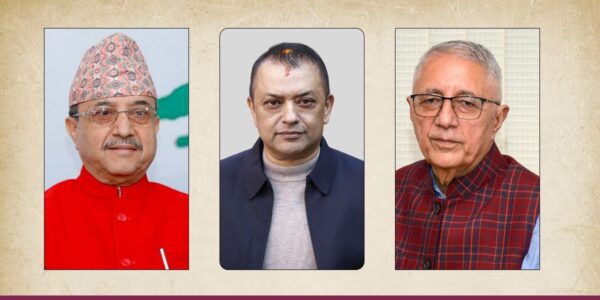
 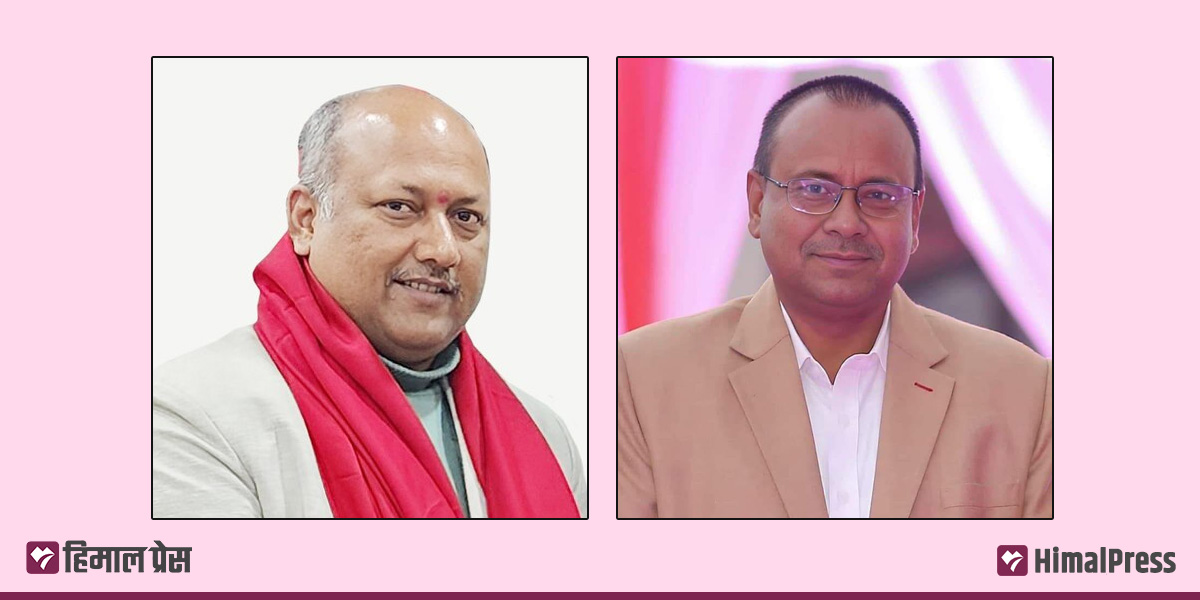 This combo photo shows Chief Minister Satish Kumar Singh (left) and NC's parliamentary party leader in Madhesh, Krishna Prasad Yadav.
KATHMANDU: The Janamat Party will soon have to give up the leadership of the Madhesh Province Government.
The ruling coalition partners, the Nepali Congress (NC) and CPN-UML, have reached an understanding to remove Janamat from leadership of the provincial government.
Janamat’s Satish Kumar Singh became Madhesh Province’s Chief Minister on June 7 last year with the backing of six parties, including UML, CPN (Maoist Center), CPN (Unified Socialist) and others. However, after the formation of a new coalition between the NC and UML at the center, Singh removed ministers from the Maoist Center, Unified Socialist and Nagarik Unmukti Party.
At that time, Janamat, UML and NC had reached an agreement for rotational leadership for a year each.
With Janamat already completing its one year, NC is now preparing to assume leadership of the provincial government. Both NC President Sher Bahadur Deuba and Prime Minister and UML Chairperson KP Sharma Oli have agreed to facilitate power transition in the province.
NC Joint Secretary Mahendra Yadav told Himal Press that an understanding has been reached with UML to form a new government under NC’s leadership in Madhesh. He added that NC would lead for the next year and relinquish the power to UML. “An agreement between Deuba and Oli has already been reached. The government will change soon,” he added.
On Friday, NC’s parliamentary party leaders in the Madhesh Province Assembly, Krishna Prasad Yadav, met Deuba in Kathmandu to discuss the transition. Deuba reportedly told Yadav that a specific date for the leadership change cannot be finalized as Oli is busy with party meetings.
Janamat Chairperson CK Raut had appointed Singh as the Chief Minister, bypassing the party’s parliamentary party leader, Mahesh Prasad Yadav. The decision had caused friction within the party.
Now, even Raut is not happy with Singh’s leadership. He even sought clarification from Singh for his deviation from party policy. Raut has also expressed dissatisfaction over budget-related issues in recent weeks.
On the other hand, PM Oli is said to be dissatisfied with Raut, especially after he participated in a signature campaign led by Rastriya Swatantra Party (RSP) in support of its President Rabi Lamichhane. Both NC and UML are reportedly frustrated by Raut’s frequent public criticism of the government.
NC expects Singh to step down voluntarily in line with the agreement reached among the three parties. “If he refuses, NC and UML will withdraw their support and form a new government,” Joint General Secretary Yadav said.
Parliamentary leader Yadav said he is hopeful that Singh will pave the way for the formation of a new government. “As agreed before, NC will lead the government, followed by UML,” he added.
Janamat leaders, however, said that no agreement for rotational leadership exists. “Janamat will lead the government for the full term of the provincial assembly. I was present in the discussion with ruling coalition partners; no such agreement exists,” Janamat’s parliamentary leader Yadav told Himal Press.
Among the ruling parties in Madhesh, UML has 25 members, followed by NC with 22, Janamat with 13 and Loktantrik Samajbadi Party (LSP) Nepal with nine. Of them, one member each from UML and LSP are suspended, while the Speaker, who is from UML, cannot vote. This means the NC-UML coalition will have only 52 votes.
NC and UML, therefore, do not have the required number of 54 to form a government in the 107-member provincial assembly. Sanghiya Samajbadi Party, which has one vote, could support the coalition. However, the coalition will still have to win the support of Nagarik Unmukti Party or Rastriya Prajatantra Party, which have one member each, to form the government.