 Himal Press
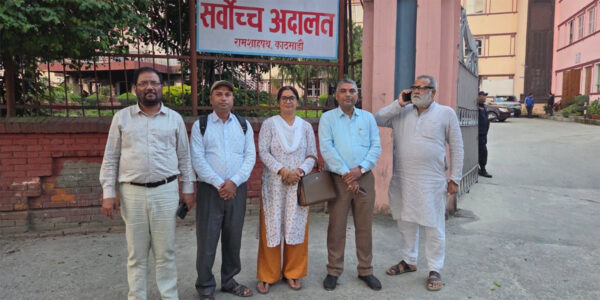
 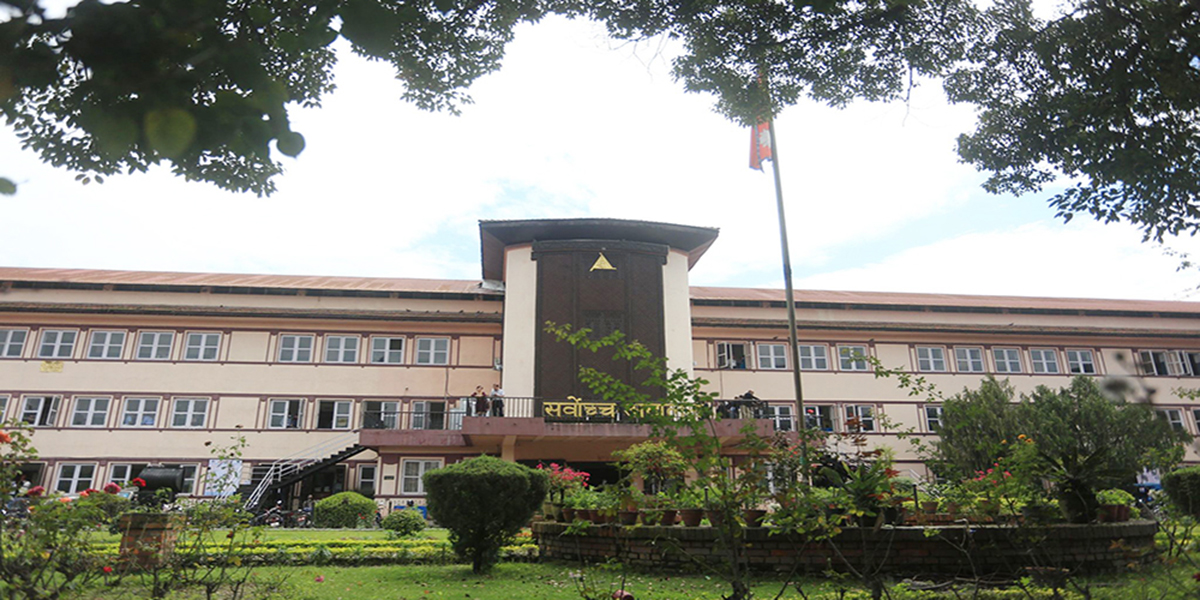 Supreme Court Building (File Photo)
KATHMANDU: The Supreme Court has dismissed writ petitions challenging the appointment of 52 office-bearers of various constitutional commissions.
A constitutional bench, comprising Chief Justice Prakash Man Singh Raut and Justices Sapana Pradhan Malla, Manoj Kumar Sharma, Dr. Kumar Chudal, and Dr. Nahakul Subedi, issued the verdict after midnight on Wednesday with a 3-2 majority, according to Supreme Court Spokesperson Achyut Kuinkel.
Chief Justice Raut and Justice Dr Subedi ruled that the appointments made as per the recommendation of the Constitutional Council on December 15, 2020, were unlawful and should be quashed by a writ of certiorari. However, Justices Malla, Sharma and Dr Chudal were in favor of dismissing the petitions.
The constitutional bench, however, was unanimous in holding that the second round of appointments made on May 9, 2021, should not be annulled.
The verdict has paved the way for all 52 office-bearers to serve their full terms.
The Constitutional Council had recommended office-bearers for the Commission for the Investigation of Abuse of Authority (CIAA), the Election Commission, the National Human Rights Commission, the National Women’s Commission (NWC), the National Natural Resources and Fiscal Commission (NNRFC), and the National Dalit Commission on December 15, 2020. Likewise, another meeting of the Constitutional Council held on May 9, 2021, recommended office-bearers for the CIAA, Public Service Commission, Election Commission, NNRFC, NWC, National Muslim Commission, National Inclusive Commission, National Indigenous Nationalities Commission, Madheshi Commission, Tharu Commission, and Dalit Commission.
The KP Sharma-led government introduced an ordinance to amend the Constitutional Council Act (Functions, Duties and Procedures), 2010, on December 15, 2020. As per the ordinance, the majority of the Constitutional Council members could hold the meeting and take decisions as required. Before the ordinance was introduced, five of the six members were required for the meeting to convene.