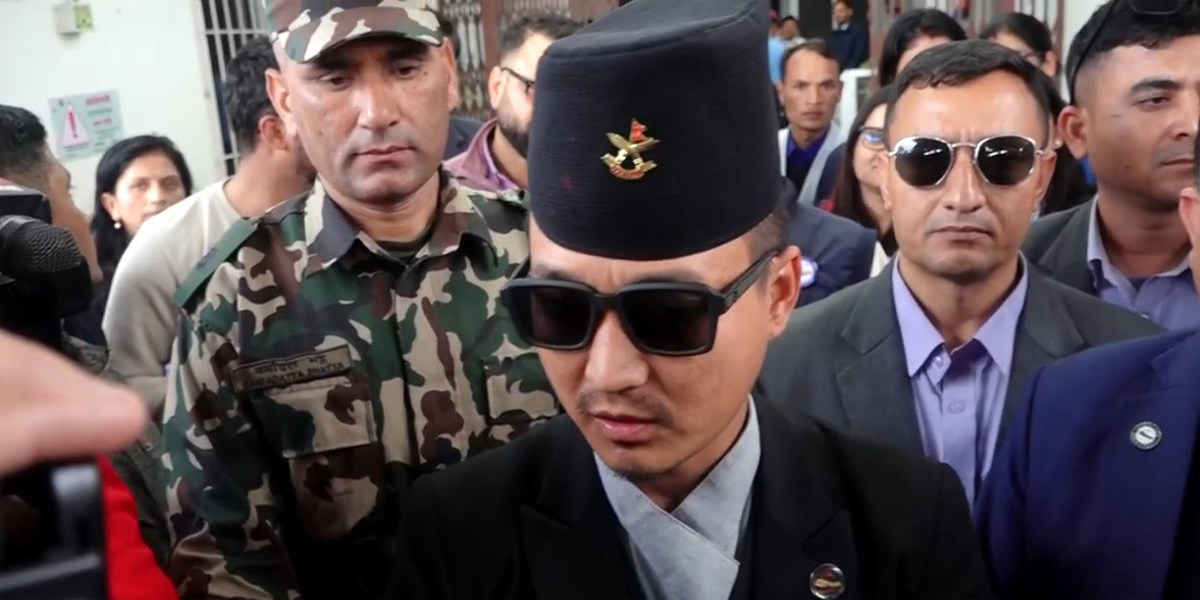


KATHMANDU: An unusual scene unfolded on Thursday during a meeting of the Confederation of Nepali Teachers (CNT) in Mid-Baneshwar, Kathmandu, on Thursday.
CNT President Laxmi Kishor Subedi was elaborating on the nine-point agreement reached with the government on Wednesday when commotion erupted in the hall. He immediately postponed the meeting.
The nine-point agreement reached on Wednesday ended the long-running protest of school teachers. However, dissatisfaction has grown within the CNT as the agreement failed to address the demands of groups like the Nepal School Employees Council, Child Development Teachers, and the Institutional School Teachers’ Union (ISTU). The situation escalated to physical altercations, requiring Nepal Police to intervene.
Teachers also expressed anger toward journalists covering the event, with some attempting to snatch their mobile phones. School employees were the most dissatisfied group at the meeting.
This shows internal dissent within the CNT has intensified. Differences among constituent organizations of the CNT have been raising serious questions about its leadership.
CNT agreed to suspend the protest after a written commitment was made to present the School Education Bill in Parliament by June. However, constituent organizations such as the Nepal School Employees Council, ISTU, relief teachers, child development teachers and permanent teachers have voiced their dissent.
The Nepal School Employees Council (NSEC) has accused the CNT leadership of betrayal. “Despite repeatedly saying it wouldn’t happen, you betrayed school employees for personal gain. Have you forgotten how you spoke about employee issues at various places in the past?”
NSEC President Gangaram Tiwari said in a social media post.
ISTU President Homkumar Thapa criticized the agreement process and the leadership’s role. “The person claiming an unyielding stance proved weaker than sand. The CNT’s earlier resolve was completely reversed by Tuesday evening,” he said. Stating that ISTU had clearly communicated its bottom lines for negotiations, they were neither upheld nor included in the talks.
Another constituent group’s president said that a salary scale based on staffing levels could only be implemented after the School Education Act is passed, tempering expectations for immediate reforms. “The cabinet cannot set staffing-based scales until the Act is passed. Whatever was decided earlier will likely apply,” he added.
Dissatisfaction with the CNT extends beyond unaddressed demands. Some officials accused the agitation of being derailed by political influences. A leader from one constituent group, speaking anonymously, claimed that the second-largest group within the CNT had opposed the protest from the start. “They misused power to intimidate teachers and followed party directives. After 24-25 days, even the leading group’s resolve wavered. They met Nepali Congress leaders like Purna Bahadur Khadka, Gagan Thapa and Bishwa Prakash Sharma,” the leader said. “The protest weakened from that day.
Meanwhile, Shankar Adhikari, president of the Unified All Nepal Teachers’ Organization, another CNT constituent, claimed the protest has yielded immediate results. “We secured a nine-point agreement. All agreements have been passed by the cabinet. What more is needed?” he questioned.
Kumar Bajgai, a central member of the CNT and co-patron of the Nepal Relief Teachers’ Association, described the nine-point agreement as incomplete but a positive starting point. “The agreement states that demands of relief teachers will be addressed through the School Education Act. Some colleagues are expressing anger without understanding the agreement’s essence,” he added.